
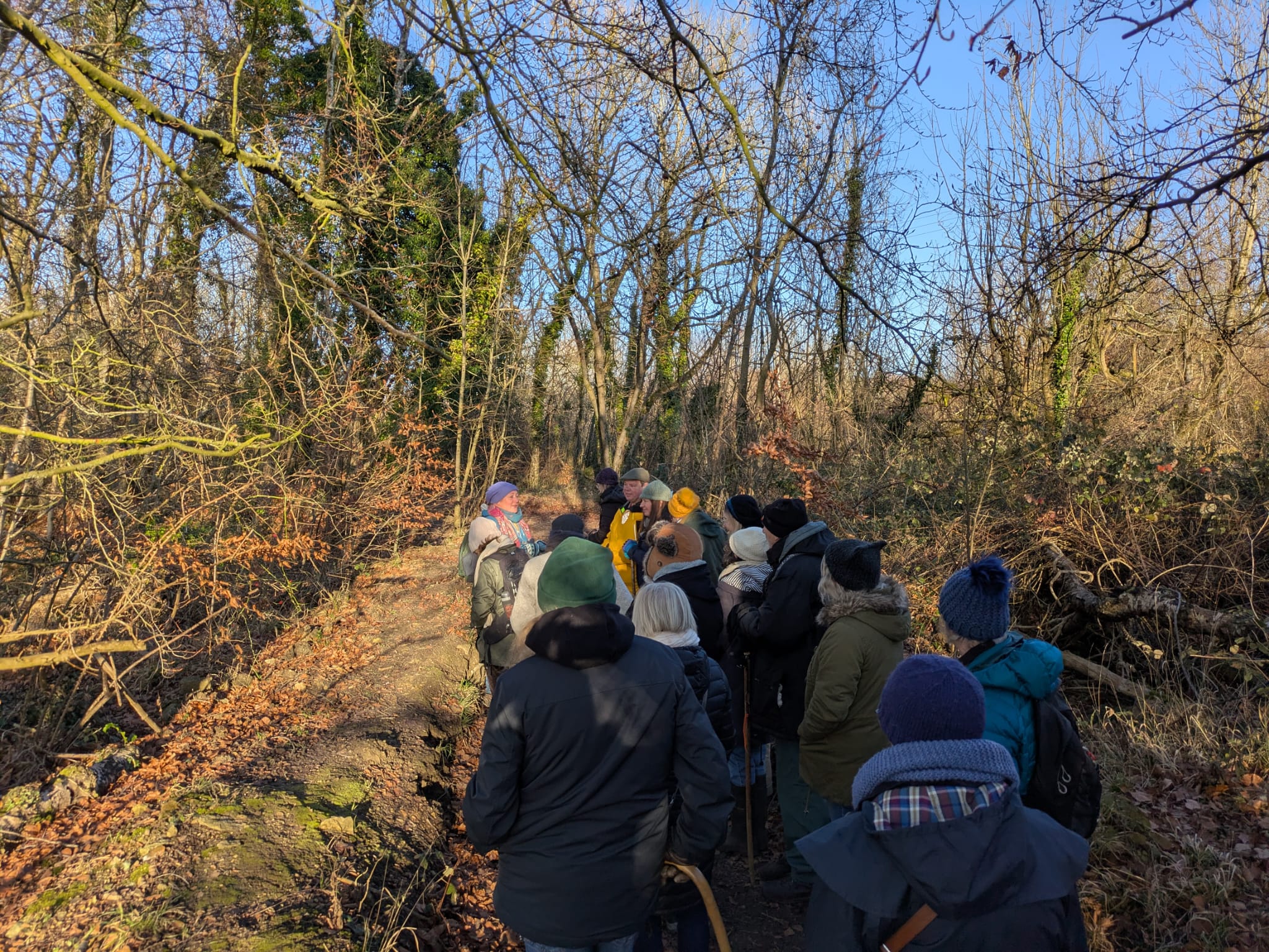
Breakheart Quarry was our chosen location for our January herb walk as a space of renewal, a good place to start the new year. This 54 acre area of land has been a community space now for over 15 years. In nature’s terms this is still young, a gradual recolonisation taking place so we expected to see the species associated with renewal and rebirth, appropriate to a fresh start.
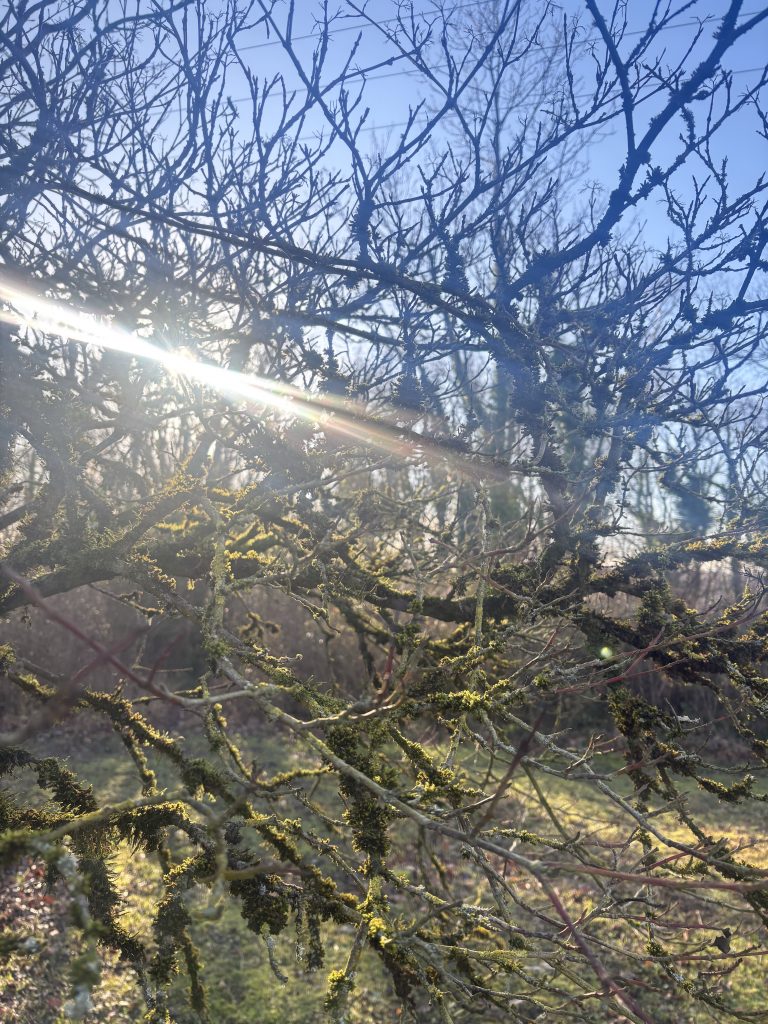
We were greeted by a bright, crisp morning and gathering in the car park it was cheering to see so many turn out to share a bit of herby time together. Some knew Breakheart well, for others this was a new place to explore.
Breakheart has a long history as a site from which Cotswold stone was quarried (one of the many across our line of hills). It was actively used in this way, along with a lime kiln too, well into the 20th Century. Stone from the quarry was used in the construction of both the Berkeley Power Station and the M5 motorway. The more recent history of Breakheart saw it under the ownership of the Nuclear Decommissioning Authority (NDA). Their activity ceased in 2000 and since 2009 a local community group have been taking care of the site under a management lease. Their aim is to “keep the beauty of the landscape, restore the area to to its former natural glory and allow the community access as a place for learning and leisure.”
Into the woods
We set of first towards the wooded area.
The whole of Millend Wood is classified as semi ancient woodlands, with a segregation of tree species within its boundaries. The western slopes are predominantly aged, copiced beech; the southern slopes a mixture of native cherry, ash and imported larch, originally planted during WW2 when large amounts of wood for building and infrastructure were required. The eastern slopes are mainly ash with some hazel and oak. Larch has been felled and replaced with hazel to create a lower over-storey for dormice and small nesting birds.
Hazel coppice
The Breakheart Community Project are maintaining this area in line with its ancient woodland status. They were helped by the Forestry Commission to instate a suitable management scheme.
Coppicing is a sustainable method of woodland management that enables wood to be harvested while maintaining the trees’ health and the habitat for birds and small mammals. It involves a long term perspective, managing the landscape through multi-year cycles. Here at Breakheart a five year cycle has been established, elsewhere this may extend to seven or ten years. A tree managed this way can live for several hundred years (more than twice as long as an uncut tree’s life expectancy).
The term ‘coppicing’ derives from the French coup – to cut), it is an ancient practice and well suited to this semi-ancient woodland at the Quarry.
Conrad gave us an overview of the coppicing process describing how the stems are cut back to the ground, taking trees in rotation, allowing the tree then to regenerate from the base (known as the ‘stool’). It’s a considered approach to managing the trees, work is typically done by hand. This perhaps explains why this method of woodland management has declined as a practice. Keeping some standing trees – of hazel or oak – among the coppice complicates the management further but improves the ecological diversity of the site and adds a much longer (100 year plus) cycle.
The multi-stemmed tree that re-grows from the hazel stool is a feature of its naturally shrubby tendency, it creates ideal habitat for dormice.
This generates lot of straight, flexible wood, of varying qualities, which can be sorted and used for fencing and other building, hedgerow stakes, plant trainers, walking sticks, basket making, and reused onsite for habitat creation to attract insects or mammals.
The other benefit gained is light. Clearing creates space in the woodland which allows the sunlight through to the woodland floor encouraging new growth, creating diversity and varied structure within the woodland understory, and attracting small birds, insects and butterflies.
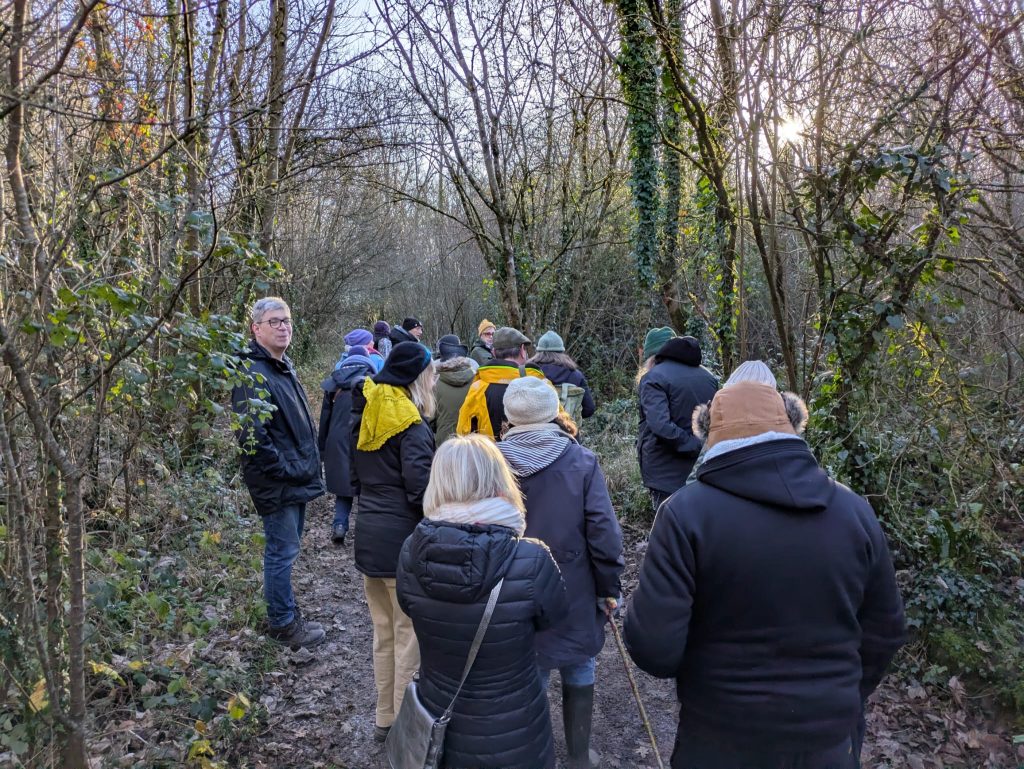
While much of this understory of plants lies dormant through the cold winter months (including wild garlic, celandines and wood anemone), mosses, bramble and ferns provided plentiful green as we made our way along the woodland path.
Restoring and renewing
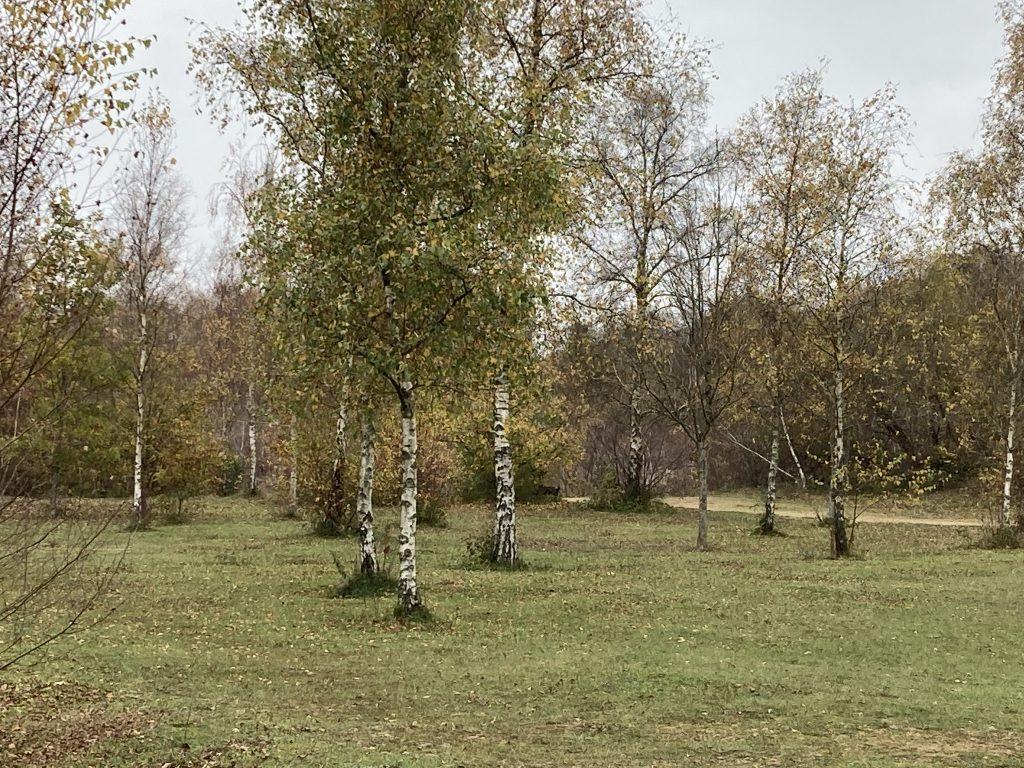
The open area of the quarry is where we see nature’s restoration processes at work clearly. While first impressions are of a stark landscape, well-used by man through centuries of extracting stone and decades of nuclear testing, the pioneer species are taking hold. Primary among these is the birch.
Birch
Birch was our herb of the month for January, you can read all about her here. A wonderful plant for the new year – sweep away the cobwebs with a birch broom and look out for her early leaves. As one of the first trees to come into leaf each year she offers an encouraging announcement of spring. Her spring leaves are good for a tea to drink, it’s helpful for sore throats, sore joints and sore urinary tracts. Her mature leaves are good for bath tea, soak in this to ease muscle pain, support skin health and reduce inflammation.
Herbs underfoot
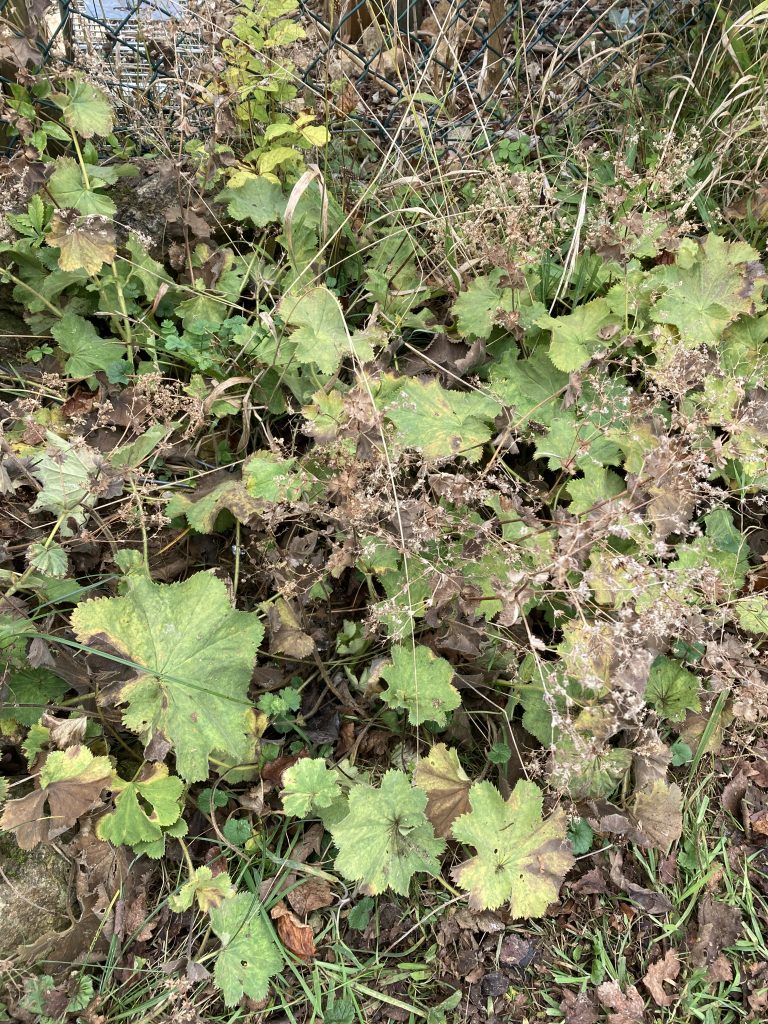
Breakheart Quarry has a very good reputation locally for its smaller herbs. We needed to look close to the ground for these. In winter they are well hidden but we did see some small recognisable shoots of salad burnett, thyme and cleavers. The wild lady’s mantle did not show her face but she will have felt our footsteps while she nestles underground.
Community Project
The site is managed by the Breakheart Community Project, who were granted a quiet enjoyment lease of 99 years in 2009, and charitable status in 2013 when they were also enrolled into the environmental body of Entrust. This enables them to benefit from the Landfill Communities Fund (contributions made by Landfill Operators under the Landfill Tax Regulations Act , 1996). Ray, one of the most instrumental people behind the current thriving operations here, popped out to chat to the group, happy to see turn out of people, and of course, concerned for our safety while on the site.
Year round
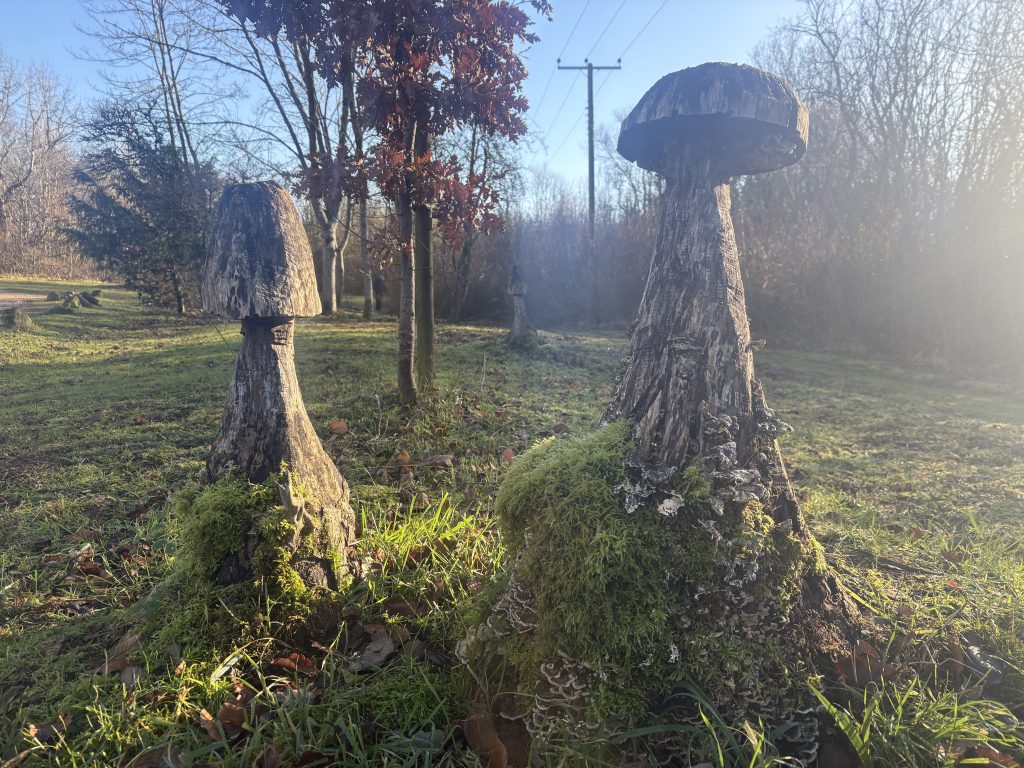
Breakheart is a haven to return to throughout the year, to see the seasons unfold. Soon it will be wrapped with the intoxicating scent of wild garlic; summer evenings bring the potential of glow worm sightings and through autumn there’s the colours of some very special trees including cherries, wild service and spindles.
Highly recommended as a place to visit, or to get involved as a volunteer to help look after this local treasure.
Leave a Reply