
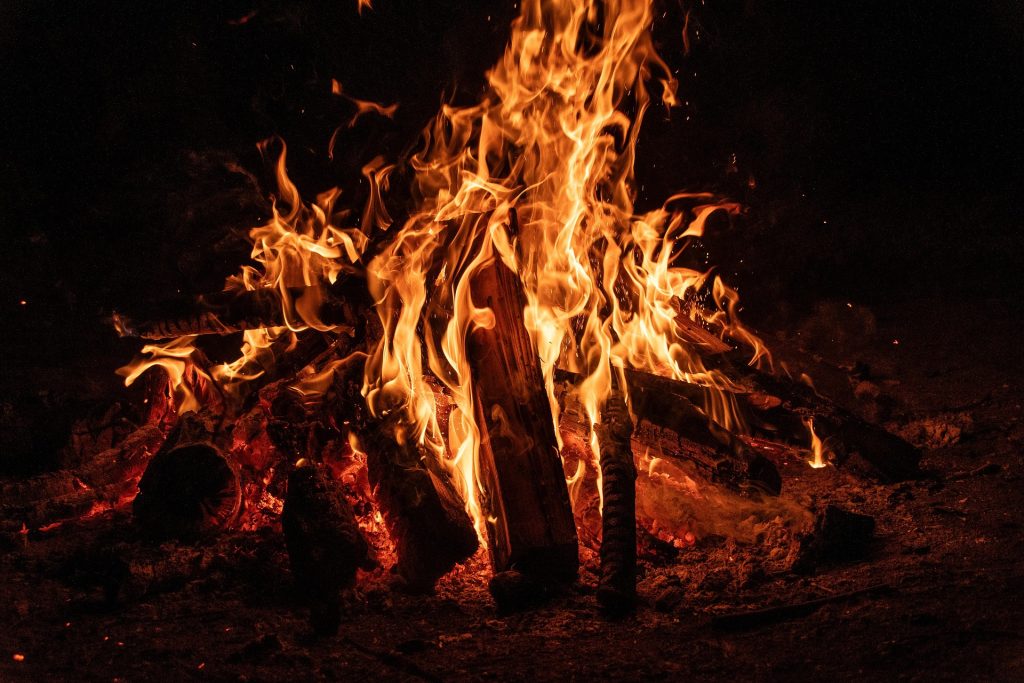
There is art in creating a good fire. The kind that brings convivial warmth along with its physical heat. A blaze to gaze at, lost in the simple entertainment of watching embers glow, smoke curl and the occasional spark fly.
Some see wayward sparks as playful sprites, other characterise them as a flurry of people going to church, disappearing up the chimney.
Dancing flames encourage imagination and tease out stories. Weird, wild and wily tales all bring some level of comfort when recounted in the flickering light of a fireside.
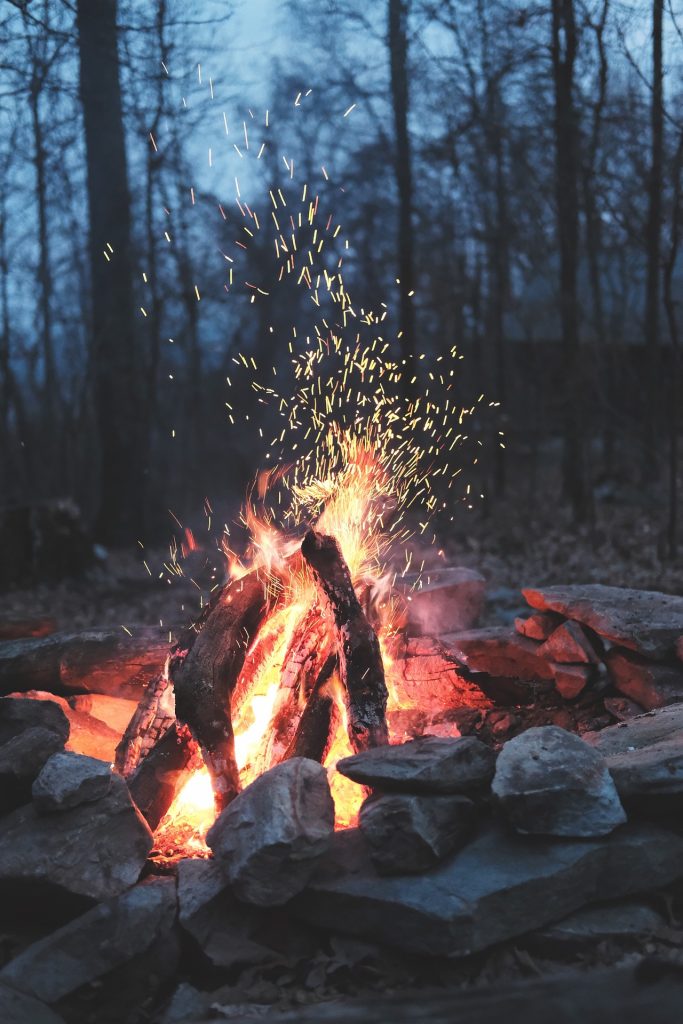
Whether in a woodburner, open hearth. brazier or bonfire a key skill for building, stoking and maintaining warmth and glow is knowing which woods to choose. The tree that supplies the wood dictates the likelihood of achieving a good burn, and of making it last the evening through.
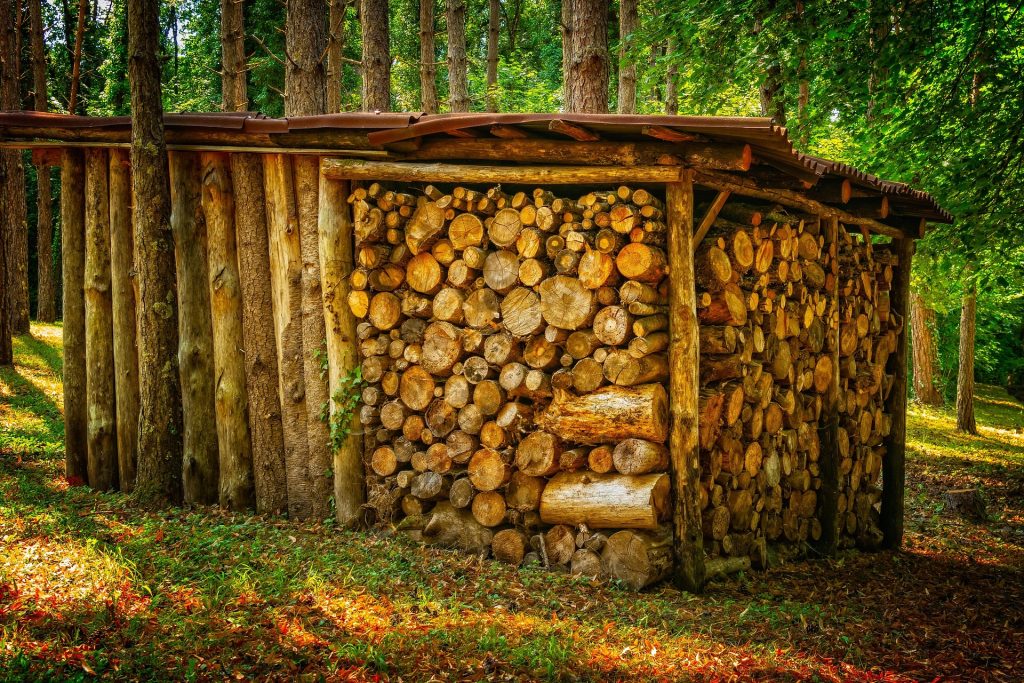
There’s plenty of folk wisdom and sayings to help remember the qualities of different woods. There also seems to have been a trend in the early 20th Century for forming these truths into instructive poetry. Here are two examples, which I suspect have drawn on the same source material.
I came across the first poem, Logs to Burn, in Richard Mabey’s book Purposeful Plants. He claims to have learnt it as a boy scout, though the poet is unknown.
The second poem, The Firewood Poem, is attributed to Celia Congreve. It was first publised in The Times on 2nd March 1930.
There is good consensus across the two poems with ash being the supreme wood praised throughout, while the pleasure of wood from fruit trees is welcome too.
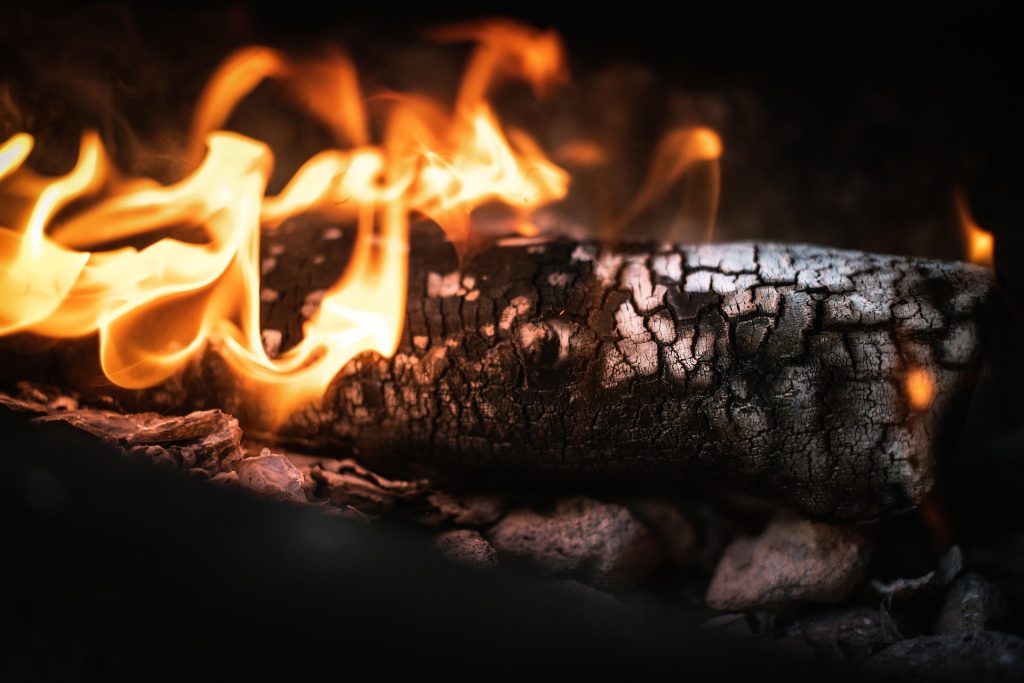
Logs to Burn
Logs to burn! Logs to burn!
Logs to save the coal a turn!
Here’s a word to make you wise
When you hear the woodman’s cries.
Beechwood fires burn bright and clear,
Hornbeam blazes too,
If the logs are kept a year
To season through and through.
Oak logs will warm you well
If they’re old and dry,
Larch logs of pine wood smell
But the sparks will fly.
Pine is good, and so is yew
For warmth through wintry days,
But poplar and willow too
Take long to dry or blaze.
Birch logs will burn too fast,
Alder scarce at all.
Chestnut logs are good to last
If cut in the fall.
Holly logs will burn like wax –
You should burn them green.
Elm logs like smoldering flax,
No flame is seen.
Pear logs and apple logs
They will scent your room,
Cherry logs across the dogs
Smell like flowers in bloom.
But ash logs, all smooth and grey,
Burn them green or old,
Buy up all that come your way
They’re worth their weight in gold.
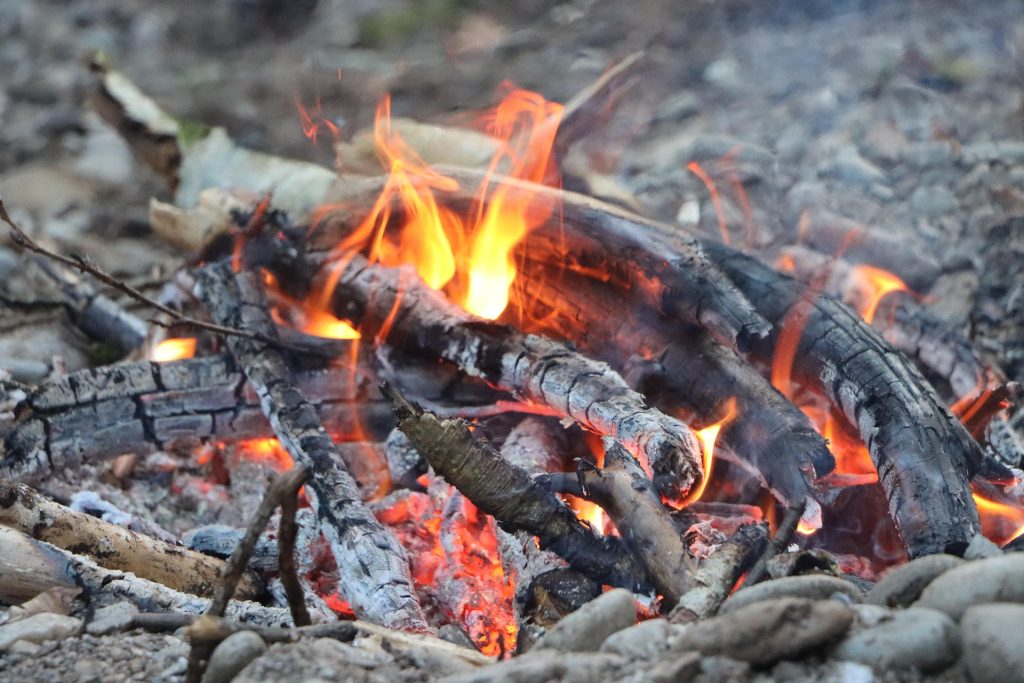
The Firewood Poem
Beechwood fires are bright and clear
If the logs are kept a year,
Chestnut’s only good they say,
If for logs if ’tis laid away.
Make a fire of Elder tree,
Death within your house will be;
But ash new or ash old,
Is fit for a queen with crown of gold.
Birch and fir logs burn too fast
Blaze up bright and do not last,
It is by the Irish said
Hawthorn bakes the sweetest bread.
Elm wood burns like churchyard mould,
E’en the flames are very cold
But ash green or ash brown
Is fit for a queen with golden crown.
Poplar gives a bitter smoke,
Fills your eyes and makes you choke,
Apple wood will scent your room
Pear wood smells like flowers in bloom.
Oaken logs, if dry and old
Keep away the winter’s cold.
But ash wet or ash dry
a king shall warm his slippers by.
In summary the poems suggest a hierarchy of woods:
- Ash – always a first choice
- Pine, yew, chestnut (cut in autumn) – good, long burning
- Oak, hornbeam, beech – good if well seasoned
- Holly – burn when green
- Apple, pear, cherry – a lovely scent
- Hawthorn – for baking bread
- Larch – good scent, but likely to spark
- Willow, poplar, birch, elder, elm, fir – not worth the effort