
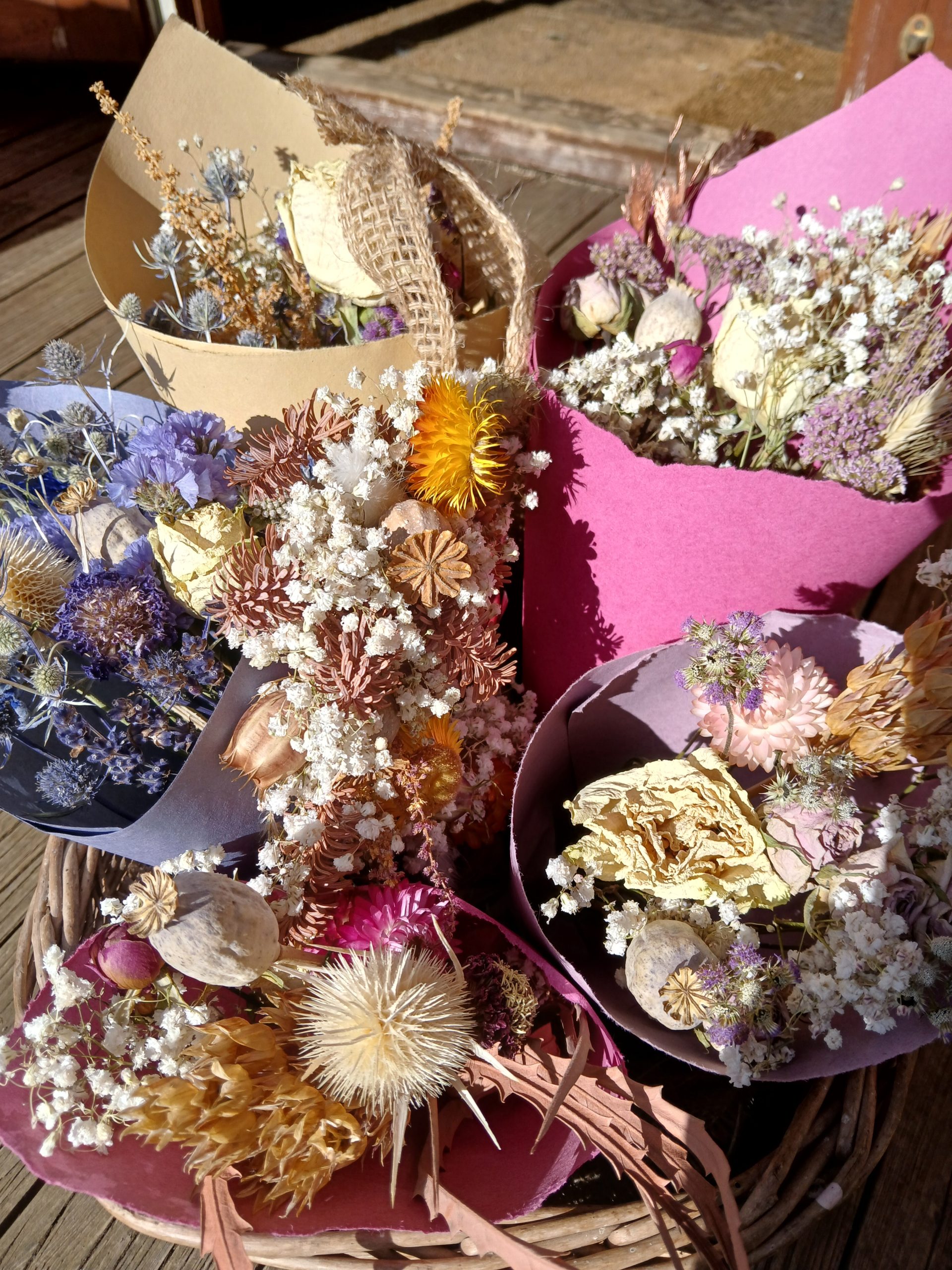
I have a love-hate relationship with teasel. Her sculptural, egg-shaped heads, covered in little prickly hooks, have a sort of architectural beauty that does make them stand out in a flower arrangement. But oh boy, does she fight back! So prickly, I come away from handling her looking like I’ve been wrestling an angry cat!
So my first piece of advice about bringing teasel into your home is one word: GLOVES. Big, thick, garden gloves, preferably the type that go up to your elbows. And long sleeves. And a coat. OK, that’s more than one word but you get the message I’m sure!
I do think teasel is worth the fight, though, so let me tell you why.
Fight for teasel
A familiar sight in the British countryside, she grows along hedgerows, field edges and rough patches of ground and – as I’m sure you’ve noticed – teasel is abundant around Dursley! In summer, the tall stems carry rings of tiny lilac-purple flowers around their spiky heads, which are really pretty and do look cute in flower arrangements. But it’s in autumn and winter, when the flowers have gone and the seedheads have turned a lovely golden brown, that teasel really comes into its own for floristry.
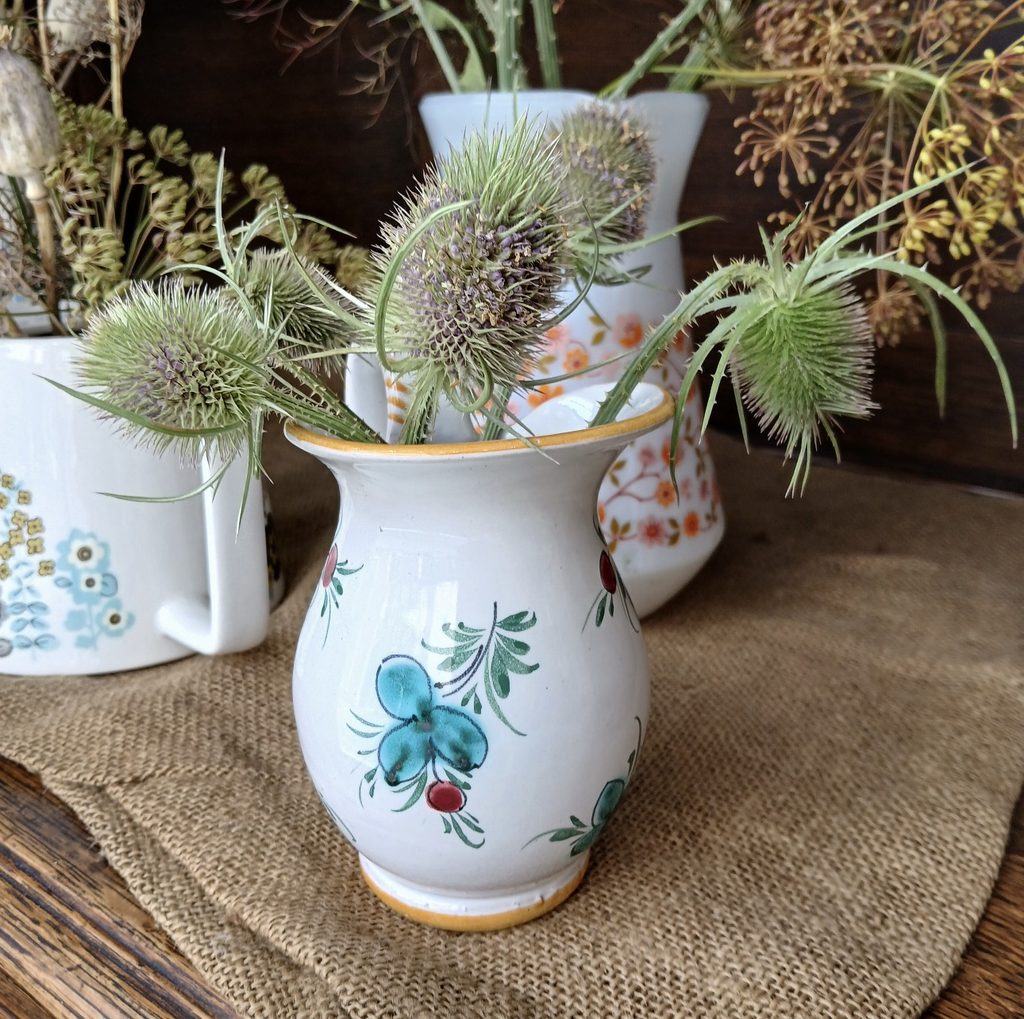
Dried Teasel
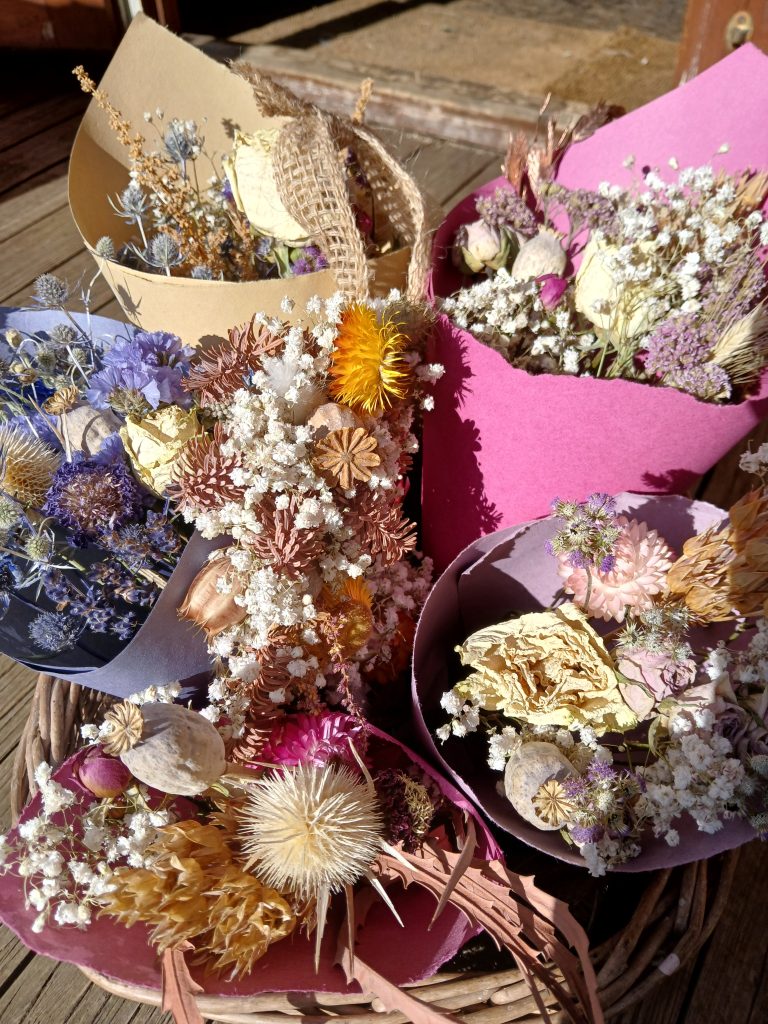
I love using dried teasel in arrangements because she brings so much to the party. Teasel gives you shape, height and texture. Her sturdy stems and striking heads are perfect for a naturalistic, country-style arrangement, especially when mixed with smaller, wildflower-type shapes and lots of variety. They make great focal points in an autumn or winter door wreath, too.
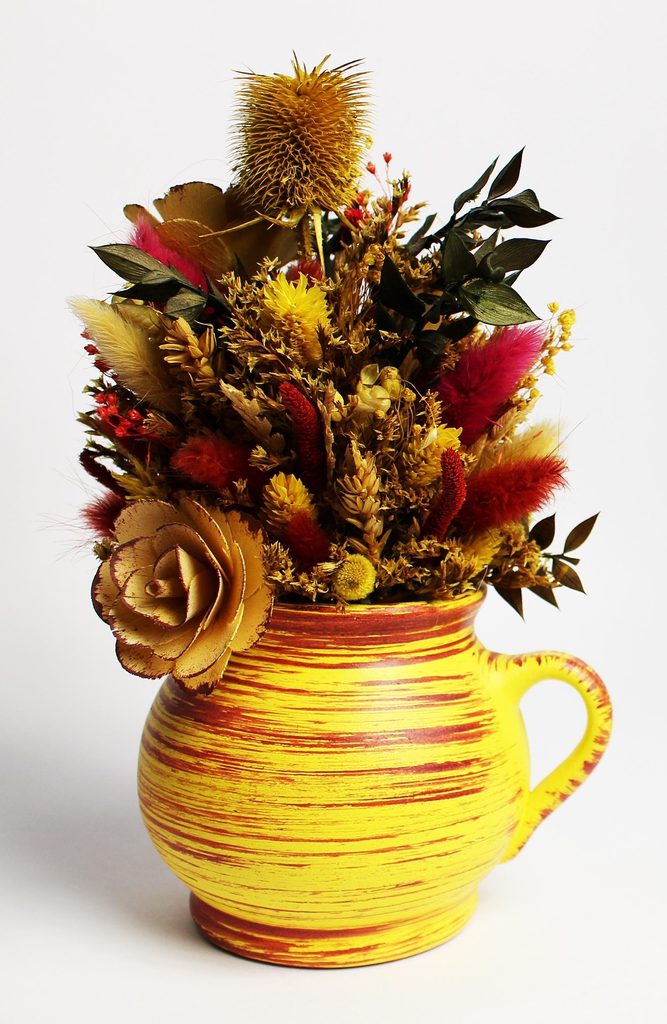
Or, keep it completely dry: pop teasel in a vase with dried honesty or poppy heads, perhaps some interesting twigs like birch and some fluffy pampas grass, and you have a wonderfully tactile, boho-style display that will last for months without needing a drop of water.
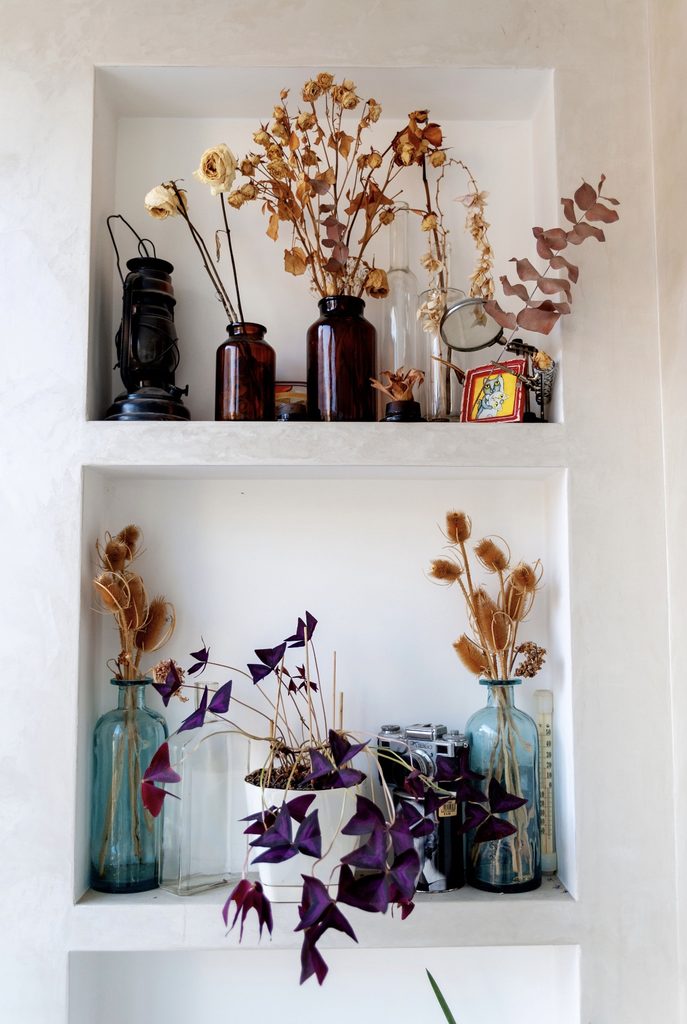
A handful of stems in a tall, simple vase can look super sculptural, particularly against a plain wall where the shapes and shadows can do their thing. You don’t need masses of other flowers, just a few well-chosen stems make a strong statement.
For a winter wedding or a boho-style wedding using dried flowers, teasel is great for adding height to arrangements but be careful not to put it anywhere people might brush against it and snag their fancy clothes, and I probably wouldn’t put it in a bouquet or a buttonhole for the same reason.
How to pick teasel
If you have teasel growing in your garden, you can cut a few stems once the seedheads have matured and turned brown. Choose heads that are firm and well formed, without any signs of mould or damage.
Teasel is often foraged from the countryside, but please do be thoughtful about where and how much you take. Always get the landowner’s permission, avoid protected sites and roadside verges that may have been sprayed, and never uproot the plant. Most importantly, leave plenty behind as teasel seeds are an important winter food source for wildlife.
How to dry teasel
Drying teasel is super straightforward. Once you’ve cut your stems, remove any leaves that might get in the way, then tie them into small bunches with a rubber band. Hang them upside down in a warm, dry place with good air circulation, away from direct sunlight if you want to preserve their natural colour. A spare room, airing cupboard or dry shed can work well, provided there’s enough ventilation to prevent mould.
Leave them for a couple of weeks, or longer if the stems still feel damp. The heads should feel dry and firm before you bring them indoors for arranging. Don’t be tempted to rush this bit, as any remaining moisture can cause problems later.
Once dried, teasel needs very little fuss. You can leave the stems their natural golden brown, or spray paint them if you want some bright colours. They’ll happily sit in a vase for months, and unlike fresh flowers, they won’t mind if you forget to change the water!
So, next time you see teasel standing tall in your garden or at the edge of a field, take a moment to appreciate it. It’s a reminder that beauty doesn’t always come in the form of a perfect rose or a delicate little daisy. Sometimes it’s a prickly brown seedhead, full of character, waiting to bring a bit of wintery warmth into your home.
Sophia Mason is a florist based in a little studio in Cam. She offers flowers for all occasions, with a focus on sustainability and supporting local growers. Find out more on the Sophia Mason Flowers website.