
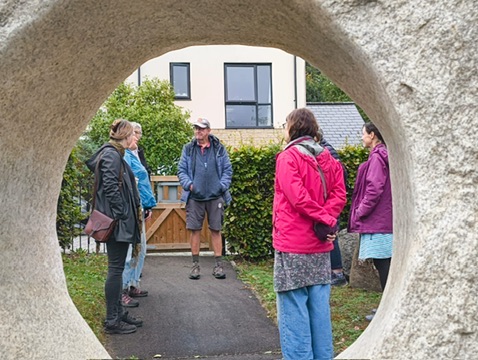
In Autumn we can feel closer to the rhythms of the earth. The turning of the leaves echoes the turning of the seasons. Plants draw energy downwards into their roots as we draw inwards, closing curtains earlier, nestling into darker times. Our October walk drew us to the standing stone in Littlecombe as a starting point.
Stand still

Standing stones are enduring markers of collaboration between humans and land, enabling connection with place to last through generations. The standing stone that started our October walk is a little known place marker within the Littlecombe development. It holds potential as a purposeful focus for the community surrounding it.
Most often such spaces are overlooked in our everyday, modern bustle. Perhaps becoming so familiar it no longer draws attention on the daily dog walk or regular commute. Locals say they never see people step inside this space. If you are nearby, do open the gate, do step inside, do breathe the air that is made sacred by the harmonious positioning of stone and trees. Perhaps it will give you a moment of calm, maybe it will help clear your head to think, possibly it will bring you a little bit closer to the place and the people and the legacy held in our tiny bit of Gloucestershire.
Bored stone
The human-sized stone has a central hole. Holes in stones have always been associated with the faery realm, considered to be protective charms, warding off spirits and potentially curing ailments. As we encounter the witches and spirits of Halloween, a bored stone is good to visit, or – if you happen to have a smaller version, sometimes known as a hag stone, collected on a beach or elsewhere – good to keep in your pocket. Yes, this is a simple superstitious custom, but it’s also a little prompt to consider the seasons and the earth around us, especially bringing awareness to the myriad happenings that go unseen.
Silver glow
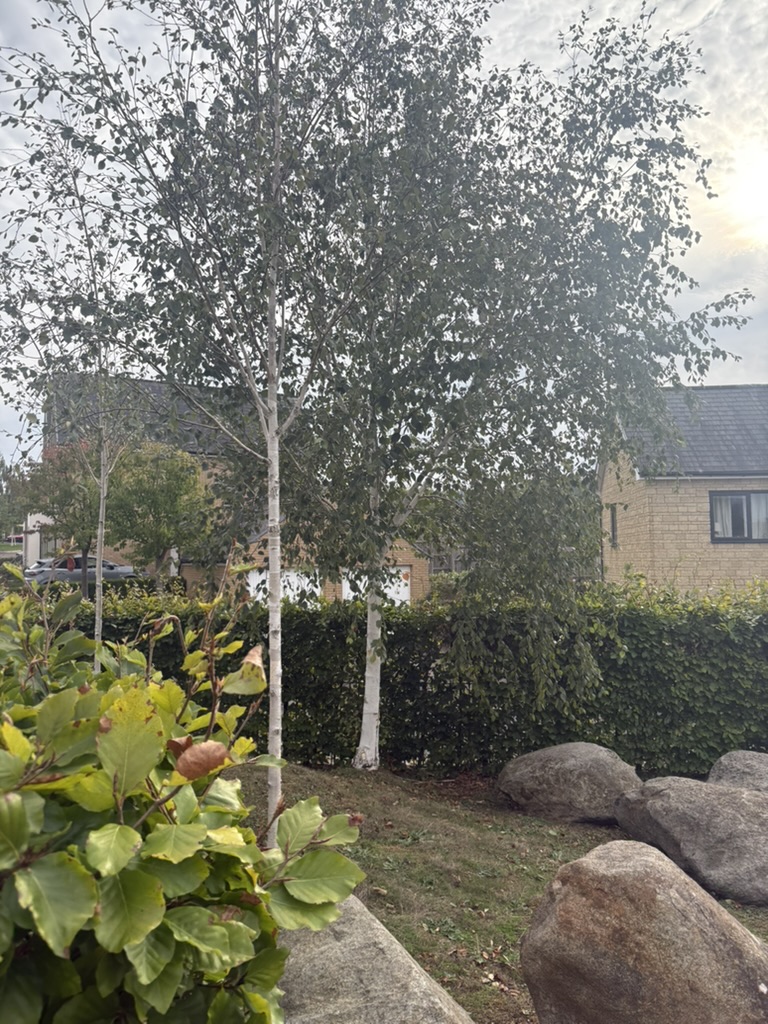
At each corner of the small triangular parcel of land surrounding the standing stone silver birches have been planted. Still young and slender, it’s easy to see why and how these trees have charmed poets and romantics through the centuries. Coleridge called birch ‘The Lady of the Woods’ and Tennyson is credited with adding ‘silver’ to her name, reflecting how her white bark shines on a moonlit night. Indeed, her common name ‘birch’ is derived from Proto-Indo-European bherea meaning ‘to shine bright white’.
Meanwhile, her Latin name Latin name ‘Betula’ is derived from Ancient Sanskrit meaning ‘a tree whose bark is for writing on’. Magic spells are especially potent when written on birch bark. Although it looks fragile, birch bark is actually very strong and can be used for boat building and roofing. Each season birch offers new utility. In Autumn her mature leaves are recommended in a strong brew to be added to a bath to help muscle pains. Alternatively, they can be infused in oil to be used in massage for sore muscles, or for eczema.
Connected communities
From this hidden corner of the Littlecombe estate we walked uphill across rough ground, heading towards the well-trodden track linking through to Peak Lane, a route that speaks to daily connection between the Littlecombe area that previously housed the Lister factory and other works, and the homes of Upper Cam.
Along the way we paused to discuss the superfood of vitamin-packed bramble fruit (aka blackberries) and their lesser-used leaves which also contain similarly vibrant compounds, the similarly tannin-fuelled astringent red dead nettle, super-stimulating stinging nettle, and the all-round soothing and powerfully healing plantain.
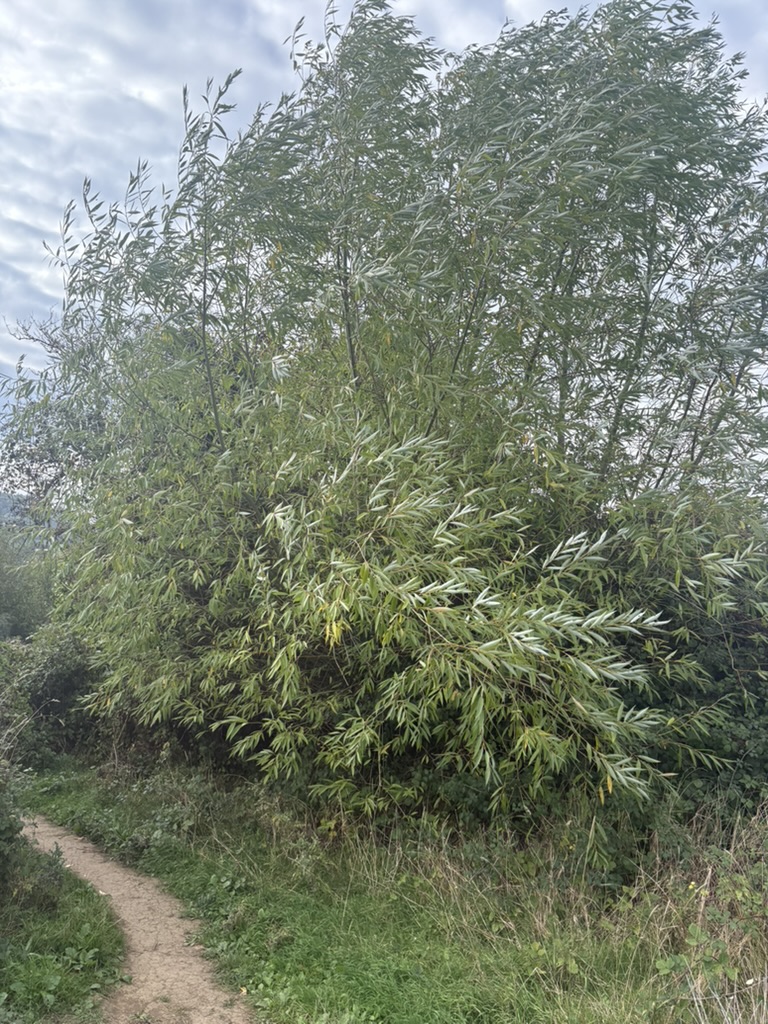
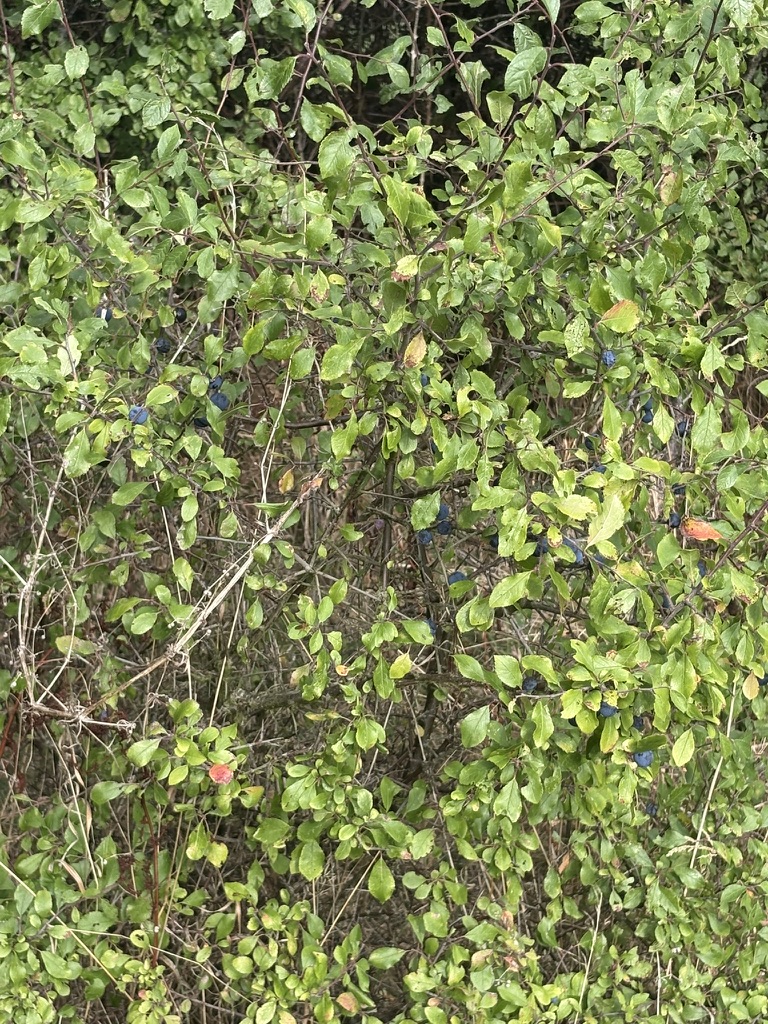
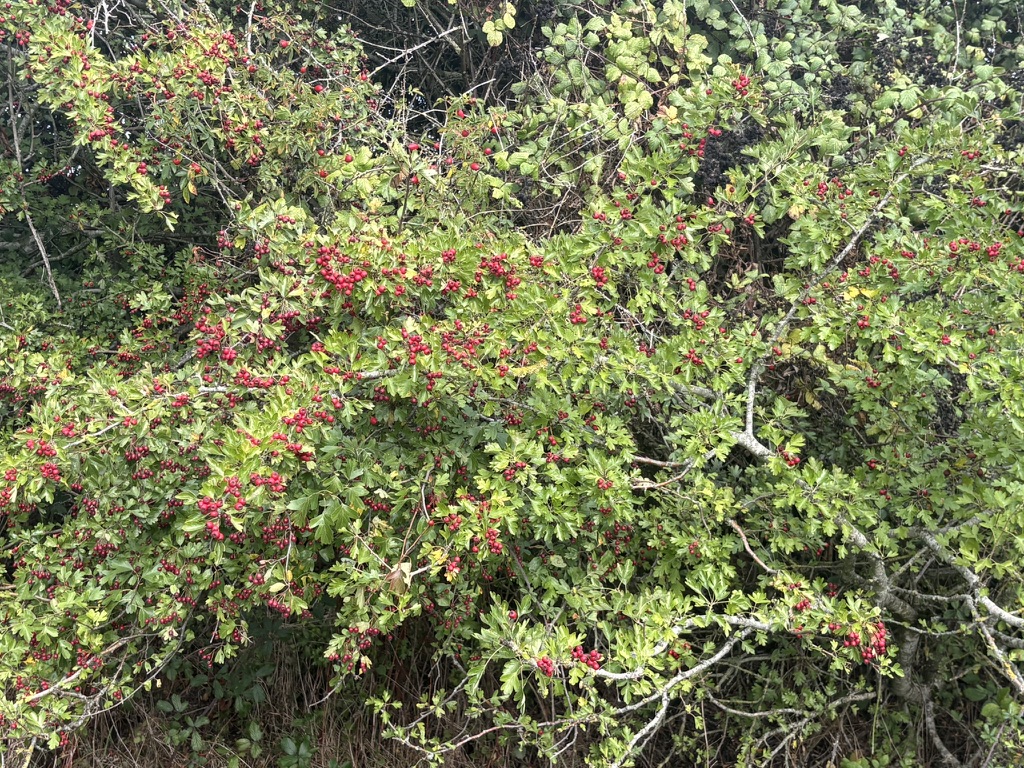
In the hedgerow we stopped to pay herby respects to willow, giver of salicylic acid; blackthorn, protector and support through hardship; hawthorn, bringer of longevity and heart health and holly, a boundary marker and support in raising awareness.
Mis-seasoned
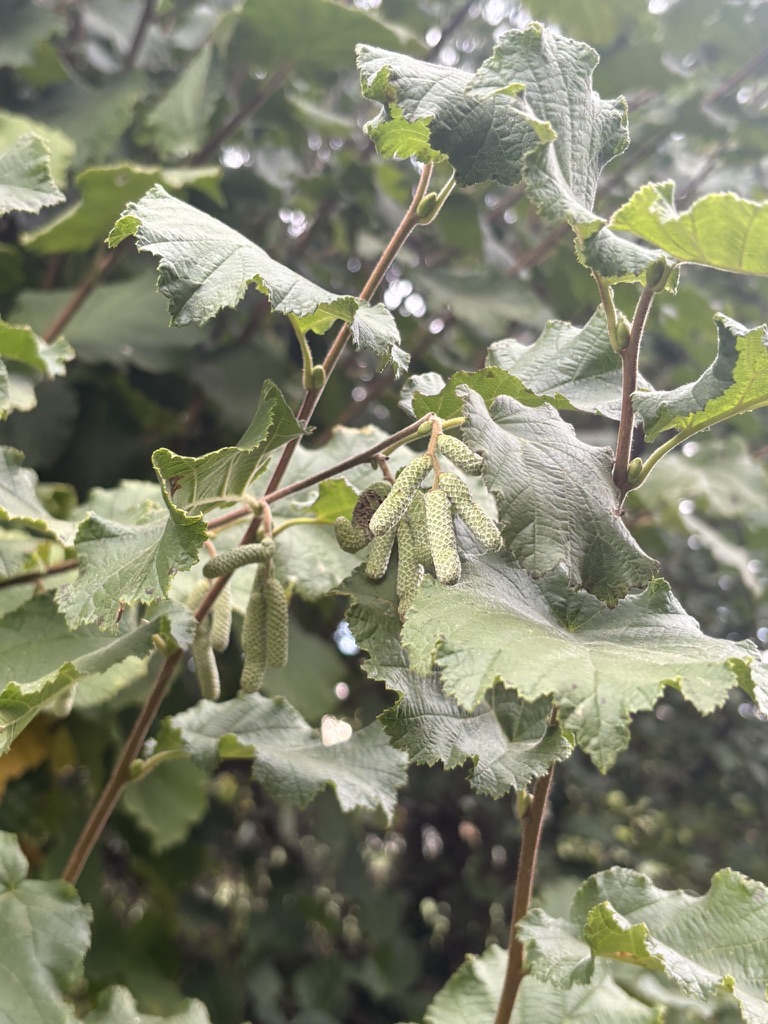
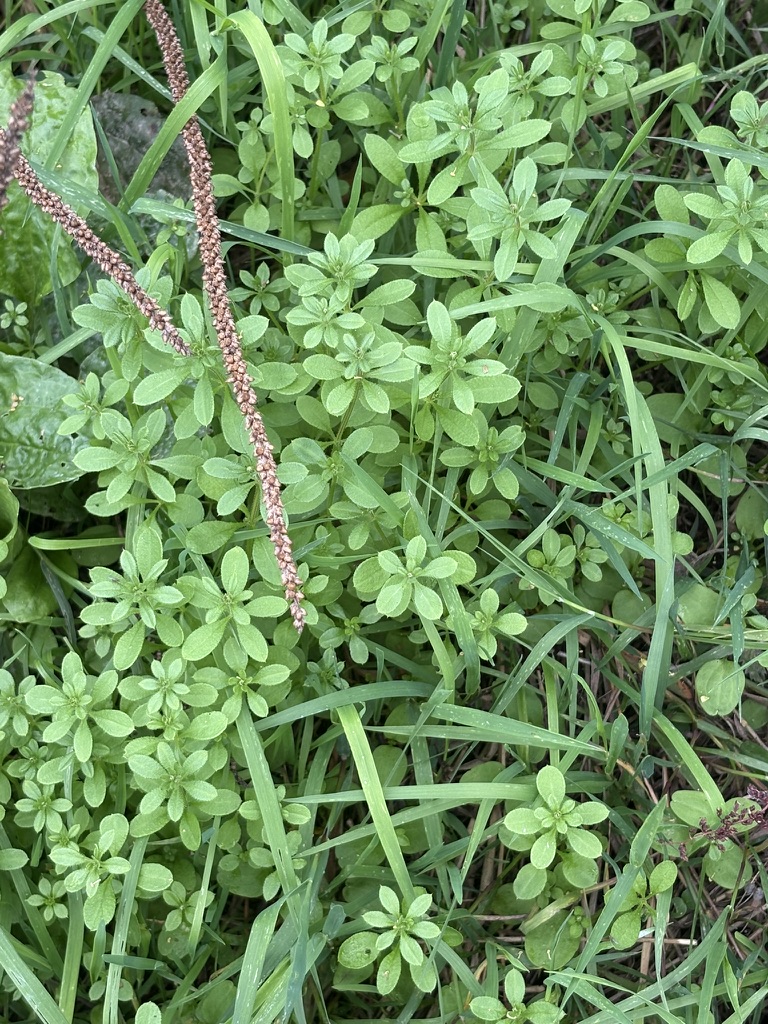
Along the narrow lane our Autumn walk provided hints of Spring. Hazels have begun to form tiny grey catkins which will fill with pollen at the first hint of Spring brightness, swelling to form the dangling lambs tails that are familiar from Imbolc to Easter. A more alarming sign of Spring was the small shoots, particularly of cleavers, which we’d expect from February onwards. Our strange hot weather this summer seems to have stressed plants into dormancy. Reemerging now the temperature has cooled they’re behaving as if it’s Spring. Let’s hope they still have energy when real Spring finally comes.
Honest and clear
One of the treats tucked away along this lane was a sizeable patch of honesty. We can all do with a bit of honesty in our lives.
She was given her common name because of the transparent seed pods that enable her small black seeds to be seen, nothing hidden. In the Victorian art of Floriography (the Language of Flowers) honesty was included in bouquets to represent openness and clarity. The gift of clarity is offered by the crone, the later-stage feminine form often associated with this closing part of the year. Her haggard persona may not offer comfort, but instead gives us the even greater gift of truth.
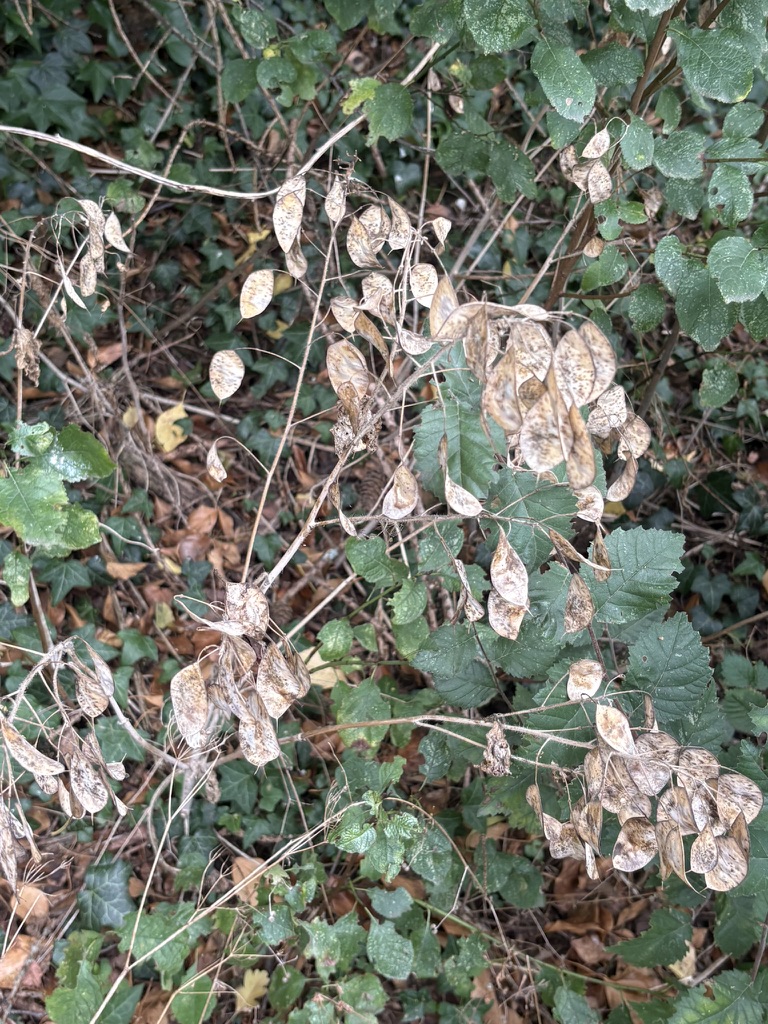
In folkloric tradition, honesty’s seedheads, like mini spectacles, were thought to help foresee things. Witches were apt to take the precaution of spying through an honesty seed before beginning their night flights so they could be aware of anything they might encounter. The plant’s Latin name is Lunaria, again referencing the seedheads, this time seeing them as glowing full moons.
Night vision
It’s plants like Lunaria and the silver birch from the start of our walk that would help nighttime travellers in the days before streetlights and torches. Other plants able to catch the moonlight on a windy night include those with paler undersides to their leaves including silvery Artemesias (especially mugwort and wormwood) and whitebeam. With dark nights ahead it’s worth getting to know these ancient waymarkers and natural illuminators.