The last weekend in September saw the Herb Society Annual Gathering. This year the event was held in Birmingham at the Midlands Arts Centre. Whenever the Society holds an in person event they vary the location to provide opportunity for all members to attend at some point, wherever they are in the UK.
While most months have opportunities to gather online, in-person events tend to take place just once a year. However, 2027 is a special year for The Herb Society. As their centenary year, two face-to-face events are planned, one at the Royal Botanic Gardens in Edinburgh in May, the other at the Chelsea Physic Garden, London in September.
Sharing and inspiring
For the key note speaker the event provides an opportunity to share enthusiasm and knowledge with a ‘herb-friendly’ audience. This year’s talk was on ‘Topical Herbalism’, the application of herbs to our skin. While use of herbs on skin is long held tradition among herbalists, either to treat skin disorders or simply as a gentler way of introducing herbs instead of taking them internally, the speaker, Laura Pardoe, was highlighting the increased use of herbs not just by herbalists but by skincare brands.
Worlds apart
Her talk began as a comparison between two worlds. The sharing and healing-focused world of herbalism versus the much more commercial and marketing-focused world of skincare. In herbalism, products can be created on a one-to-one basis, the herb selected and its specific qualities matched to the needs of the individual. In skincare the requirements to formulate, test, package and market generate costs that make it prohibitive to work one-to-one. Instead the approach is one-to-many which necessitates branding and a very simplified presentation of any plants incorporated in the product.
A meeting point
Between these worlds, Topical Herbalism was presented as a meeting point. Products are created in a small batch way, allowing the herb to shine. However, even in this more individualised way of making, the skincare regulations prevent labelling that references a product’s therapeutic benefits. Hence skincare can products appear less substantial and beneficial than they actually are.
Problem solving
Laura illustrated the differences in approach by looking at the way each world deals with problems. The herbalist is often presented with a problem and seeks to understand the client in order to apply their herbal knowledge to respond and alleviate the problem. In topical herbalism, daily, routine application of products helps get to know skin and thereby identify and manage issues before they become a problem. In the branded skincare world, it is often necessary to highlight problems in order to generate need for the solution they are selling. As a result, we often find ourselves looking for problems because the marketing has drawn our attention to the possibility of them. Arguably, therefore, mass skincare creates problems.
Plant power
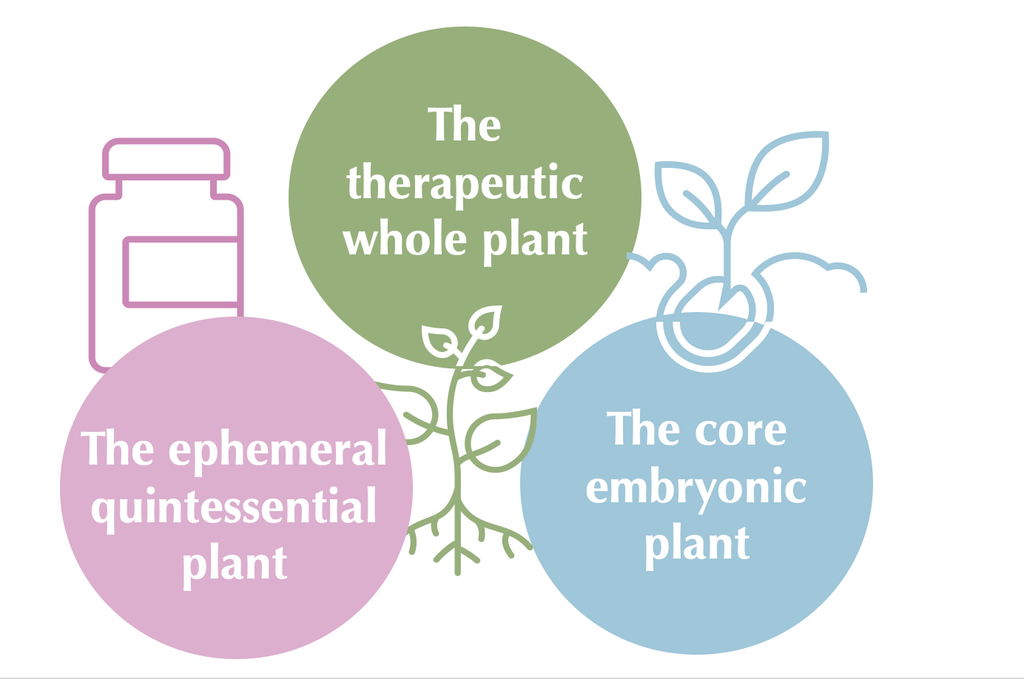
Laura presented three ways in which plant power can be incorporated into skincare products:
The therapeutic whole plant – complete with all its beneficial compounds, nutrients, vitamins and minerals. We might access these through infusing in water, oil, vinegar, glycerine or honey.
The core embryonic plant – the vital energy contained in the oils that are created through pressing seeds.
The ephemeral quintessential plant – the very essence of the plant, distilled into small bottles as essential oils.
In discussing these she provided many examples of how skincare brands would want us to associate their products with the whole plant and all its benefits. The plant seed oils were presented as the magic ingredient powering the growth of the natural skincare market, as they really work with our skin. Meanwhile, essential oils were discussed as not actually essential, and come to that, not actually oils.
Everybody’s talking about it
With so much focus on the plants in skincare, we now find the full gambit of brands, influencers and social media all talking up the herbs, some with more knowledge than others.
This heightens the need for herbalists to share their knowledge, and convey their understanding in easily remembered ways. The plants want us to tell their stories.
Skincare brands are encroaching on the herbalist’s world; but there’s also opportunity for herbalists to create great products that can better anything bought off the shelf.
Blend it Yourself Skincare
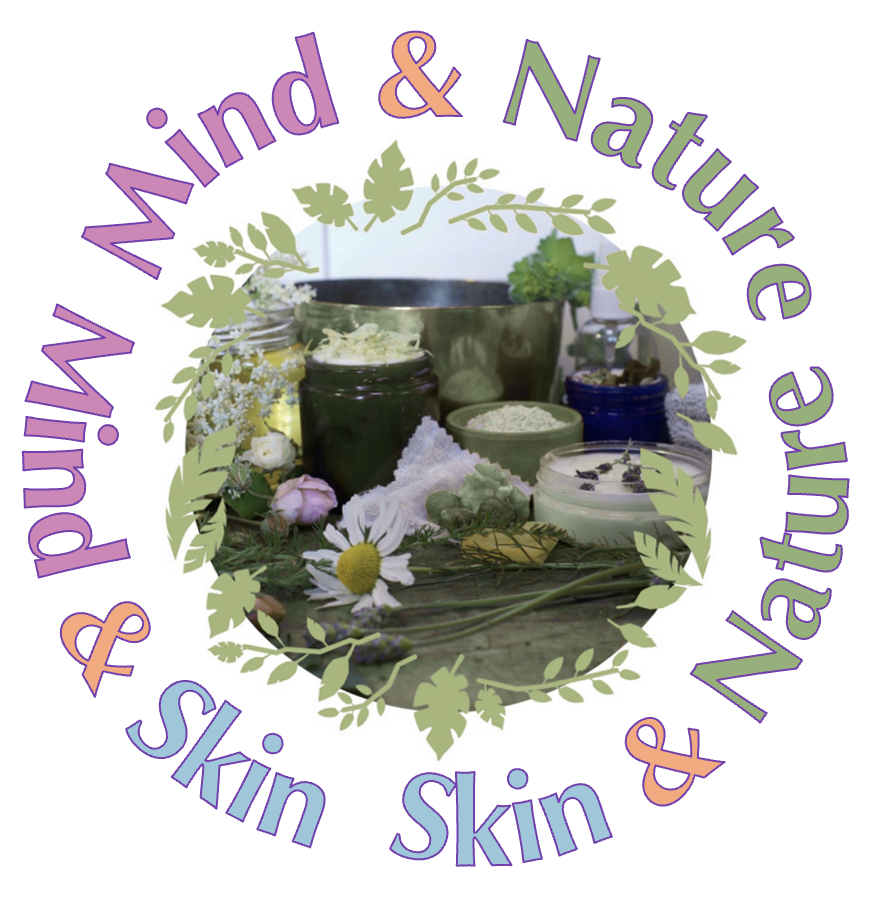
Through discussing three interlinking axes, Laura conveyed how Blend-it-Yourself skincare has benefits way beyond the product in the bottle.
Mind & Nature
Going out into nature to gather your own skincare ingredients connects you with the calming sense of being surrounded by green each time you use the product. A touch of nature at the start of every day.
Skin & Nature
Using plants in our products brings all the benefits of antioxidants, vitamins, minerals, antibacterial compounds and the rest, all in a skin-friendly form that works like our own sebum.
Mind & Skin
The final connection she drew was between mind and skin, formed as twins together in the embryo, both present by five weeks. They share so many functions skin is sometimes considered a second brain. Knowing this further increases the need for individualised skincare and acknowledging skincare’s role in looking after mind and body.
Hands on
The talk was followed by an opportunity to try different skincare oils, balms and creams and feel the difference for yourself.
Laura’s kits of pre-measured ingredients for making your own natural skincare one pot at a time were available to buy, as was her current book Vital Skincare. Her new book, Gather and Glow, will be available in Spring 2027.
The next Herb Society event will be a morning of virtual presentations on Saturday October 24th. Herbalist Melinda McDougall will be talking about Herbal Medicine for Menopause and Herbalists Without Borders Bristol will present about Solidarity Medicine. Tickets are £10 for Herb Society Members or £15 for non members. The Herb Society will be sharing £500 of the proceeds with Herbalists Without Borders Bristol to contribute to their work. Click here for more details.
Leave a Reply