

History has many tales of herbs being deployed to stimulate connection between lovers. While the warmth of sharing a pot of carefully brewed herbal tea is charming enough, it’s fascinating to hear about some of the herbs that have been deployed for their stimulating properties.
We turn to Hilda Leyel as our guide for curious plants, native and exotic. She was an incredibly spirited woman, best known as founder of the Society of Herbalists (now the UK Herb Society) and also of the Culpeper shops, which extended to 17 branches across the UK, sadly now all closed.
Incredibly well-informed, her fascination with herbs drew on sources from across the globe to create exotic and enchanting recipes. In her ‘Elixirs of Life’ (published in 1948) she has chapters on nutritious herbs, bitter herbs and tonic herbs, each of which provide mini portraits of commonplace and unusual plants.
Her introductory words on tonics tell us about those for old age before she continues:
“But herbs deal not only with the ravages of time, but with the emotions and passions which can destroy the body in youth. St Ignatius Bean assuages the agony of grief, and eroticism is subdued with infusions of wild thyme.
Every appetite, mood, fear, aberration and abnormality has its own appropriate restraining herb … this knowledge of the specific use of herbs was almost general in England throughout the sixteenth and seventeenth centuries.
Aphrodisiac herbs influence the ductless glands through their hormones and nature’s hormones are far more lasting in effect that the glands of animals.”
Orchids
“Lady’s slipper is extolled for its stimulating properties. It is one of the orchids, many of which are regarded as tonic and aphrodisiac.”
I can’t help wondering whether the rarity of this orchid perhaps adds to its allure. It is considered almost extinct in the UK with endangered and critically endangered status, due to having been over-collected in the 19th and early 20th Centuries. Had those eager to gather it heard of its reputation?
Natural England, Royal Botanic Gardens Kew, The National Trust and the Botanical Society of Britain and Ireland (BSBI) are involved in a project led by Yorkshire Wildlife Trust to bring this orchid back to prosperity.
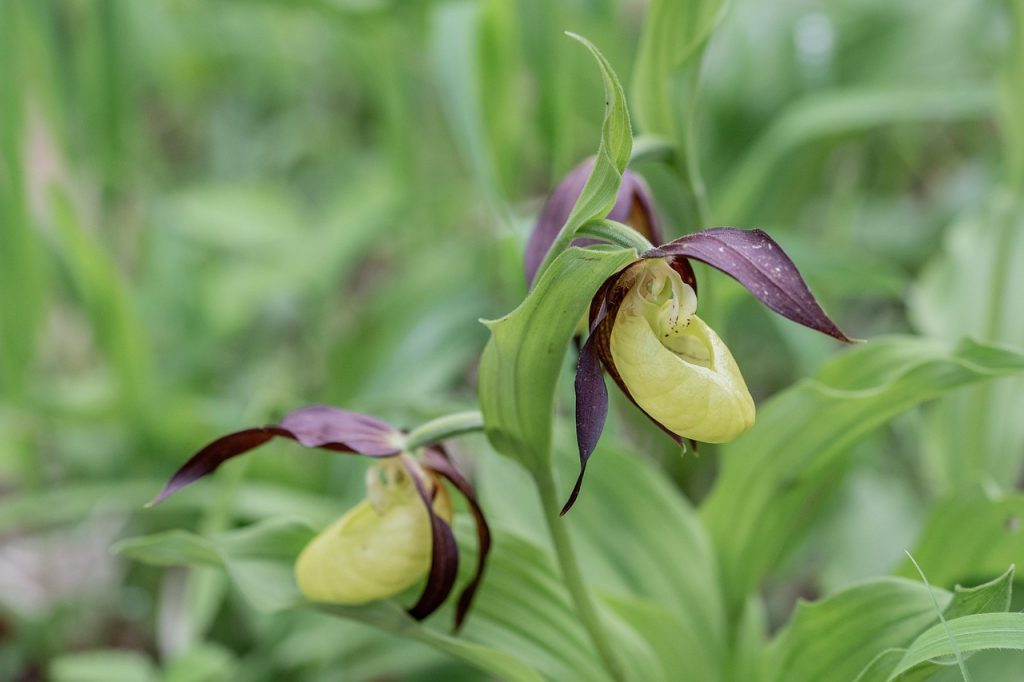
“Salep is still prepared from the tubers of some varieties of orchids; but in the days of its vogue it was served regularly in the coffee houses, and even at street corners. Orchids went by the name of Satyrions and were an ingredient of nearly every poculum amatorium in the seventeenth and eighteenth centuries. The Epithelial orchids have a similar reputation, and, partly perhaps because they are parasitical like mistletoe, they have been endowed with almost magical virtues – the Vanilla plant belongs to this order.”
Orchids should not be dug up for consumption at any time in the UK, and would certainly be very difficult to find for Valentine’s Day as they are well hidden below ground until their normal flowering in late spring or early summer. However, it is interesting to know their traditional use in salep.
Salep
Orchid tubers contain a nutritious, starchy polysaccharide called glucomannan. This makes a flour, called salep, that is used in desserts and beverages. However it is highly costly to the plant population, it takes between one and four thousand tubers to make 1kg of flour.
It makes a traditional winter drink in the Levant, and in the Ottoman Empire it was given to young women as a ‘fattener’ to make them plumper before marriage. When the drink became popular in English coffee houses, the British orchid roots used (when those of higher quality from Turkey were hard to obtain) were known as ‘dogstones’ and the drink became referred to as ‘saloop’. Exporting wild orchids from Turkey was made illegal as their population declined dangerously. The drink could also be made with roots and leaves of North American sassafras, which too has a stimulating quality.
The tradition of using orchid bulbs for drinks goes back to Ancient Roman and Greek times. Among the names given to the drinks then are ‘salyrion’ and ‘priapiscus’. Considering it a powerful aphrodisiac, Paracelsus wrote:
“behold the Satyrion root, is it not formed like the male privy parts? No one can deny this. Accordingly, magic discovered it and revealed that it can restore a man’s virility and passion,”
Paracelsus
To make a pleasant drink the salap powder was added to water until it thickens, then sweetened and flavoured with orange flower or rose water and milk added, making a cheaper alternative to tea or coffee. The drink declined in popularity when it became associated with treating venereal diseases making consuming it in public shameful.
Today the drink sahlab is sold as a street food in the Middle East. Made with milk, in winter it is served warm with a creamy consistency, topped with cinnamon; in summer it is served chilled and garnished with nuts, then known as ‘muhallebi’, or made into booza ice cream.
Eryngo
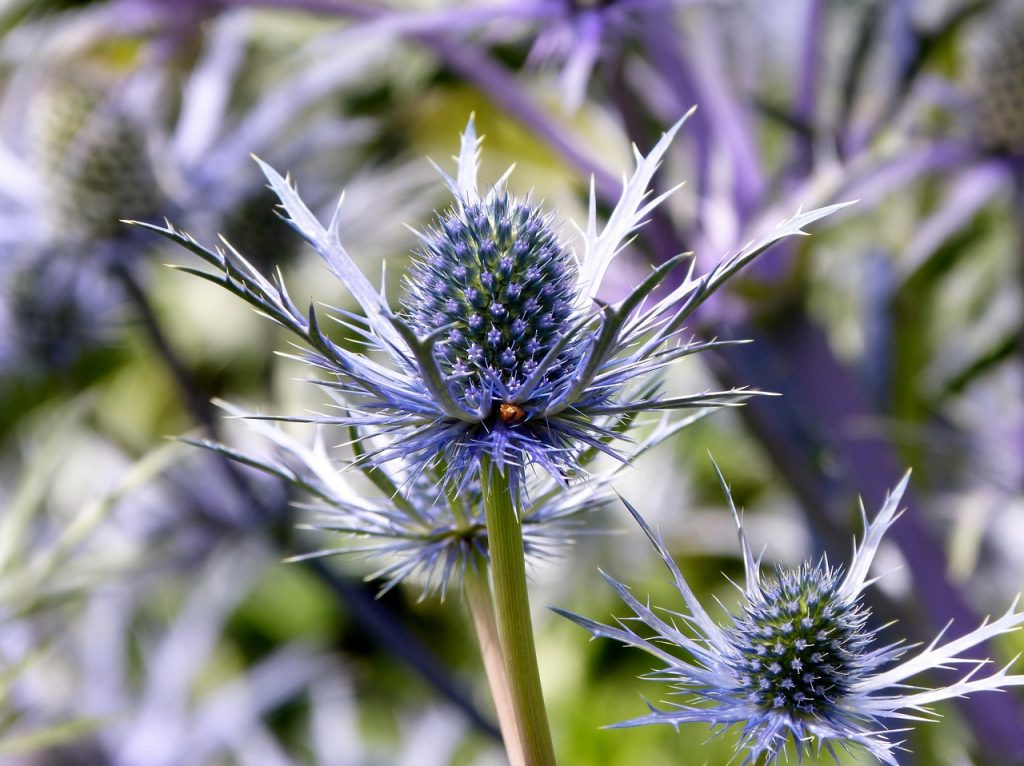
“Eryngo roots were also popular for the same reason, and sweetmeats were made from them and sold in the streets in the days of Charles II. There are references to them in the poems of some of the Restoration poets. So great was the demand for eryngo sweets at one time that a whole factory was set up for them at Colchester where their popular name was ‘kissing comfits’.”
While not looking too appetising with their spiky, thistle-like appearance, the leaves, shoots and large taproots of two species of Eryngo, Sea Holly (E.maritimum) and Field Eryngo (E.campestre) are edible. When roasted the roots are similar to parsnip or chestnut.
Kissing Comfits
Other original kissing comfit ingredients included seeds such as coriander, caraway, celery or aniseed, intended to sweeten the breath. As referred to in Shakespeare’s Merry Wives of Windsor, these were perfumed and romantic.
“Let the sky rain potatoes … hail kissing-comfits, and snow erynogoes”
Falstaff in The Merry Wives of Windsor
As their popularity grew, more scented ingredients such as musk, ambergris and orris root were added. Spices used could include cinnamon, cloves, peppermint and ginger.
Comfit making would start with preparing a small core, from small pieces of nut (like an almond or filbert or the kernel of a cherry or apricot), seed, root (like angelica or balls of orris root powder bound with gum arabic) or dried berry (cherry, blueberry, barberry, raspberry, lemon or orange). This was dipped in spice-impregnated syrup multiple times over several days, allowing it to dry between each dipping so a hard shell would form. Finally this would be dusted with starch and set with a final coating of sugar syrup or gum dragon (a natural gum obtained from the dried sap of several species of Middle Eastern legumes of the genus Astragalus).
By Regency times they had perfected the art of colouring the final layer of starch with dyes including cochineal for red or pink, saffron for yellow, indigo for blue and spinach juice for green.
The term ‘confit’ came from latin confectus, meaning to prepare or make ready, and has evolved to give us the modern term ‘confectionary’. While the layers of syrup meant they were largely sugar, they were typically sold by the apothecary, not the confectioner, because they were considered to be medical preparations to sweeten the breath or settle the stomach.
Exotic options
Hilda lists some more far flung aphrodisiacs:
“Tropical plants like cotton root, damiana, hygrophila, matico and muirapuama are all prescribed for their stimulating properties, and so is the lady’s tresses, a sweetly scented orchidaceous plant found on parts of the Sussex Downs, and other places in England.”
“Coriander is mentioned in the Arabian Nights as an ingredient in love potions. The Greeks venerated the carrot as a love philtre and called it philtron; and the Old Testament recommended Mandragora as a cure for sterility.”
The root of sweet cicely, also known as sweet chervil, gets mentioned as an aphrodisiac used by ancient herbalists who recommended it to increase strength.
Romance of the Rose
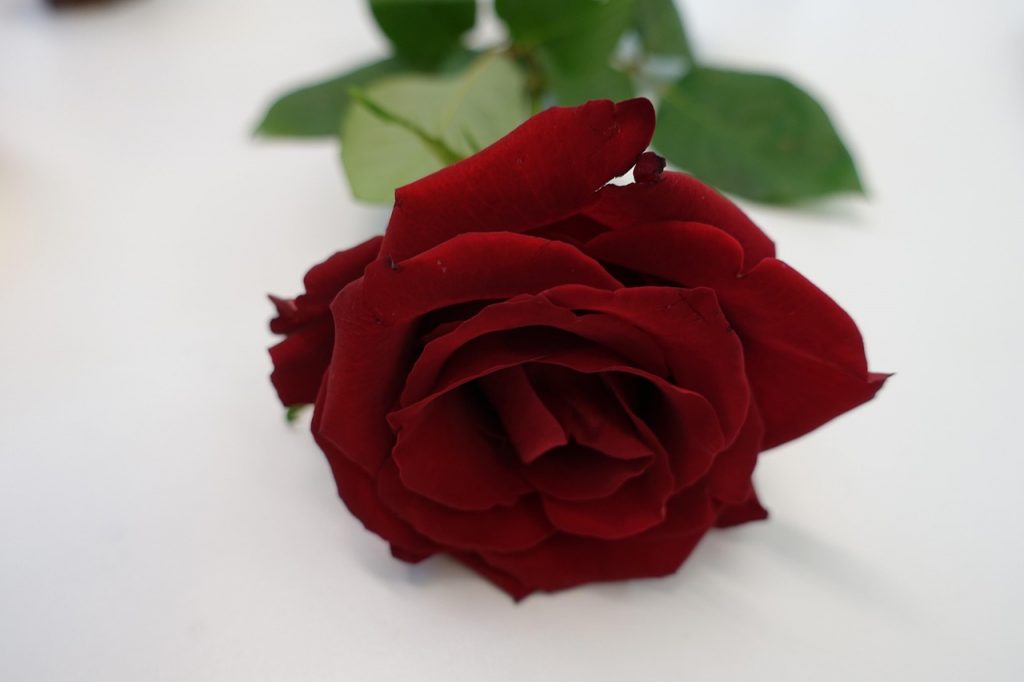
As for our standard go-to Valentine’s flower, the rose. Hilda recognises the beauty and utility of this plant, but more for scent and mood than any specific aphrodisiac qualities.
‘Roses are so wholesome that they have always been used in food and drink. The Romans put roses in their wine and wreathed themselves with roses while they drank it. Cleopatra carpeted her rooms to a depth of several feet with roses, and rose petals were used for strewing generally, because of their exquisite scent and their health-giving properties.’
It is curious that so many of these blooms prized by lovers are not in season when Valentine’s Day comes around. Good luck with your wooing.
Leave a Reply