Eastington Church and Community Orchard
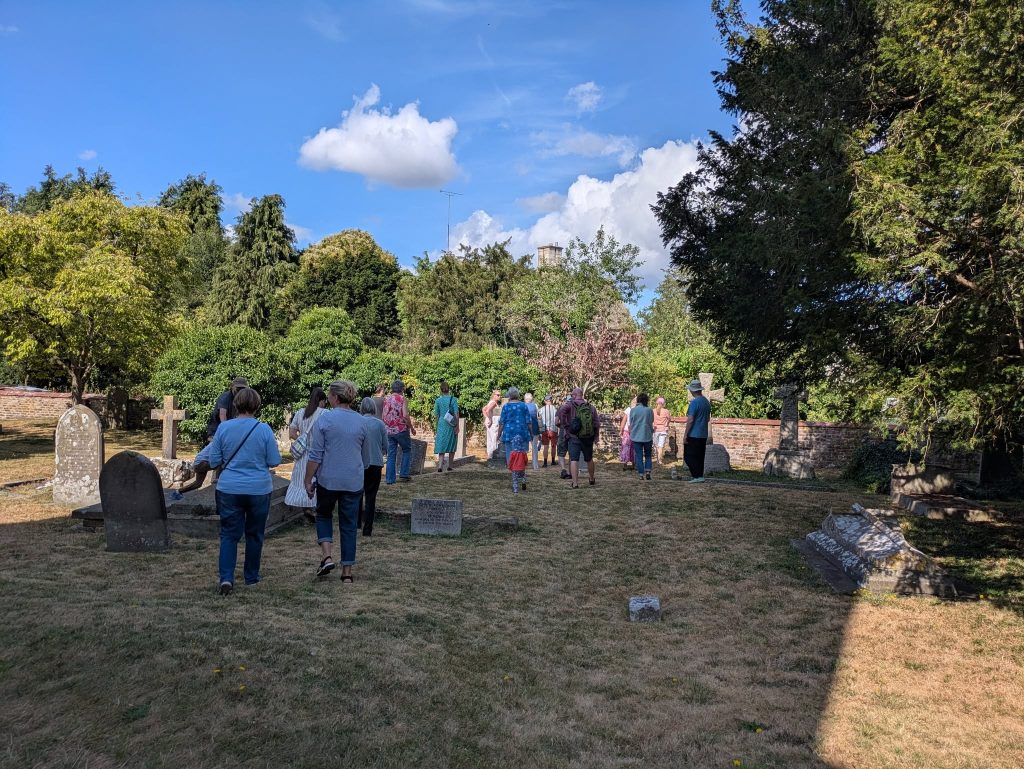
In true holiday fashion, our August herb walk was an away day and a rather special event. Reaching beyond our normal Cam and Dursley stomping ground, we headed a short way North to Eastington. Here we were welcomed by the local organisers and joined by many from the local community to explore the treasures underfoot, overhead and beyond the wall.
We all know what a parching summer it’s been, so it was no surprise to see the vibrant wild areas of a month or so ago now withered and brown. No point seeking out the treasured orchids we knew to be hidden among them. We always reckoned winter herb walks could be sparse, this summer has shown other seasons can be challenging too. All the more reason to seek and take heed. The survivors now are those that may be able to help us survive in the future, always good to know your allies.
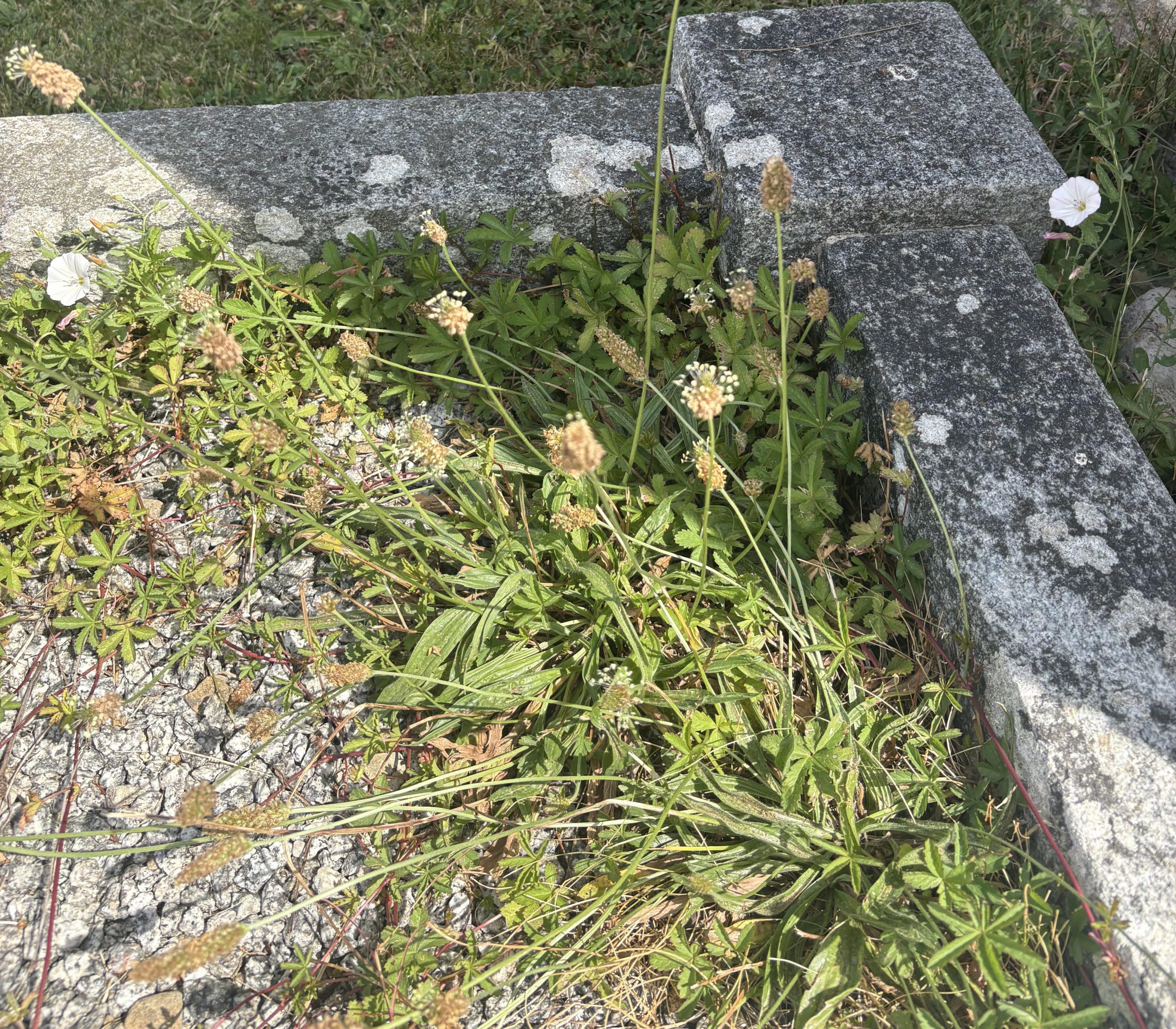
One of the best allies to start with was plantain. The ever-present, much over-looked (but not in our herb walks!). Plantain is an ancient plant, little changed in millennia. Her ribbed leaves perform so well directing water straight to her root she has had little reason to evolve further. Plantain is found in two main forms, narrow-leaved plantain (Plantago lanceolata) has long thin leaves, reaching upwards. Her energy is inspiring, helping ground us when our head is in the clouds. Broad-leafed plantain (Plantago major) has rounder leaves that spread out across the ground, important cover and protection across the surface of the earth. She will also protect our surface too, a great skin healer. At this time of the year we can start gathering her seeds, as soon as they have blackened and easily come loose from the stem. These provide protein and can be added to baking or porridge or swallowed with water if a gentle laxative is needed.
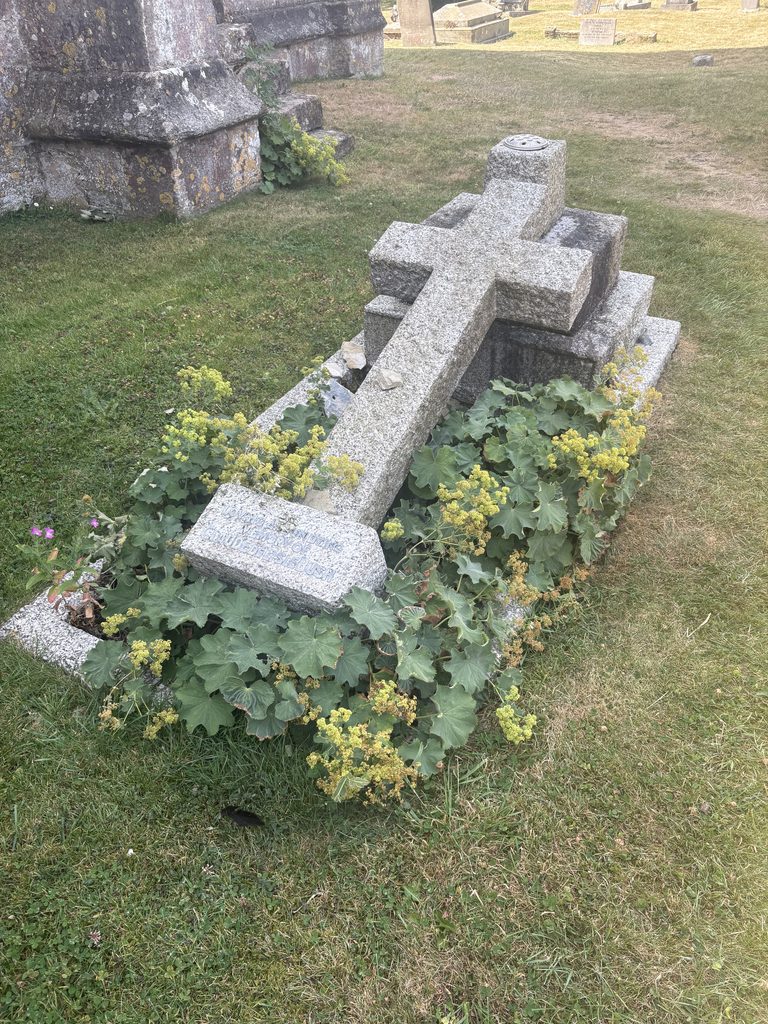
Along with plantain, Alchemilla or Lady’s Mantle was surviving the drought. Another plant with good adaptation to water. Lady’s Mantle has round, frilly-edged leaves and looks particularly pretty after rain when drops of water form miniature spheres decorating her leaves like glistening silver pearls. If you’ve ever encountered her in the early morning, you may have been surprised to see these droplets edging her leaves, even when there’s been no rain. These are excretions from the plant herself, a means of cooling her leaves. The process, known as guttation, is more commonly found in tropical plants (which for us means house plants). The secretions were highly prized by alchemists, collected a drop at a time each morning for use in their formulas. This association is the reason for her latin name, Alchemilla, little magical one.
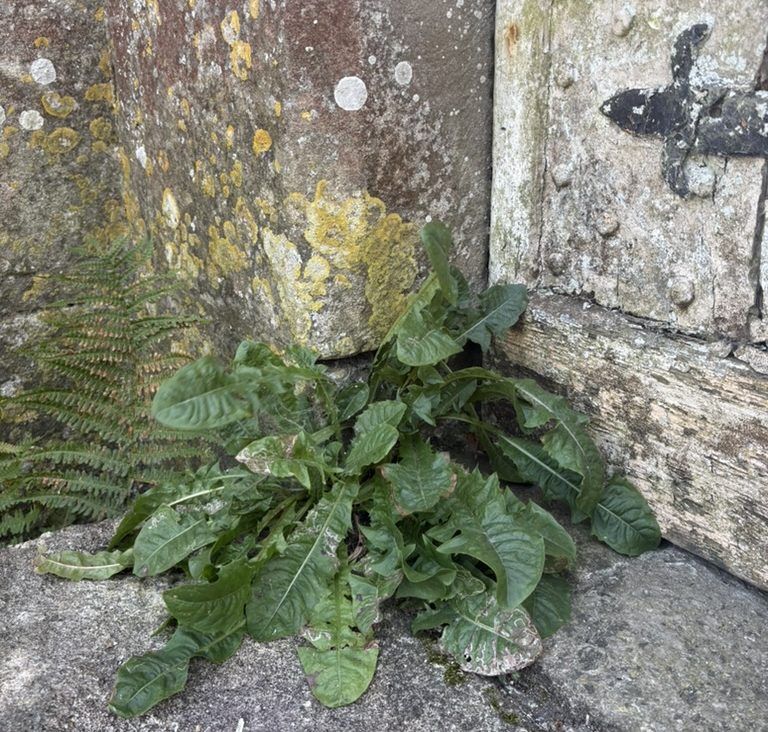
There were still some good sized dandelions too. In the early part of the year we value her fresh leaves as a vitamin-packed bitter addition to salads, and make a healthy liver tonic for internal use or a good astringent cleanser for external use; this is followed by sherbert-like flowers, great for adding to biscuits or fruit salads and for wine making, as well as infusing in oils packed with anti-aging antioxidants and soothing anti-inflammatories; their post-flowering leaves are more bitter so best to cook them for eating, or use for non-edible purposes like skincare. Dandelion’s next gift is her roots. These are harvested, cleaned, dried and then roasted and ground to make coffee.
With slightly cheeky curiosity, we wandered to the edge of the churchyard and peeped over the wall to admire the variety of herbs in the neighbouring garden that Duncan had pointed out to me earlier. This space was historically very associated with the churchyard (maybe even with some boundary changes between the two over time) as a large manor house once occupied the site, in characteristic medieval formation adjacent to the church. Among the array were poppies, cardoon and an overarching fig.
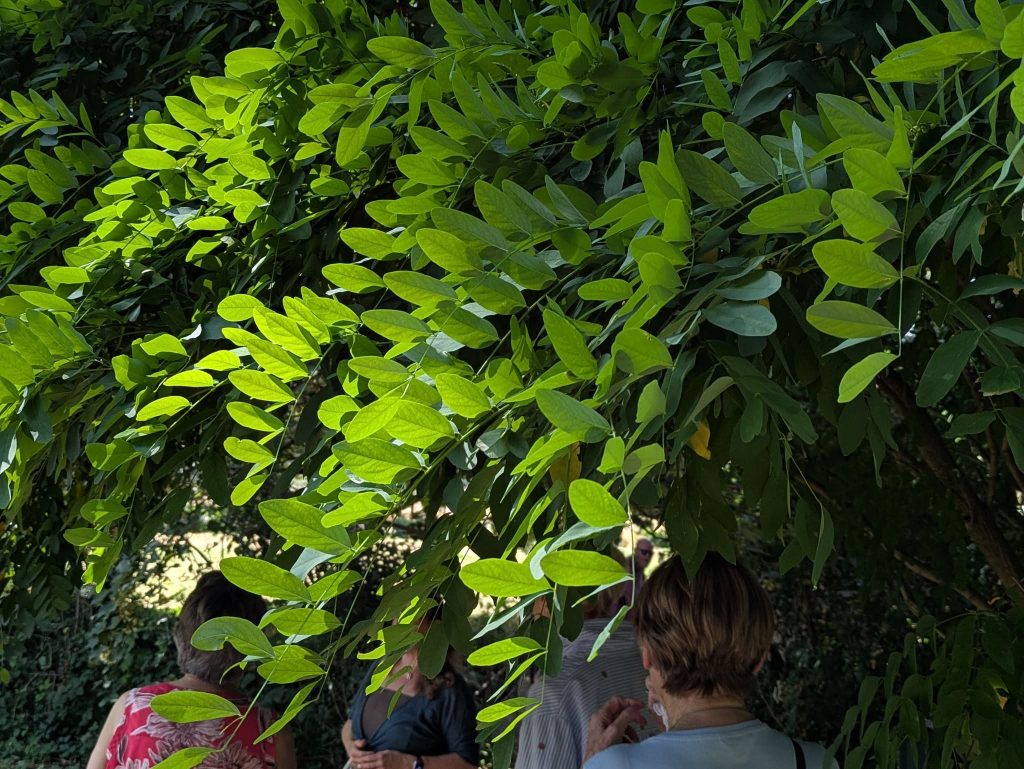
Attention back on the churchyard we walked beneath ancient yews under-strewn with wild violets to greet a pair of very different trees either side of the gateway to the bridge over the river. To our right a black locust tree, member of the tree family, a relative therefore of laburnum and wisteria. Tricia could assure us it does indeed have hanging tassels of flowers in the early part of the year. These trees were brought to England by the plant hunters of previous centuries. Beyond their beauty, they were admired for the hardness of their wood, able to endure for 100 years or more without rotting. It is said that American Independence was won in part by this tree. They gave their wood for the nails that held the American ships together, proving much stronger than the oak nails used by the British, who consequentially lost more ships.
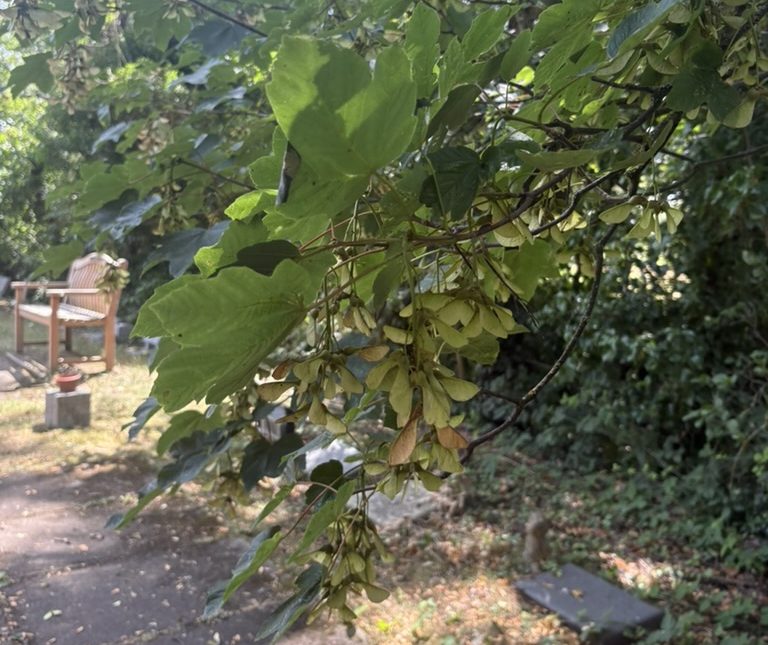
The field maple is very much more traditional English tree, being a good indicator for an ancient hedgerow. It’s recognised for having a mass of lower branches which were much associated with beneficial ‘magic’. An ill child could be passed through these branches to cure them or to break a spell on them. The branches were also hung up to ward off bats and evil spirits. We now value them as good nesting sites for birds, early nectar for bees, food for moth caterpillars and seed for finches.
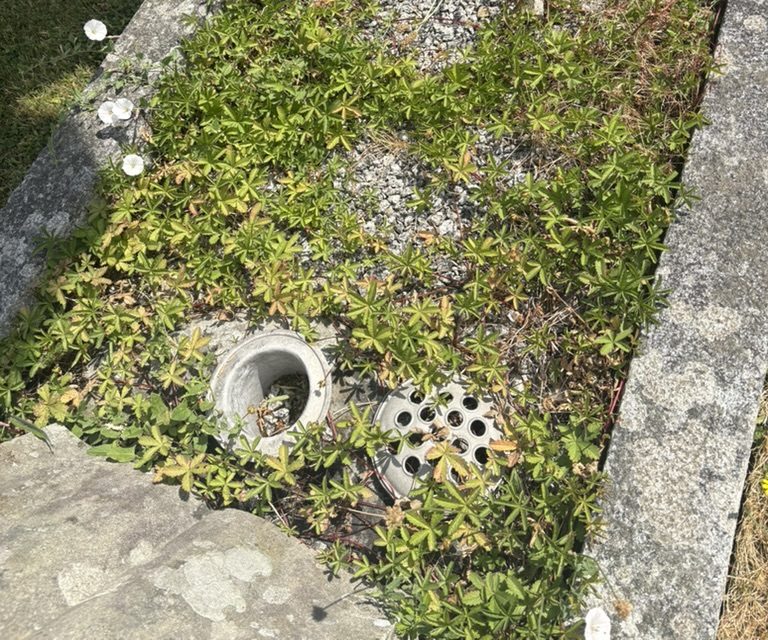
Looking back down at our feet we examined the five-pointed leaves and five-petaled flowers of cinquefoil, a plant with long folk use particularly against fevers and helpful to manage the detoxing process of withdrawal, while also good to make an antiseptic mouthwash, astringent anti-wrinkle cream or soothing infusion for irritated skin.
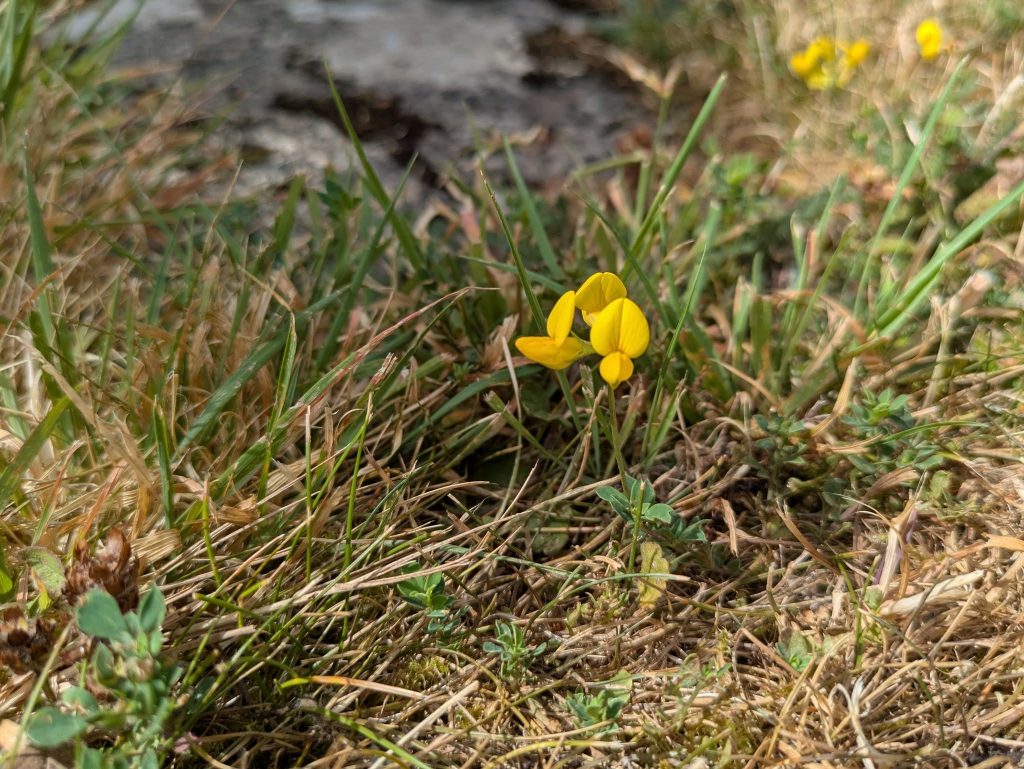
Nearby were the bright yellow flowers of birds foot trefoil, sometimes known as ‘granny’s toe nails’ thanks to the horny black shape of their seed heads. These are flowers of protection and would be woven into midsummer wreaths to ward of mischief, or picked by school-going children to protect them from being punished by teachers. They have a calming nature when used in infusions for topical application and can relieve anxiety when taken internally, although this is not recommended as the plant contains potentially harmful cyanogenic glycosides.
Our circuit of the churchyard had offered far more than the dry prospects at the beginning had led us to believe, but there was still the treat of skipping across the road to the Community orchard. Here’s a little Instagram post showing you a few images from the orchard in full apple-y fruit-fullness. While the apples and pears are a few weeks away from harvest still, plums were ready to drop and medlars looking gorgeously curious.
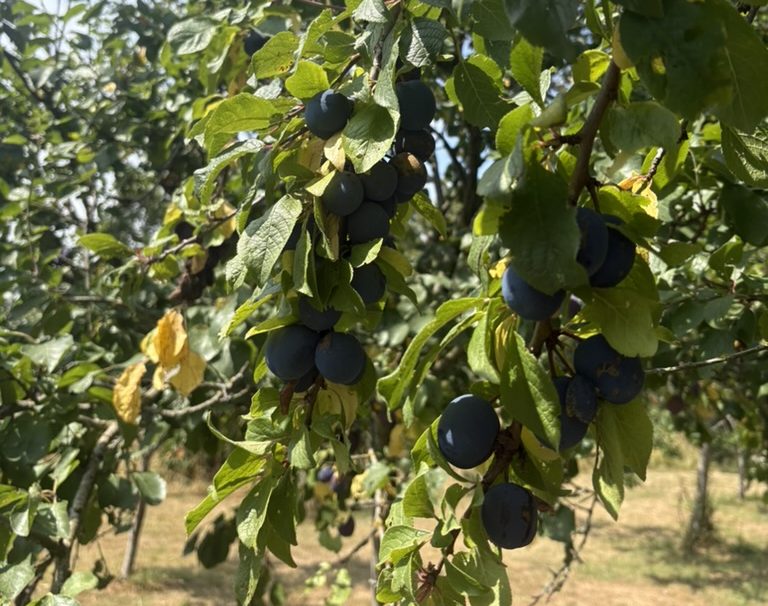
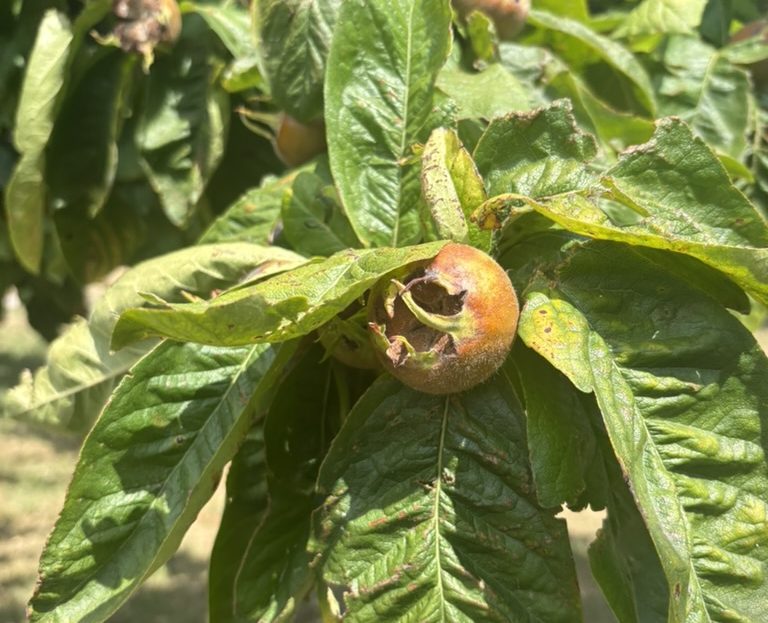
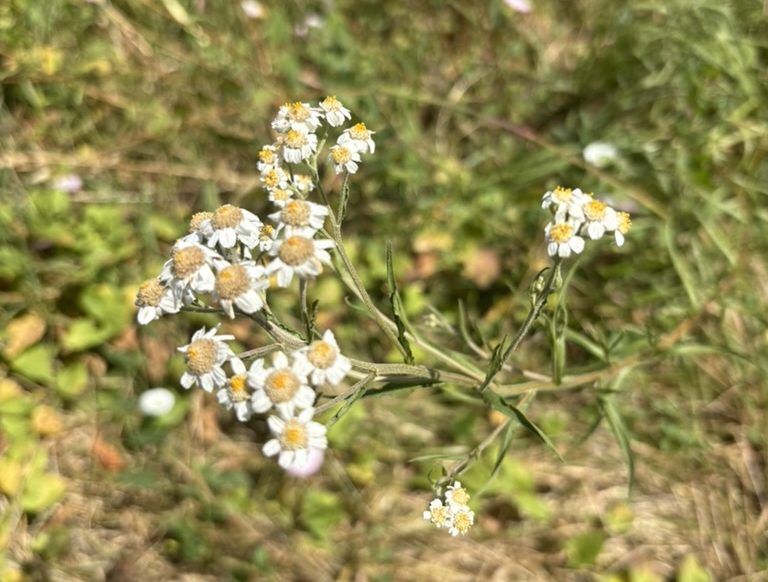
Before wandering around the fruit trees we did do a little side-step to the quite wild area as I wanted to share a couple of specials to finish off our herb walk. First was the Devil’s Bit Scabious, a beautiful blue flower but named after its root which is curiously fore-shortened, as if the devil has bitten it off. Other folk names for her include ‘the pincushion flower’ which better describes what we see. Along with her were a couple of shoots of English Mace. This highly fragrant herb is lovely to add to savoury cooking, only a little is needed, but it’s traditional use was to make ‘sweete water’, a simple infusion in a bowl brought to the table to clean fingers when eating without cutlery was more common.
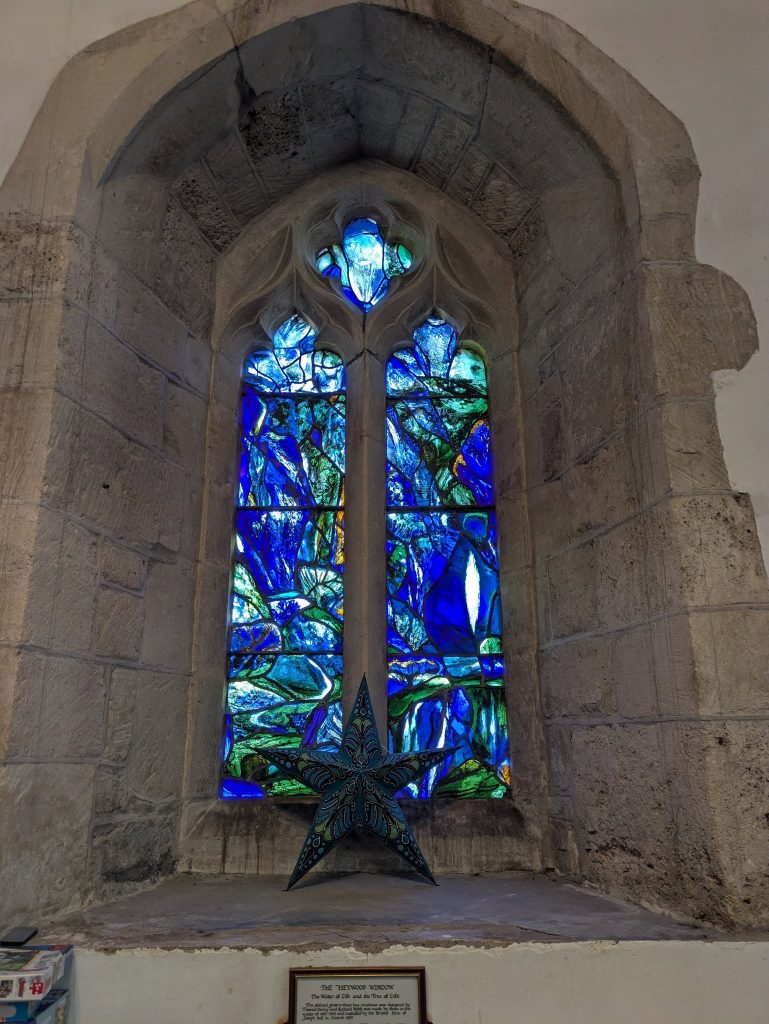
Following the walk, all were invited back to the church for more chat and an amazing array of super-tasty home-baked cakes. Cotswold Herbs certainly felt very welcomed at Eastington. Do call in at the church if you’re nearby, there’s a wealth of history there, some great plants and a stunning stained glass, with national repute as the Denny Windows (after the craftsmen), but locally remembered as the Heywood Windows (after the benefactor).