
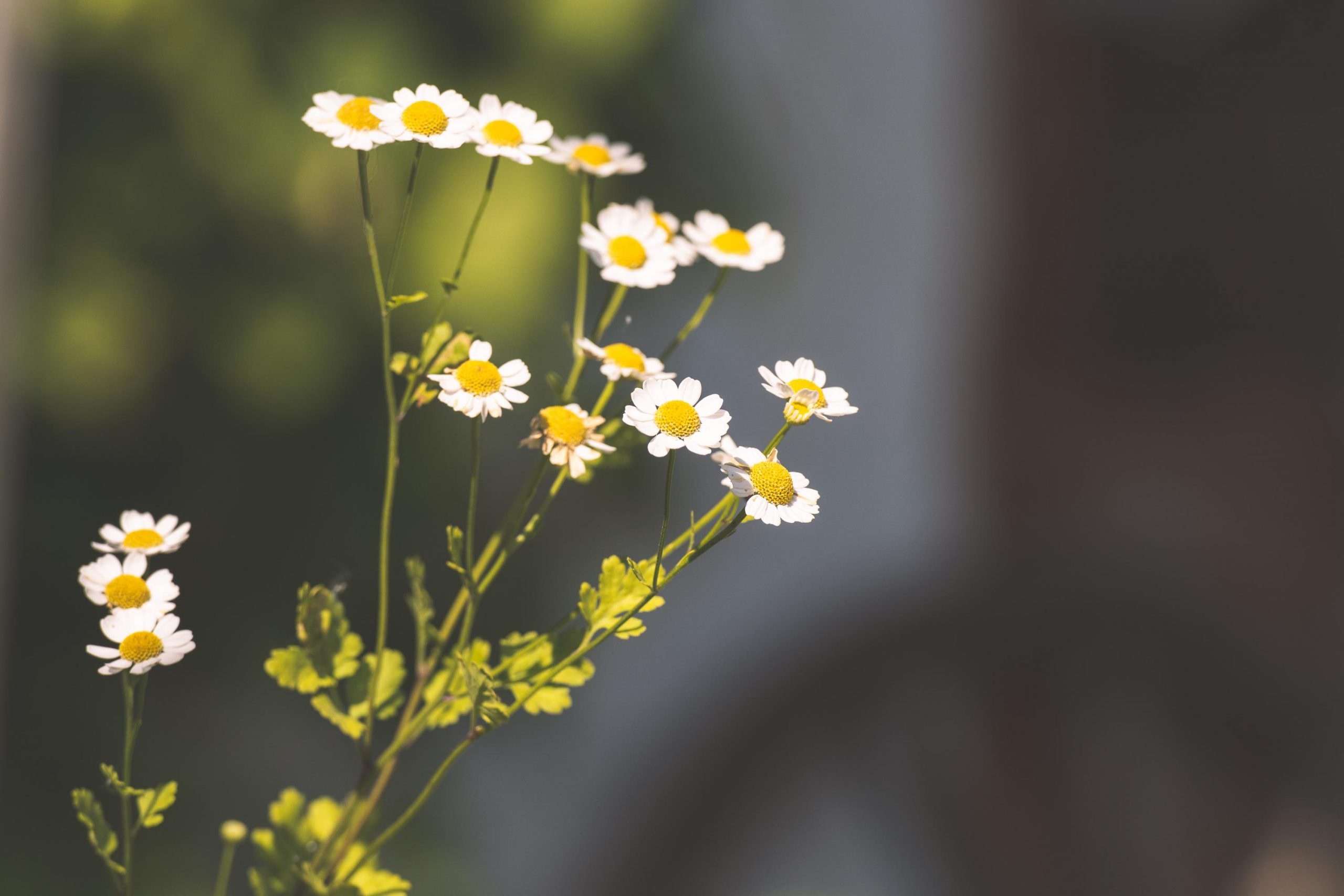
Feverfew
As a lifelong migraine sufferer, I have a special place in my heart for feverfew, which I’ve found to be helpful in managing the condition. But even if I’d never had a migraine in my life, I’d still be head over heels in love with this pretty little herb!
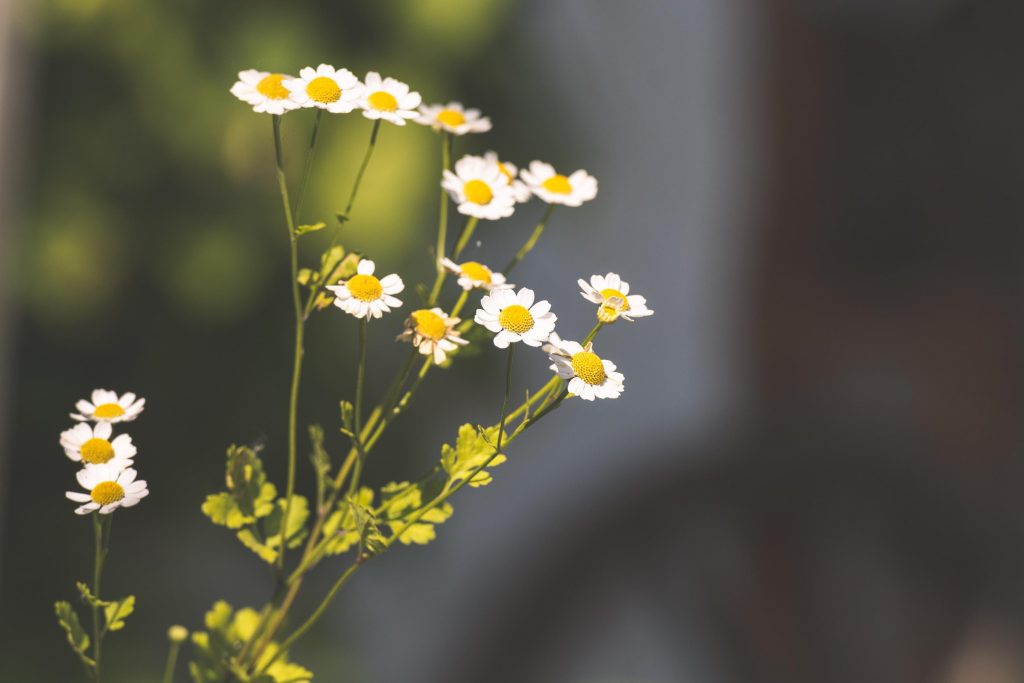
Feverfew, Tansy, Cow bitter, Golden Buttons, Hind-Heal, Immortality, Buttonweed – Tanacetum has almost as many names as it has varieties. The one that grows in my garden all summer is the fluffy double white type Tanacetum parthenium. It seeds itself very freely all around and is very welcome! But the type you’ll see used most often in floristry are the single white miniature-daisy type (the variety “single vegmo” is available commercially all year round); you’ll also sometimes see the bright yellow button-shape vulgare.
When to gather
Although it’ll be flowering in your garden all summer long, the best months to pick and bring in your feverfew flowers will be June and July, when they will be at their strongest and will last a week or more in a display. May will be a little early and the young stems will be more likely to droop, whereas in August and September you may find the flowers have gone over and are no longer looking their best, especially if the summer has been as hot as this year’s has been.
It’s always good to cut flowers early in the day and put them straight into water so they don’t dehydrate, but this is particularly key when you’re cutting feverfew flowers because they are absolute divas and will find any excuse to wilt. I know I said I love feverfew, and I do, I think she is ever so pretty, but she can be ever so fussy as well! The stems will start to droop quickly when out of water and once they’re gone, it’s nigh impossible to perk them up again – your only option is to cut the stems really short and sink them neck deep in clean water, and even that might not get them back to full strength. You can get away with using feverfew in buttonholes and wedding bouquets if it’s supported by other flowers in a way that will hide the drooping, but it’s always a risk.
Pamper her
Miss Feverfew is happiest with her feet nice and wet in a vase or bowl of water with flower food, and when in those conditions, she will perform splendidly. Cut off any lower leaves that might be under water because they will go slimy; keep the display in an area with good air circulation, and change the water every day, re-cutting them stems each time.
Show her off
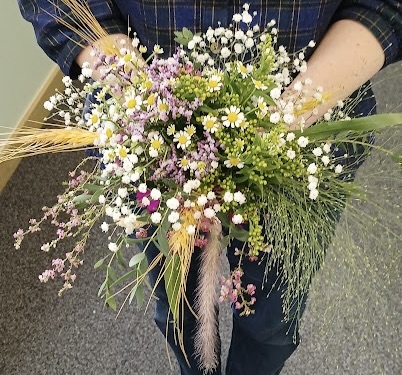
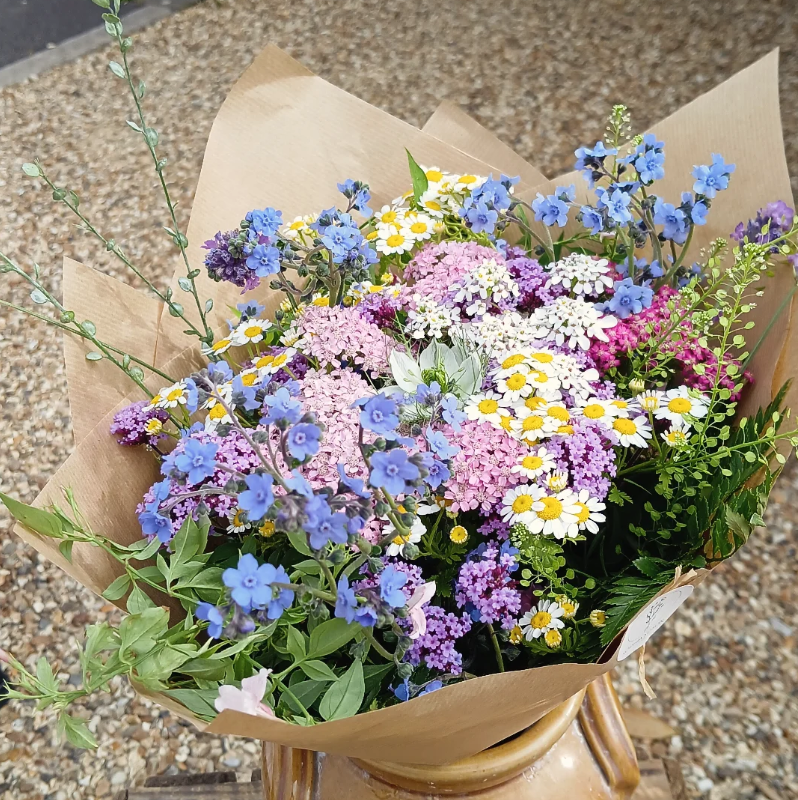
Feverfew looks stunning in an airy, meadowy arrangement with other dainty flowers such as scabious and nigella, and adds volume and texture when used between roses. It makes a great alternative to gypsophila for adding romance and frothiness to wedding arrangements, and it certainly smells a lot nicer with its citrussy scent – allegedly it also repels insects, which could be useful for an evening event during midge season!

Protect yourself
But DIY brides takes note: feverfew can irritate the skin, so use gloves when you pick it and arrange it, and be mindful about where you use it. Don’t put feverfew in your bouquet unless you’re certain you won’t get a rash, and I’d advise keeping it away from food and anywhere that a child might grab it during your ceremony and reception.
Because she’s worth it!
Is she sometimes unpredictable and a little irritating? Yes. Is she nonetheless one of my favourite flowers? Also yes! I hope feverfew will be your flower-arranging friend as she is mine, and nothing that I’ve said here has put you off from picking and using her. She really is gorgeous and grows so generously that even if she does misbehave in the vase, you can always cut more and enjoy her dainty beauty all day, every day!
Sophia Mason is a florist based in a little studio in Cam. She offers flowers for all occasions, with a focus on sustainability and supporting local growers. Find out more on the Sophia Mason Flowers website