
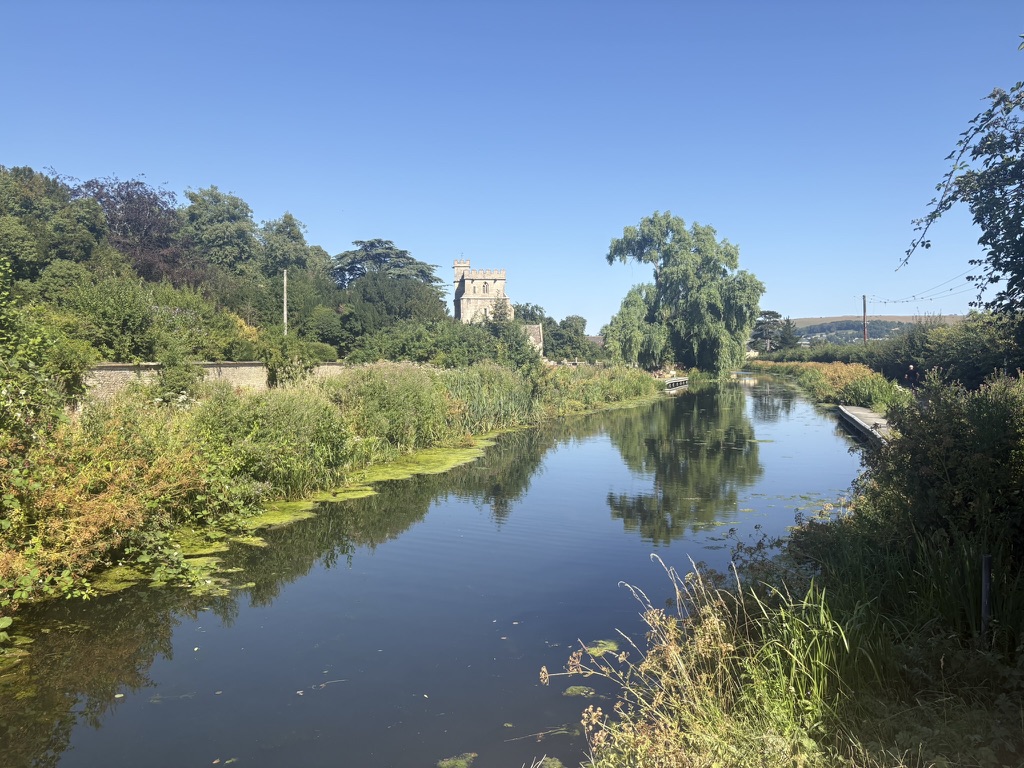
Stroud Valleys Project, working with Heritage Lottery funded Cotswold Canals Connected, are providing a series of events, workshops and happenings to encourage enjoyment of the canals and their surrounding natural heritage. As part of this, Cotswold Herb Centre were invited to lead herb walks along the canal with a specific aim to enable women to feel safe walking along the canal tow paths in early evening.
On a summer’s evening, particularly given the balmy days we’ve been having recently, a walk along the waterside with the low sun still warm in the sky is a delight. I was happy to be able to take part in leading a dozen or so enthusiastic women in a light-hearted, chatty herb walk, spotting many friendly plant allies along the way. Our purpose was simply to gain familiarity with the plants and learn a little of their traditional uses and lore, and perhaps ways they can help us today.
Some of the dominant plants along the walk, making their presence known by their size, were horsetail, burdock and the umbellifers.
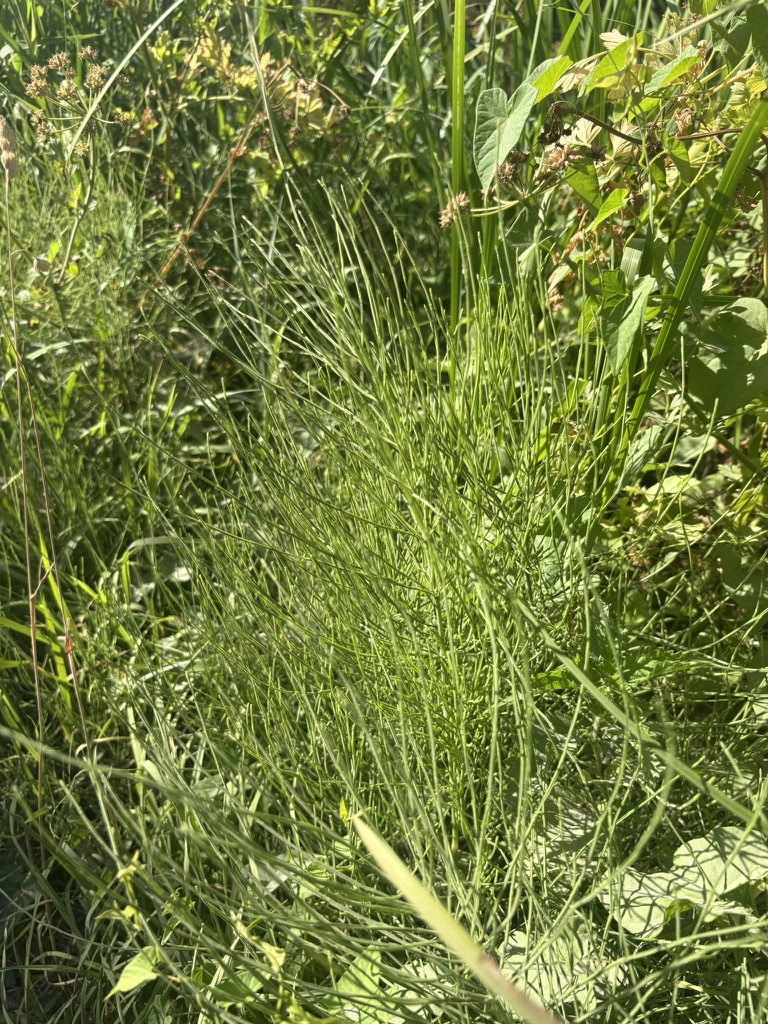
Horsetail
Horsetail is a curious plant, you’ll find her in lots of places along the canal, a throw back to Jurassic times. Imagine her relatives the height of houses populating the earth, these are the early plant forms that made up much of our coal seams. Their strength is in having super deep roots, she’s not going to budge, enjoy her in the wild but don’t let her get established in your garden. Those roots bring up hard-to-reach minerals from the depths of the earth, especially silica which is helpful in strengthening our hair and nails. A strong decoction will create a nail soak or hair rinse. The plant was also used as handy pot scourer, you can easily break off sections at a time as former users of the canal likely did.
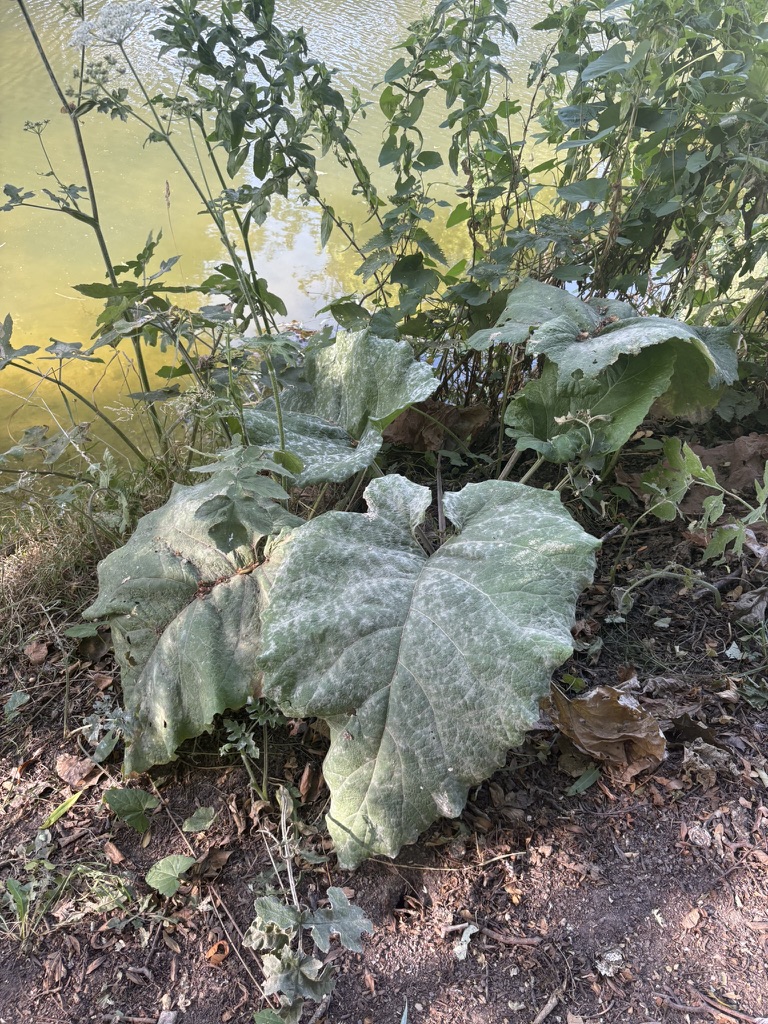
Burdock
There are some massive examples of burdock too, look out for her enormous leaves, you could float a family of field mice or perhaps a small dog along on them (but please don’t try). Burdock is most often thought of today as the annoying spiky seeds that get caught up in dogs’ coats, or otherwise as one half of the fizzy drink ‘dandelion and burdock’. The drink originates from a traditional immune-supporting tonic made from the roots of both plants. Burdock root contains inulin, a fibre which nourishes gut microbiome and may improve digestion; dandelion root is a famous diuretic, helping flush out our system. Not that I’m making any health claims for our modern-day fizzy drink. The seeds are edible, if you can gather them before your dog does. Burdock is used in Traditional Chinese Medicine to purify blood and help skin conditions; in Western traditions it is also used for inflamed skin, often as a poultice of blanched leaves, and made into a lotion to massage the scalp in helping prevent dandruff and hair loss.
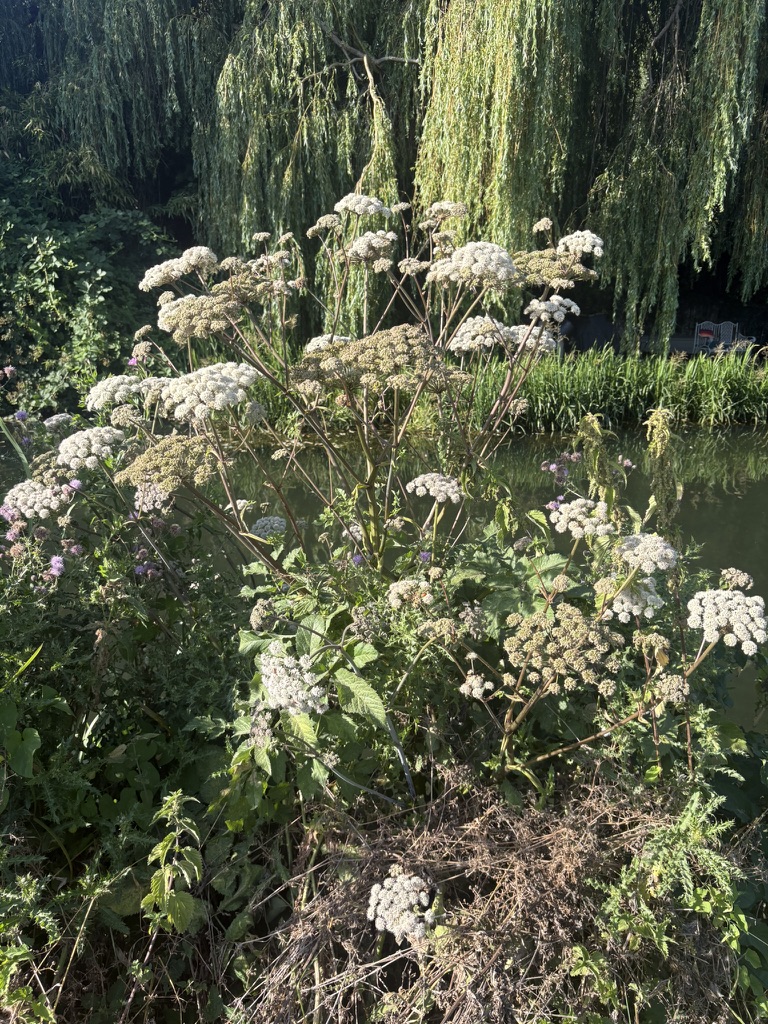
Umbellifers
There were a few different umbellifers along the canal. They are more properly referenced as members of the Apiaceae family these days, but I find their old name better paints a picture of their spreading flowerheads set above tall straight stems. Notoriously tricksy to identify, the recommendation is always to find at least three features which you know relate to the plant in question, which may be the shape of the leaf, the flowerhead, the seed head, their height, markings or ridges on the stem or other characteristics, like the single red flower among the mass of white flowers of wild carrot; the radial spikes of hemlock water droplet’s flower head or the aniseed smell of sweet cicely. Never take chances if you’re not certain, while some are innocuous or even pleasant, others may be an irritant if touched and deadly if consumed.
Mugwort
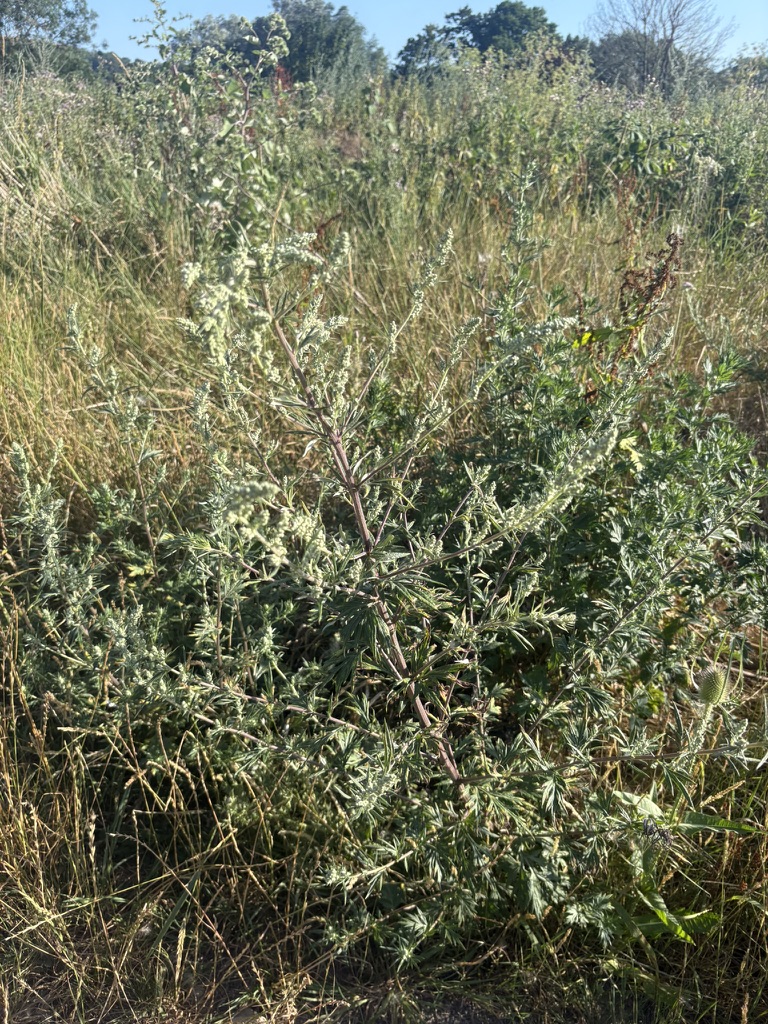
We felt blessed to be in the presence of ‘the mother of herbs’, Mugwort. Identifiable by the silvery underside of her leaves, belying her as a member of the Artemesia family. Her deep, funky smell when her leaves are crushed is another good sign. Mugwort, also sometimes called cronewort or The Old Lady, was the traditional sign of your local healer or midwife. A bunch would be hung at her door, or painted on symbolically. As such, she is revered as the manifestation of ancient wisdom and feminine qualities.
Though contraindicated for use in pregnancy, mugwort was used in ancient times to provoke or delay absent periods, comfort during menstrual cramps and (in the form of a compress) to speed up the birthing process and afterbirth.
With a beautiful affinity to skin renewal, mugwort-infused oil will help soothe itching or burning, drinking mugwort tea can help clear skin blemishes and bathing in mugwort-infused water can help relieve muscle ache and invigorate.
You’ll often find her along roadsides, especially ancient byways, as she has another name of the ‘travellers’ herb’. Putting a little in the sole of your shoe is thought to ease sore feet. It was for this reason that the Romans planted mugwort along their roads for soldiers to help themselves; in the days of carriages and footmen mugwort was still used for this purpose.
In modern times, mugwort’s reputation as a dream-bringer predominates. She may be drunk as a tea before bedtime, slipped under a pillow, smoked or burnt as incense to provoke her effect on the pineal gland – that pine-shaped gland in our brains that impacts on our unconscious. Through these means, mugwort can gently alter our perceptions, encouraging wisdom and observation.
Pink and purple plants
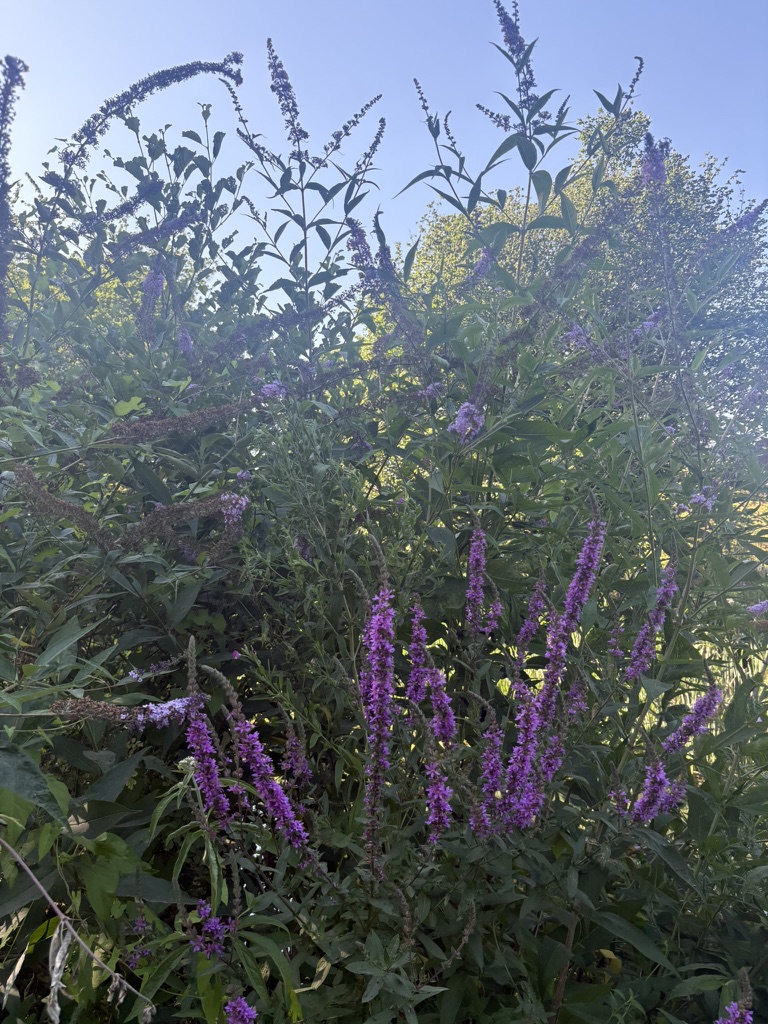
Fuchsia pinks and strident purples are often associated with the height of summer florals, bright colours to complement the bright skies. Among these we spotted great willow herb, purple loose strife, buddleja and Himalayan balsam.
Great willow herb
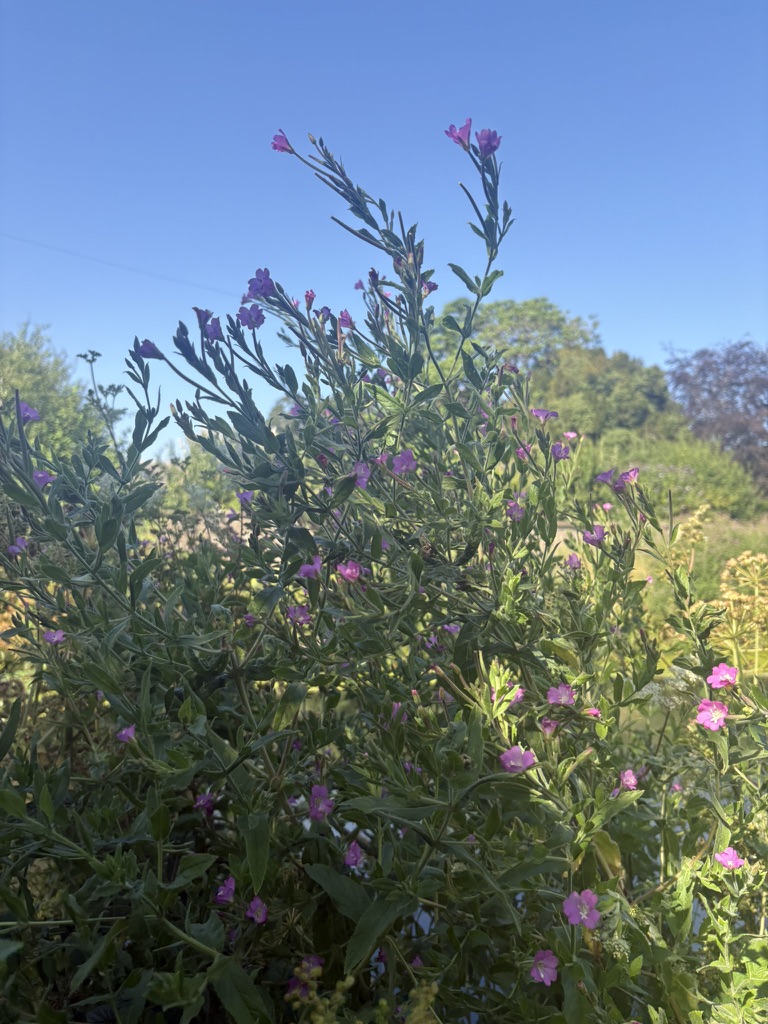
Beautifully tall with smallish pink flowers with white centres, great willow herb has the folk name of codlins-and-cream (codlins being cooking apples), perhaps due to her colour scheme, but maybe because her flowers smell of ripe apples when crushed, while her leaves smell of moss rose and eglantine. She is a cousin of rosebay willow herb and has similar fluffy seed heads that make good firelighters.
Purple loose strife
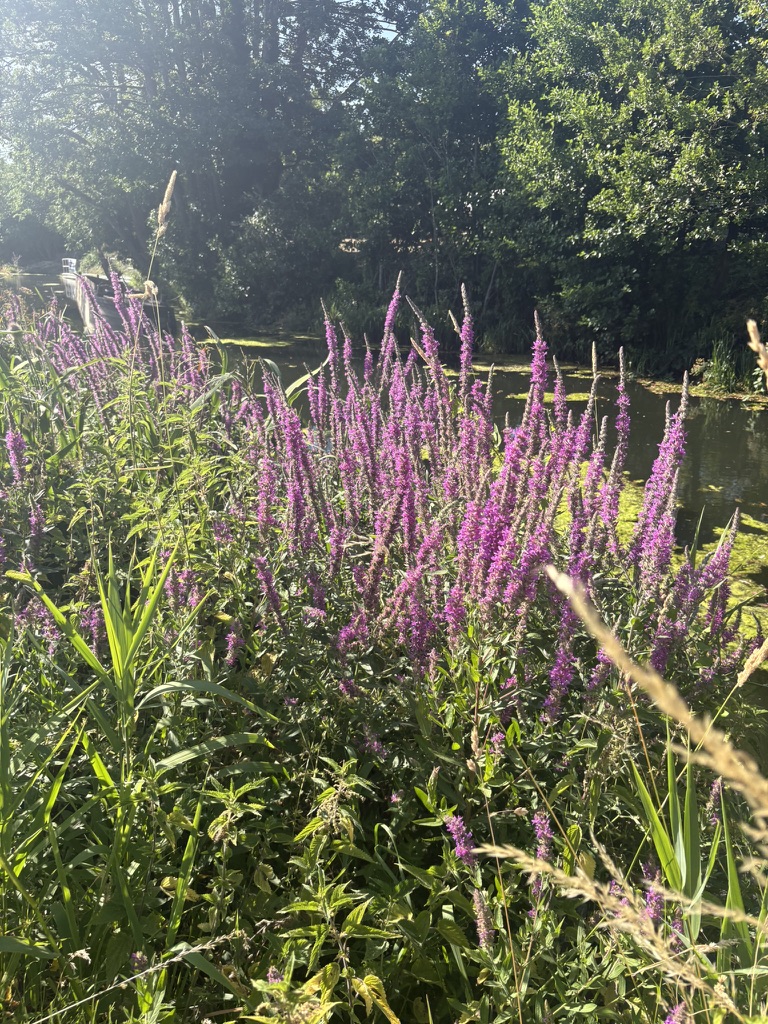
Purple loose strife has a long history of use in European folk medicine and was widely used during the cholera epidemics of the 19th Century. Also used for wounds, sores, impetigo, eczema, eye infections, her latin name Lythrum salicari derives from the Greek lythron for ‘blood’ – suggesting likely medical use. Her common name, loose strife means ‘stop worries’, a friendly plant to have around.
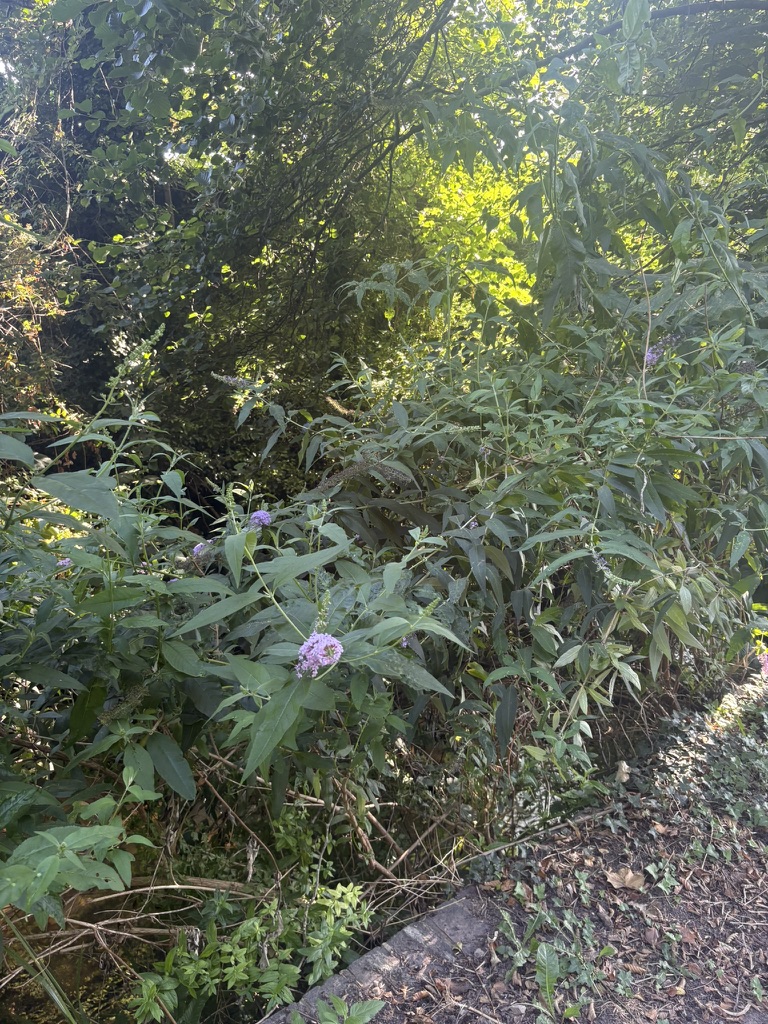
Buddleja
Buddleja is a great example of a plant that can grow anywhere. Where some see thuggish behaviour, I see a powerful instinct for survival and staying power. This plant has resources to share with us. On researching I discovered she is used in Traditional Chinese Medicine for wound healing, painful or swollen eyes and sensitivity to light. In Korea she is used to treat inflammation and headaches. In fact, she has a reputation as ‘the natural DNA bodyguard’ due to her ability to support skin’s self-repair functions. A boon to skincare, she is antioxidant, anti-inflammatory as well as having photo-protective properties against UVA damage.
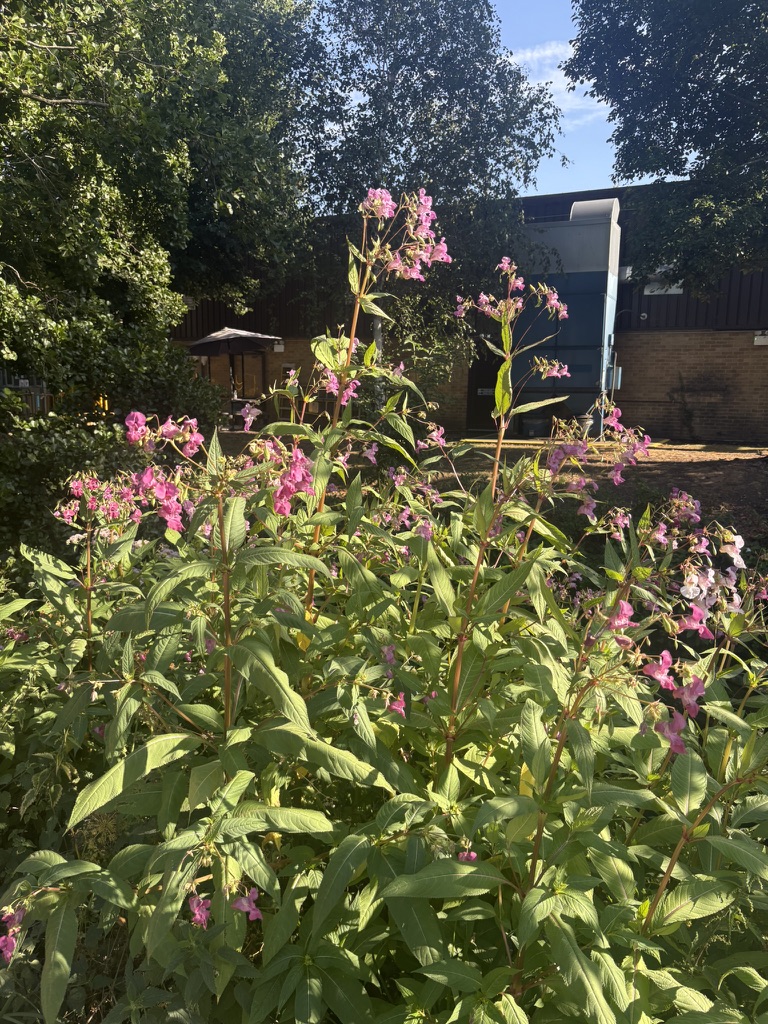
Himalayan Balsam
An intruder to our canalside, considered invasive, Himalayan balsam has the folk name of policeman’s helmet due to the helmet-like shape of her flowers. While not encouraging her presence, you can have fun with the flowers making colour changing drinks, and her leaves have been traditionally added to curries.
There were many more plants that we chatted about along our walk including yarrow, chamomile, gypsophillia, teasel, hawthorn, nettle, rose, plantain, meadowsweet, mint and comfrey, but I’ll close with elder.
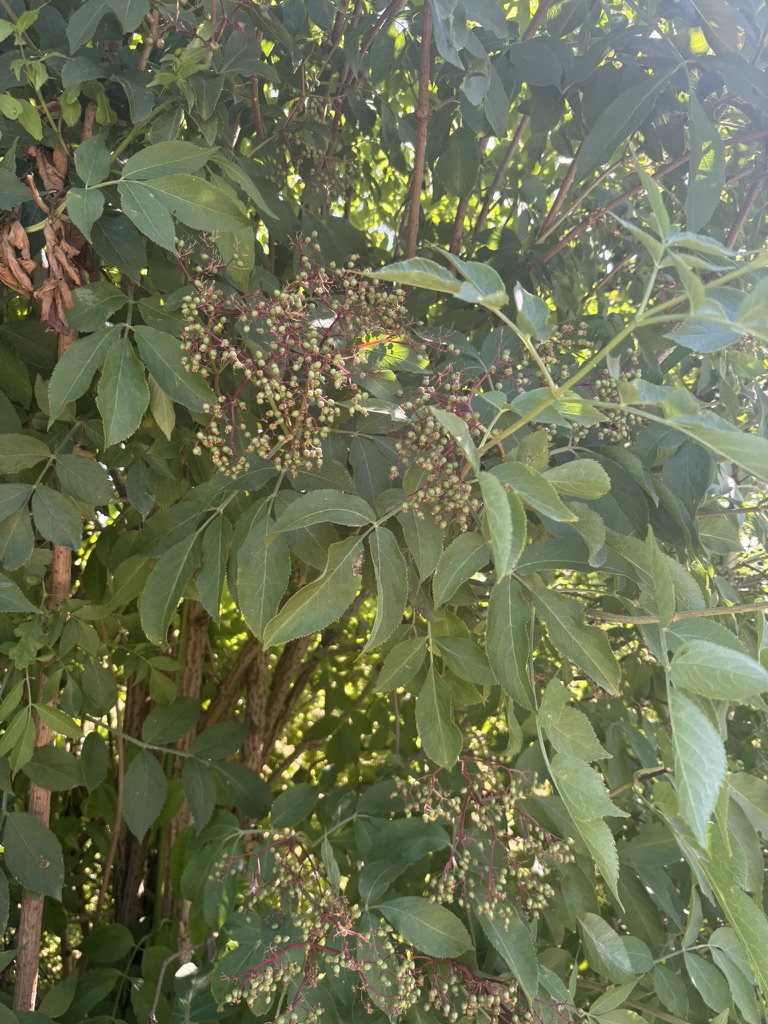
Elder
Always important to acknowledge the elder, plant of mystery and contradiction, considered to be inhabited by Hylde-Moer, the elder mother. Tip your hat to the tree as you pass by, and gather respectfully from her generous offerings. Elder’s bounty marks the beginning and end of summer, her white flowers in May were historically the most coveted of skincare ingredients, now mostly enjoyed for making cordials; her purple berries of autumn are a source of immune supporting goodness that can be boiled up into a rob to be sipped daily and keep us healthy through winter.
Do come and join us on future herb walks
The first walk took place on the evening of Thursday 16th July between 6pm and 8pm, our next walk is planned for Friday 14th August, this time leaving from Fromebridge Mill. To book your place, click here.