
On our December herb walk we were particularly looking out for the winter plants that have become a natural part of our festivities at this time of the year.
Having met at the tall pine trees outside the police station on Dursley Road, we didn’t need to move far to find copious examples of fantastically berried holly, different forms of ivy and many other firs and conifers.
Trees worth preserving
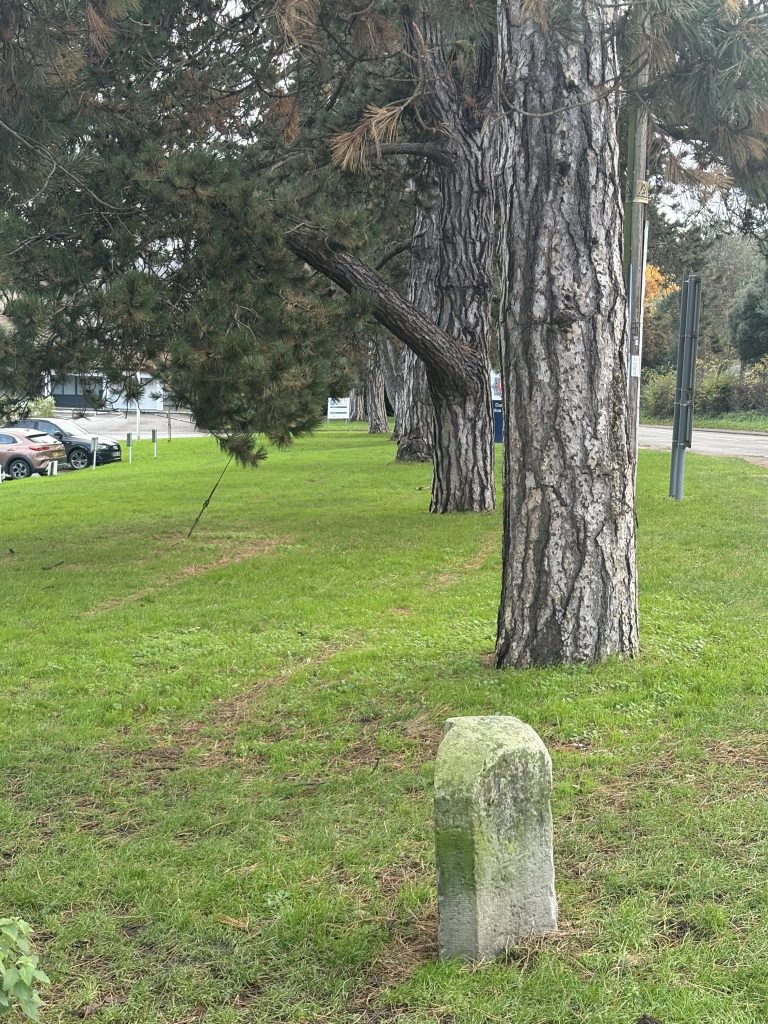
Have you ever noticed the row of pine trees in front of the police station? There are about nine magnificently statuesque examples (and clearly a few inbetween that have been lost). It’s easy to wander by without paying attention to them towering above; but next time you’re there, pause a moment to look in more detail and perhaps give them a little ‘thank you’ for all the benefits they offer us.
Pine scent is abundantly used in manufacturing cleaning products, for floors and the like. It is naturally antiseptic and the scent is refreshing, clearing airways so a perfect choice. Pine trees are natural air fresheners, stand among them, breathe in deeply and be uplifted.
That same refreshing quality can be brought out even more by putting pine needles in hot water – whether as a cup of tea, or as an aromatic bath, your choice.
Our discussion of the many benefits these pine trees bring to us and the local environment made us wonder more about their history and longevity. Post walk, a little bit of research (thanks Kath!) looking at old maps showed that the pine trees in front of the Police Station and along the footpath appear to have been planted between 1901 and 1920. Making them over 100 years old, but mere youngsters as Scots Pine can live to 500 years old. If we take care of them, they could be taking care of us for centuries to come.
Trees that are special to an area, particularly ancient trees, but also ones with particular significance or known to provide local benefit, may be protected with a Tree Preservation Order. Stroud District Council have an interactive map where you can look at all the trees protected in this way.
There are relatively few trees registered around Cam and Dursley, these pines included. Which trees do you value enough to seek their protection?
Holly
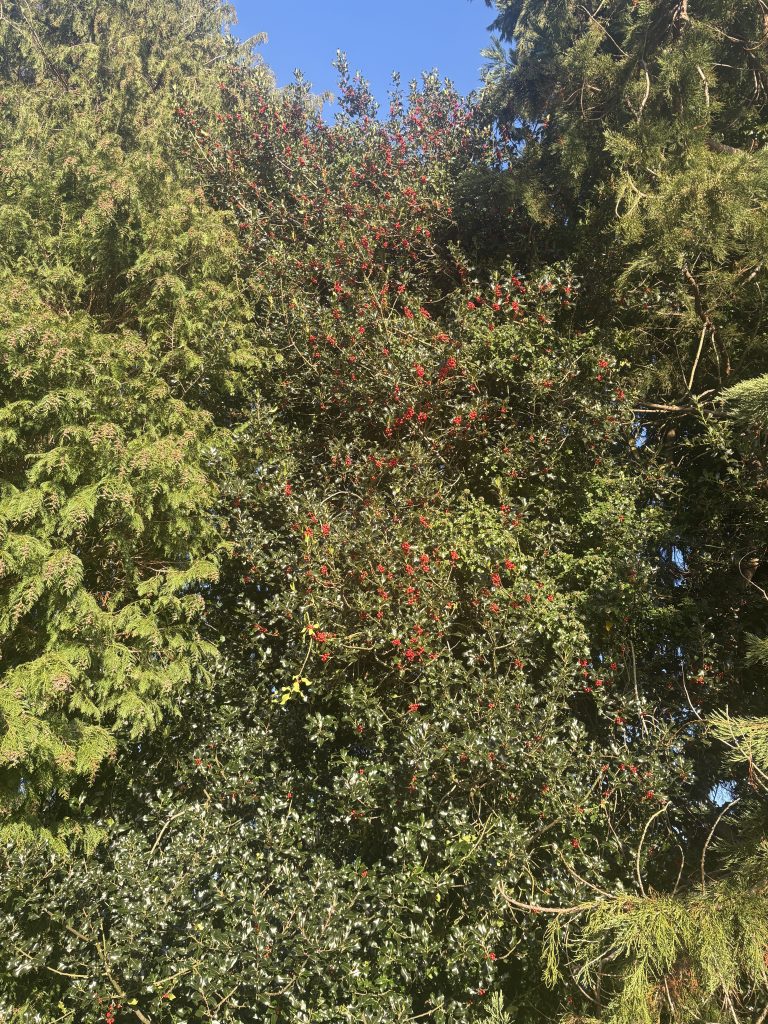
The boundary between the Police Station and the Recreation ground is packed with firs, cypress and hollies, many of towering stature. A tall holly tree provides a good example of how ‘He holly’ and ‘She holly’ can be found on the same tree. The classic prickles that holly is renowned for are found on the ‘she holly’, the lower branches where animals may graze. Look up and you’ll see the leaves are much smoother, less prickly. This is the ‘he holly’. Out of reach of browsing animals it doesn’t need to protect itself as much. If you can reach it, this holly is much easier to handle when creating decorations. There’s lots more to learn about holly in our herb of the month blog from December.
Ivy
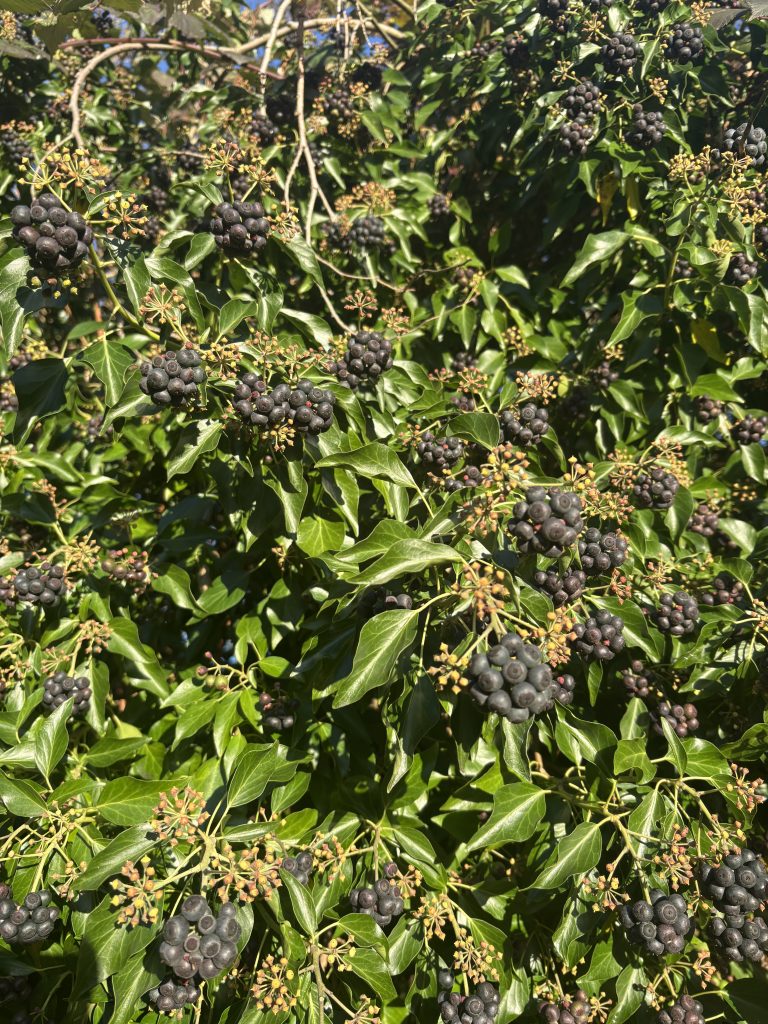
The examples of ivy along our walk came in all shapes, sizes and varieties, leading to the question: is ivy a tree, a shrub, a climber or ground cover? It plays so many roles and fills so many niches, twining in and around the other trees and plants, knitting the whole scene together.
For clarification, Google tells us ivy is generally considered a woody vine or climbing shrub, not a tree. It uses aerial roots to cling to supports like trees, walls, and ground, but it can become more shrub-like and even produce flowers/berries as it matures, with some cultivars specifically bred to be “tree ivy”.
The many berries on the more tree-like ivy were evidence of how it had recently played a role as a rich nectar source for bees. Honey made from ivy flowers is sometimes called ‘winter honey’ and is noticeably thicker. Some find the herby medicinal flavour overpowering but it is treasured as a treatment for coughs and potential antibacterial qualities. Think of it as our version of Manuka honey.
Spring water
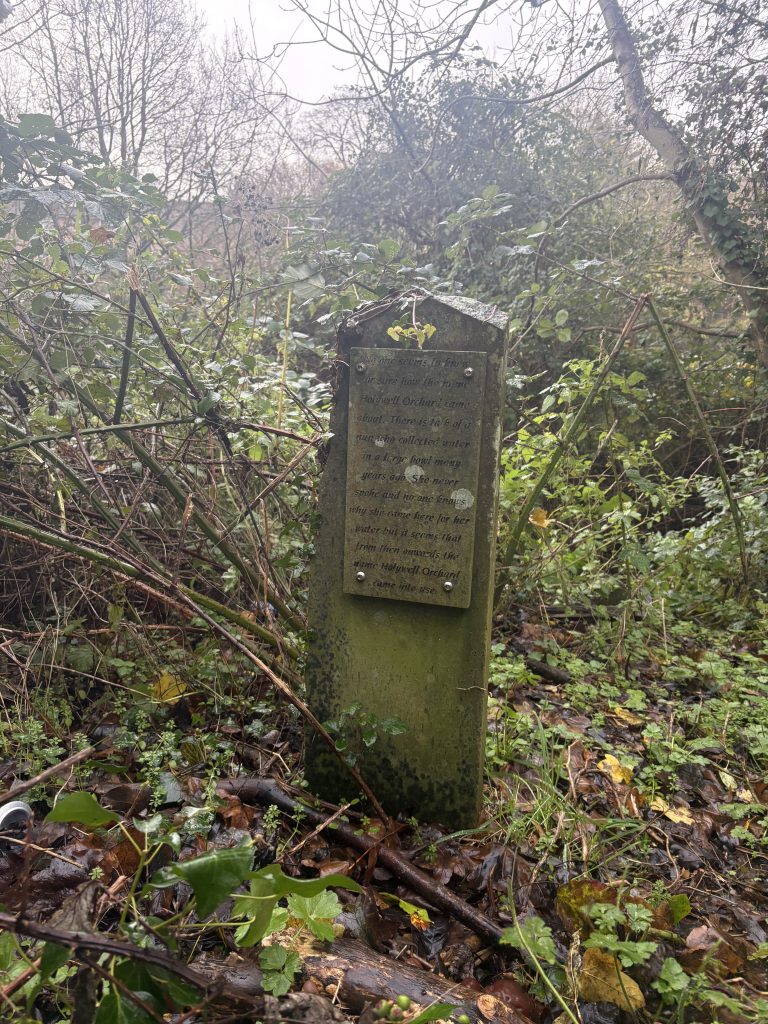
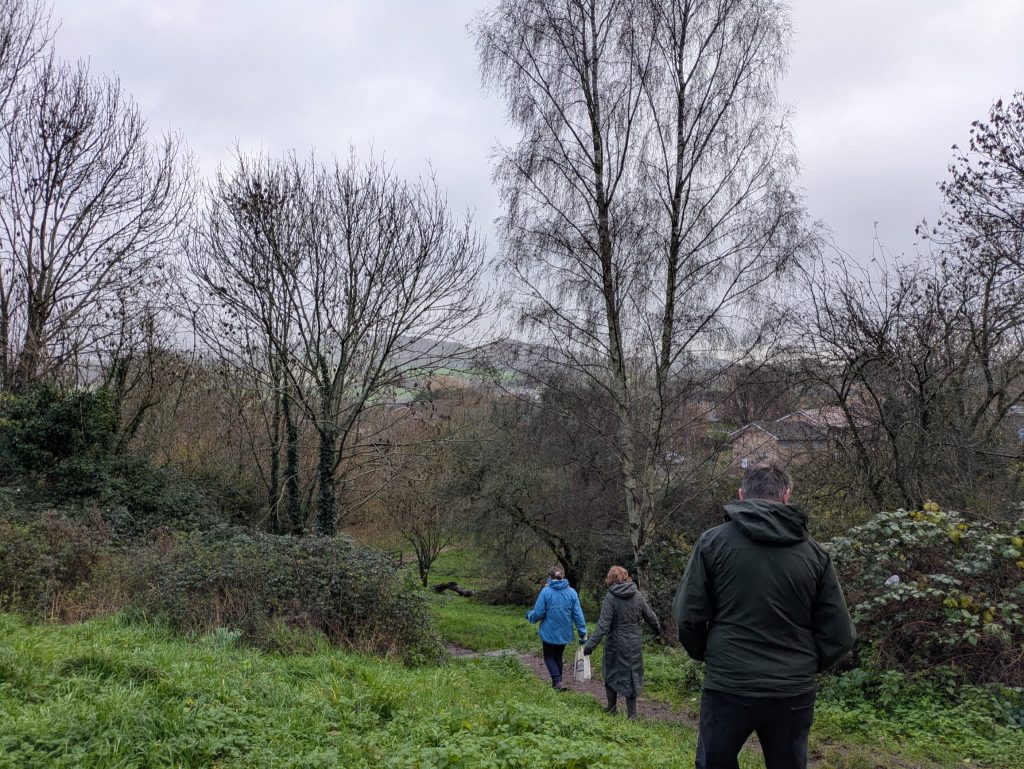
With all these winter plants to see and discuss along the path, we were half way through our allotted hour’s walk before even reaching Holywell Orchard. Here it was a treat to be directed towards the spring that’s so important to the name of the orchard (thanks Conrad!).
History relates that a nun would daily come in silence with her bowl to collect water from the spring that naturally emerges from the hillside here. So it became known as Holywell. In time, a cottage was built nearby and an orchard planted. Hence, Holywell Orchard. Many others have relied on that spring for their supplies of fresh water, but only a few documented, you’ll find other stories if you visit the spot.
Orchard fruits
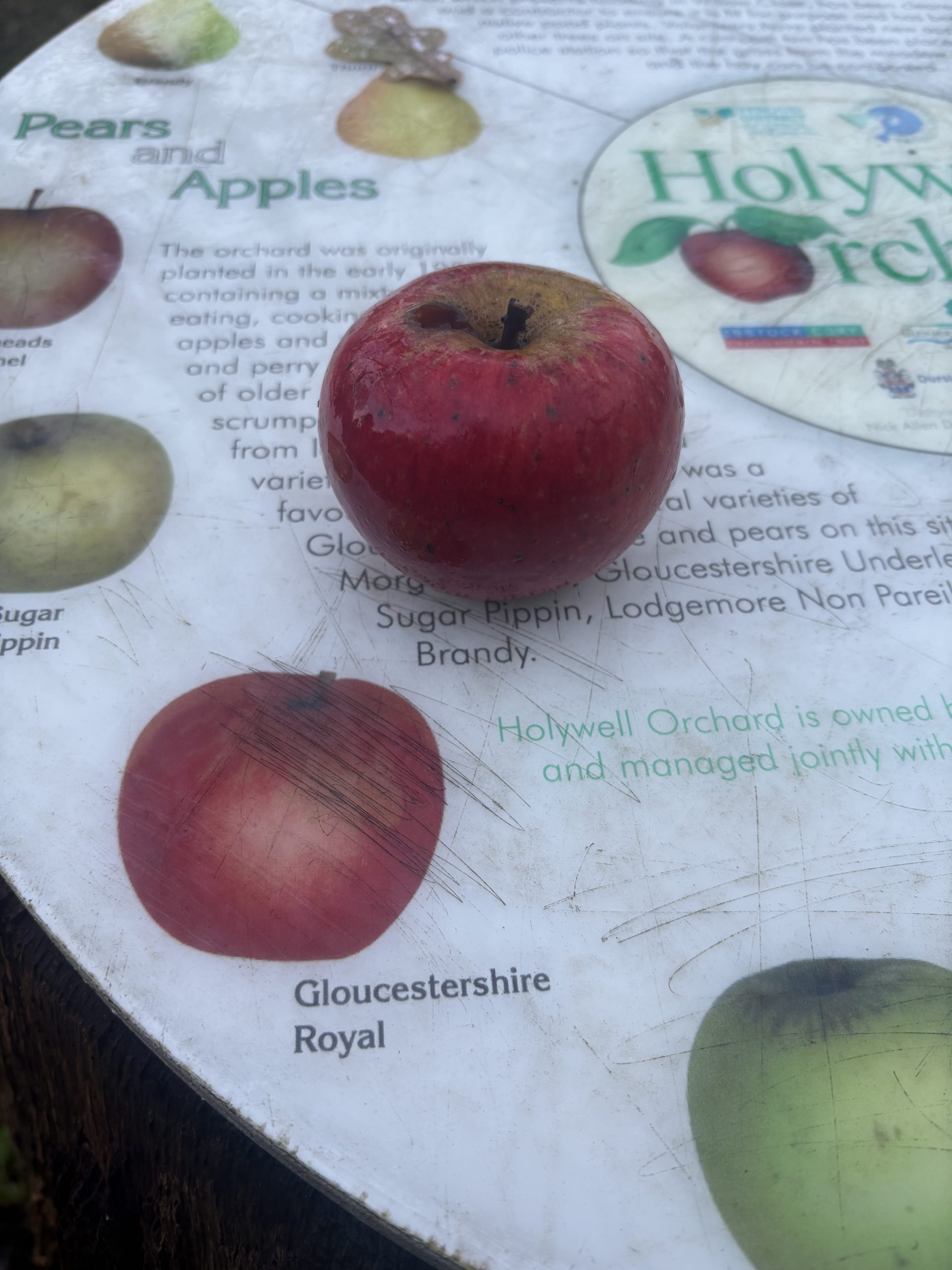
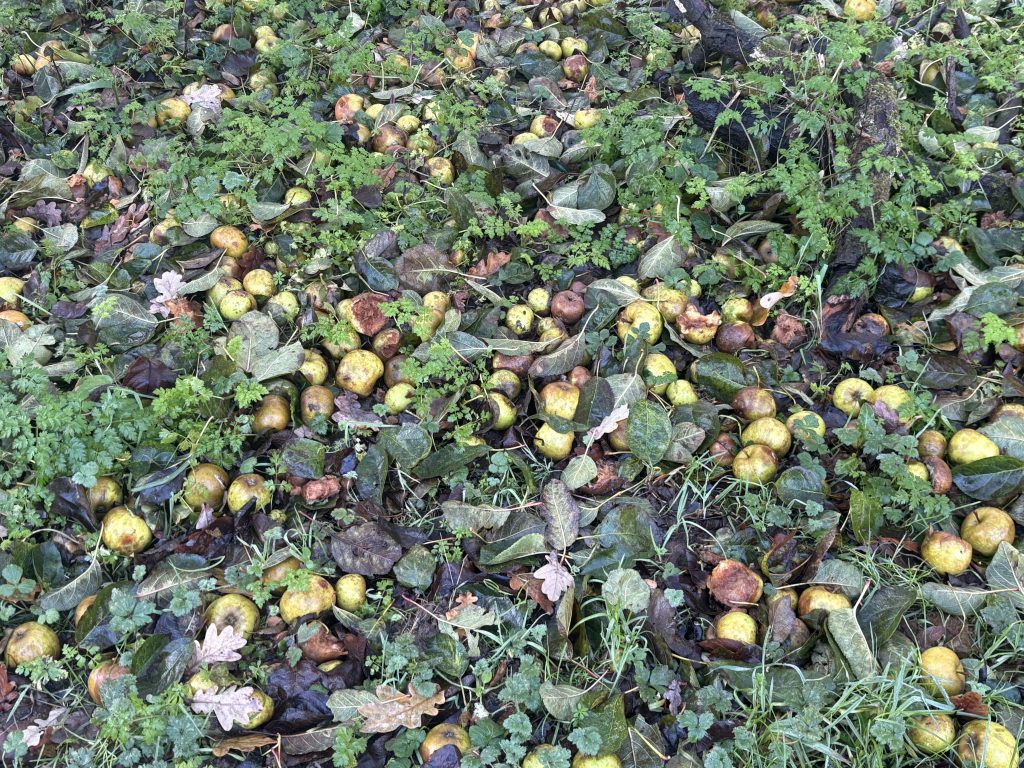
As for the orchard, some of the trees still remain, now perhaps a hundred or so years old. Some of their varieties have been identified, there’s an information board about them in the orchard as work was done here a few years ago by Stroud Valleys Project and the District Council. This has been a good year for fruit, but very little is collected from these trees. As we went down the steps to where a large pear tree stood that rich autumnal scent of sweet, rotting fruit filled the air. These are more trees in our area that are worth nurturing and preserving.
Missed one
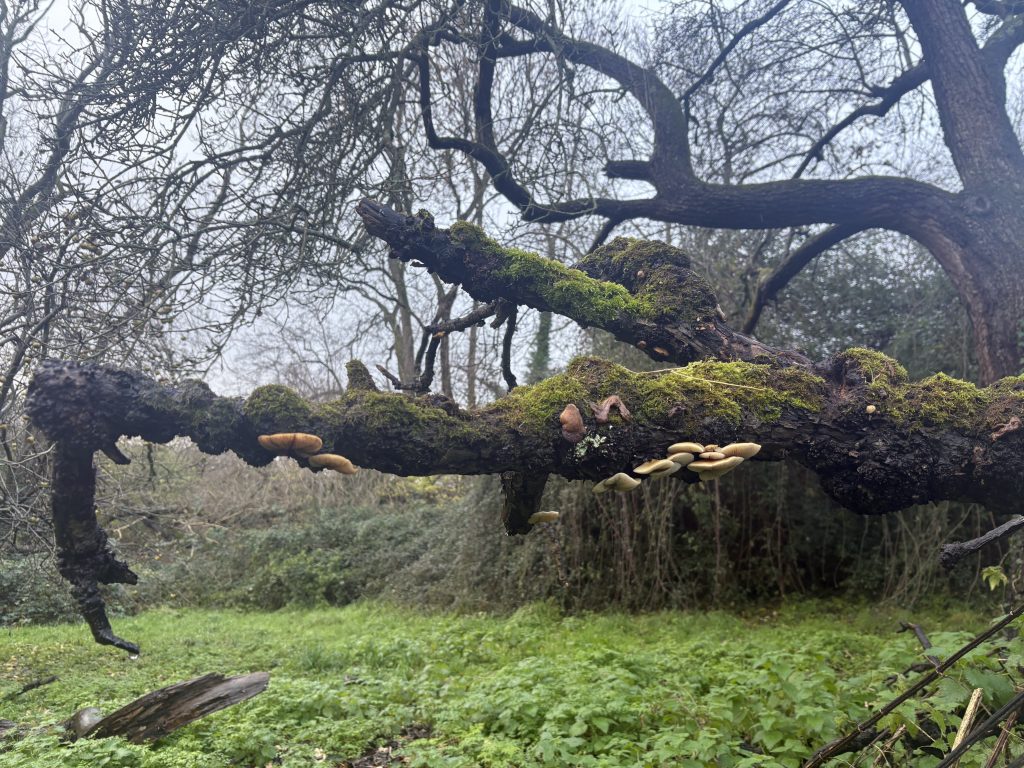
There was one Christmas staple missing from our walk – mistletoe. Often found in orchards as it does like apple trees, we didn’t spot any here. If you’d like to know more about mistletoe, take a look back at the notes from our February walk last year, or join one of our forthcoming winter walks – it’s at this time of the year, when branches are bare, that we can clearly see the round balls of mistletoe silhouetted against the sky. Walks are always on the first Saturday of the month, starting at 10am. The starting place will be listed in the calendar on this website. Forthcoming dates are: January 3rd (meeting at Breakheart Quarry), February 7th (meeting place tba) and March 7th (meeting place tba).


Leave a Reply