Words by Dr Viv Rolfe
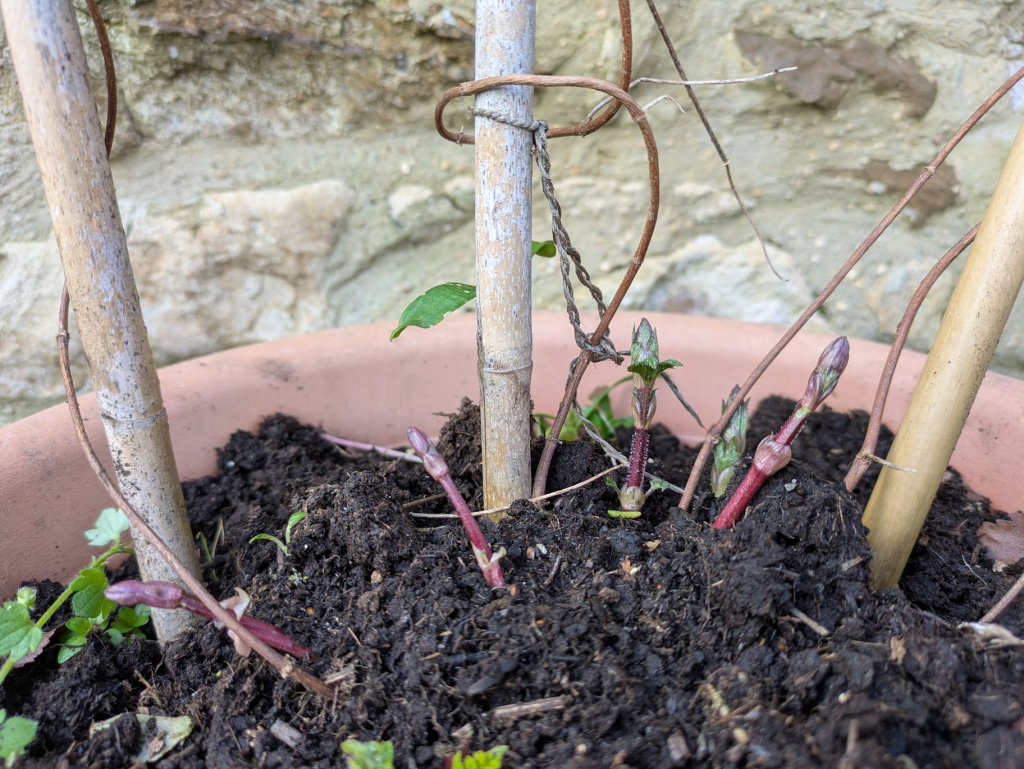
I was joyed to see the tips of my hop plant coming through this week. The plant was kindly provided by the Hoptician Pub in Dursley last year, but my plant did not grow well enough to create any ales for them. So I’m excited that it is shooting as I didn’t know it would survive the winter.
Brewing
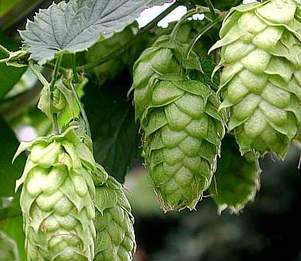
We all know that hops are used in brewing, that is, the female flowers that ripen into scaly cones. If you touch one they are sticky with a resin called lupulin, and this gives rise to the extremely bitter taste and mouth-drying quality. In brewing, the introduction of hops wiped-out our traditional home brewing practices and recipes that used bitter wayside herbs like nettle, burdock, or meadowsweet. When hops were cultivated and enabled beer to be made at scale, people stopped making beers in the home.
Chemistry
Hops are in the Cannabaceae family or hemp family, along with Cannabis. That gives a clue to some of its more herbal medicinal uses. Hops contain valerianic acid, the same sedating compound found in valerian root. Both herbs are used as sedatives and what I would class as quite strong ones. Both are used in a tea in low doses. If you look at night time teas in the supermarket they will contain smallish amounts of either valerian root or dried hop flower, and of course due to their pungent and drying tastes, they will be mixed in with more flavoursome treats like chamomile, lavender or lime flower. I wouldn’t make a tea out of either hops or valerian on their own, partly because they would taste horrible, but also because they could well knock you out.
Tradition
In olden times, hops were used as either a tea or tincture to calm nervousness, and as Maud Grieve describes “Doprocuring for the patient sleep after long periods of sleeplessness in overwrought conditions of the brain”. Dried hops would be placed under the pillow to also aid sleep, and other preparations of the flowers and leaves were used to cleanse the blood and relieve inflammation.
Science
If we skip forward to the modern-day, the science shows us that hops do aid sleep and help people sleep for longer. I do struggle with the research a bit as it assumes groups of people will respond to herbs in the same way, and it looks for this as an outcome. But this is not usually the case, and particularly for something like sleep, I find that people discover what works best for them. Herbs are as individual as we are.

Dr Viv is co-founder of Cotswold Herb Centre and researches the science behind the tradition. Her PhD is in gut physiology and, as well as her work at the National Centre for Integrative Medicine in Cam, she supports our local GL11 Community Hub as a Wellbeing Coach. Find out more about Viv’s work on her website Curiosity Research, or brew yourself a pot of her specially blended Wayside Herbal Tea.
Leave a Reply