
To soothe, enliven and restore.
There’s a duality in many plants, with lemon balm it’s her ability to both calm and enliven. She will soothe the mind, ease the ache of a broken heart and enable a clarity of thinking, coming to you as a ‘breath of fresh air’. Lemon balm is recommended as an aid to sleep, not the knock-you-out narcotic kind of sleep, but more a gentle, restorative sleep. Perhaps it’s this clarity and deep rest that forms the basis for lemon balm’s ability to enliven and energise. There is a joy in her aura, let her bring out the playful child in you.
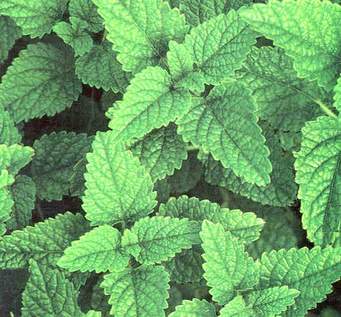
Undoubtedly, as her name tells us, she is lemony. Anyone encountering her vibrant green leaves will notice the volatile oils she gives off when brushed past. They are truly, unmistakably lemony. But not like the sparky spritz of lemon zest. With lemon balm you get an earthy undertone, she is rooted, grounded. Lemon balm helps you dream big, while keeping you centred and your mind clear.
If you’ve access to lemon balm (she grows quite abundantly once established) do go out and meet her. Take in her scent, she may encourage you to linger in the garden a little longer than you planned! To help breathe in her charms, gather a few leaves to put in hot water as a tea. Let this steep for a few minutes and then inhale the oils. If you can, take this to an open place to enjoy, or somewhere with a view. Lemon balm has a way of opening you up, to drink lemon balm is like sitting on top of hill, able to take in the landscape around you.
She’s therefore a good friend if you’ve something you need to ponder. Sitting with lemon balm can help unravel some of the knots your thoughts can get into. She has a simplicity and straightforwardness that is like the innocence of that inner child within you.
Growing lemon balm

Occasionally you’ll find lemon balm in a hedgerow, but she’s more commonly regarded as a garden plant, perhaps because she’s been cultivated in cottage and physic gardens for centuries. In the ninth century Charlemagne decreed lemon balm should be included in all monastery and apothecary gardens because of her healing properties and ability to increase life span.
Lemon balm grows vigorously and will self-seed around the garden. She can be grown from seed, with a bit of warmth, and likes a sunny spot in the garden. Alternatively, find a friend happy to divide a clump, or buy small plants from the garden centre, they will soon bulk up. Choose a place for her where you will pass by often to benefit from the scent given off when her leaves are brushed. From April onwards her leaves are vibrant and form big fragrant mounds. As the summer progresses, you’ll see perky white flowers, they’re small so relatively indistinct, but they are packed with nectar so attract bees. The flowers mark the maturing of the plant and you can expect the leaves to have less potency from this time through to their dying back in autumn. Cutting back after flowering will stop too much self-seeding.
Melissa officinalis
Beekeepers plant lemon balm by their hives, or rub the hives with lemon balm in order to attract bees. It is said that bees will not desert a hive if lemon balm is close by. There is a compatibility between the compounds excreted by lemon balm and bees. The Latin name for lemon balm ‘Melissa’ is derived from the Greek word for honeybee, showing the longevity of association between plant and pollinator. In Greek mythology, Melissa was a nymph who could take the form of a bee and discovered honey. She and the other nymphs fed honey to Zeus when he was an infant, so helping him gain his strength and power.
The second part of lemon balm’s Latin name ‘officinalis’ indicates that she is regarded as a medicinal plant, officially listed in the traditional materia medica.
Lemon balm is good for digestion, the tea can be drunk to lessen flatulence. It’s also helpful for menstrual cramps. The volatile oils are mildly antiviral and antibacterial so leaves were used topically – a simple poultice of leaves mashed with water – against herpes, sores, shingles gout and insect bites. In contrast to their ability to attract bees, the leaves were otherwise used as an insect repellent.
The calming nature of lemon balm was useful in supporting the nervous system, helping against headaches, insomnia, depression and also colds and fevers. In general it is considered a tonic for the circulatory system.
Lemon balm in the kitchen
Lemon balm makes a wonderfully refreshing summer drink when a little honey is added to the tea and then this is left to cool in the fridge. You’ll find leaves gathered in the afternoon, when the sun has been on her, have the strongest, most aromatic flavour. The quantity of lemon balm leaves per mug is greater than you’d need for a less ‘fleshy’ herb (such as rosemary or thyme). Brew with a lid on to keep hold of the volatile oils.
You can also add her lemony leaves to cooking both in sweet and savoury dishes. They’re good in cakes or biscuits and with chicken or fish. Add a few shredded leaves to salads and fruit salads, they work well with oranges and olives. You could also blend some leaves in with cream cheese for a sandwich, lovely with smoked salmon.
Lemon balm in the bathroom
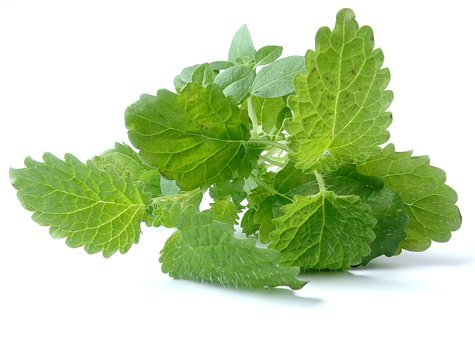
Lemon balm is both astringent and soothing, so a good choice to use on skin that’s troubled by over-production of oil or spots and acne. Also working well as a rinse for greasy hair.
Your skincare product can be a simple water infusion, creating a toner to be used fresh that day; or an oil infusion blended into balms and creams for a longer lasting product. Lemon balm is great to add to a deodorant and is the go-to herb for lip balms to protect from cold sores.
A bundle of fresh leaves make a lovely, scented addition to a bath. Lemon balm’s fragrance has also been used extensively in perfumery. Medieval Carmelite water was based on lemon balm. It was the toilet water for cultured men and women to rub on after bathing, and also dabbed on foreheads to reduce headache and nervous tension.
A recipe for Carmelite Water
In a mortar lightly crush 8oz of balm leaves, 2tbsp nutmeg (grated), 2tbsp coriander seeds, 2 tbsp cloves, 1 tsp cinnamon sticks and 1 tsp dried angelica root
Put these with a pint of orange flower water, one and three quarter pints of vodka and 1oz lemon peel (coarsely grated) into a teapot still. Distil slowly, strain off, bottle, stopper or cap tightly.
The fragrance gets more subtle and mellower the longer the water is left to stand
Storing lemon balm
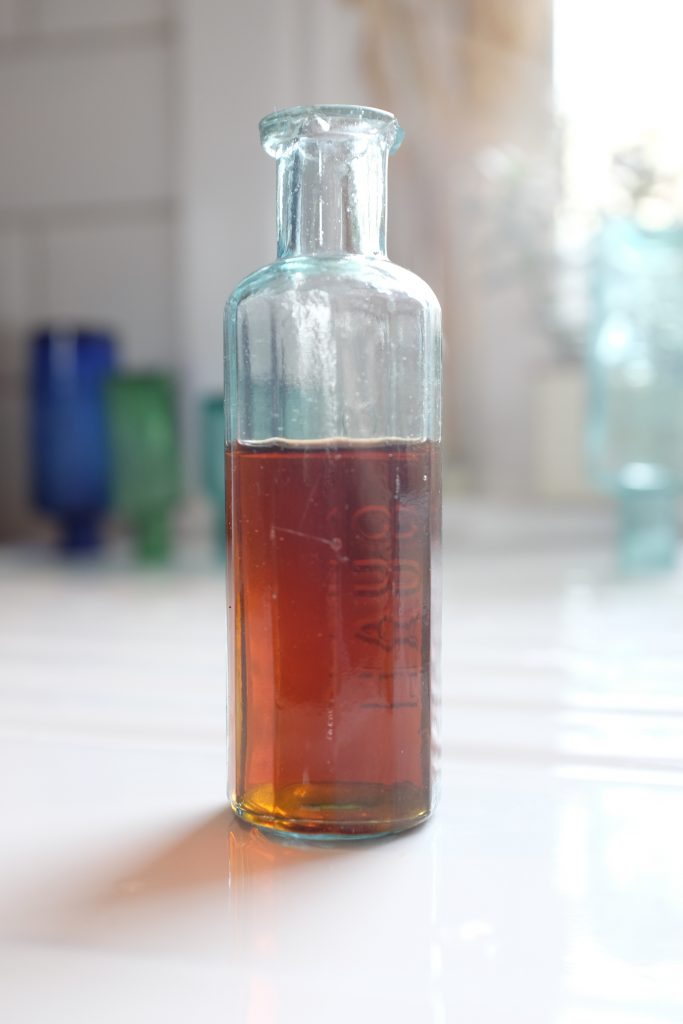
Lemon balm does have a long season, from Spring through to Autumn, but still, you may want to keep some by for use in the winter months. Sadly, she is one of the hardest herbs to dry, apt to lose a lot of her volatile oils. Patience is the key. Gather a loose bunch and hang upsidedown in a cool place, a sheltered spot outdoors is ok in the summer months. Alternatively, stems can be laid on a drying rack but make sure there’s good air flow, and handle them as gently as possible, don’t let the leaves touch, or they will go brown. With good air flow, drying should be complete in about five to seven days, you’ll know because the leaves will be crispy. If you’ve got it right, they will be bright green and still have that lemony scent. Store in a dark jar and they’ll be ready for making a mood brightening tea when needed. Dried leaves have also been shown to be just as effective as fresh in the medicinal applications and are preferable for use in oil infusions.


Leave a Reply