
Field Lane, The Quarry, Cam
And all of a sudden, it’s September. We seem to have come very quickly around to the second anniversary of Cotswold Herb Centre. Two years into our monthly herb walks, and still we’re finding new treasures. This month certainly didn’t disappoint.
Having seen hedgerows bursting with fruits early this year, we were keen to maximise our potential to complete the full ‘hedgerow bingo’ card. A trip along Field Lane in Cam provided good opportunity, as well as delighting some visitors who were less familiar with the area with the fantastic views it affords. Look left and see the swathe of the River Severn backed by May Hill, Brecon Beacons, Hay Bluff and the Malverns; look right and find the familiar local lumps and bumps of Stinchcombe Hill, Uley Bury, Cam Peak, Cam Long Down and Coaley Peak. We’d have scored pretty highly on ‘hilltop bingo’ too.
But of course it’s been a long hot summer so we were also keen to see what had survived among the verges and hedgerows.
Wild Carrot
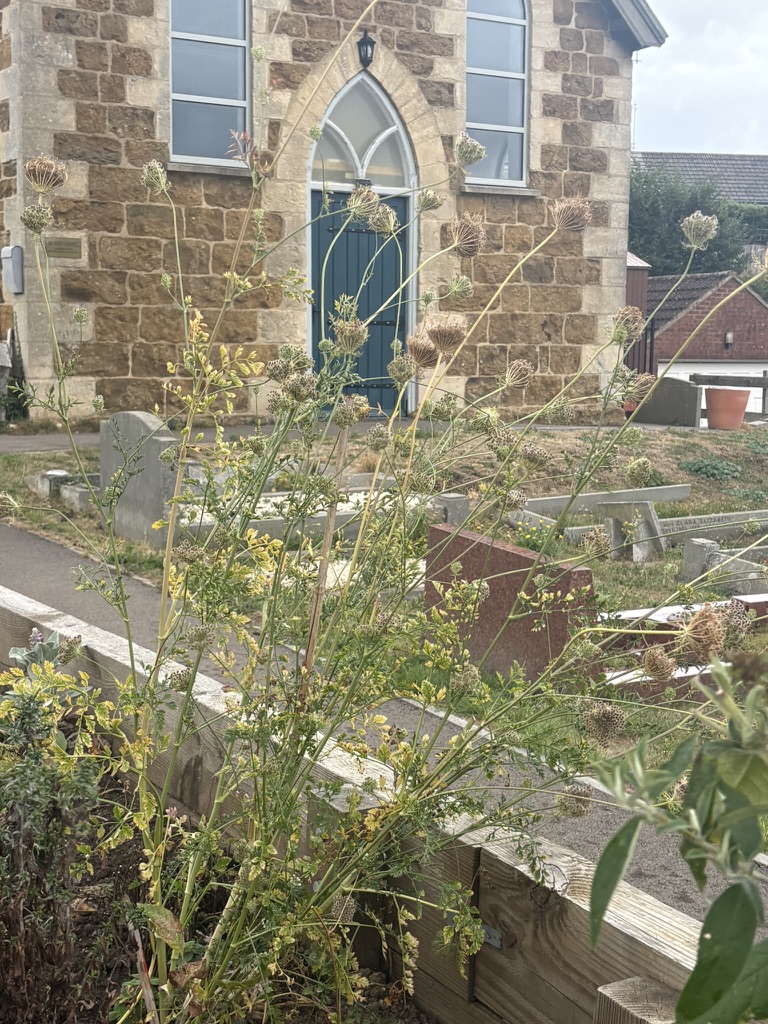
Meeting at the Quarry Chapel we were able to admire this season’s wildflower planting, careful tending and watering has ensured a good show here despite the weather. Other noteworthy herbs around the Chapel included wild carrot – distinctive in this season by the balled-up nature of its flower head; in other seasons by the little red flower among the mass of white flowers in each umbelliferous head. Every part of wild carrot is edible, the flowers, seeds, leaves and root (like a carrot!) but do be cautious because it’s very easy to mis-identify this plant, potentially stumbling upon deadly hemlock.
Ancient yarrow
Yarrow is there too, when not slashed by the mower. Another head of many white flowers, this time on shorter extremely strong stems accompanied by feathery green leaves. Keep an eye out for yarrow, you’ll find her in lots of places, often among the grasses of a roadside verge. Here it was appropriate to find her among the graves as she has been associated with burials back to the beginnings of human time. Graves dating to 3000BC were found to contain yarrow – noted by archaeologists as a sign of humanity and caring for others, noted by herbalists as potentially showing yarrow was already recognised as a necessary and helpful accompaniment in life and in death. Yarrow is known to be strengthening, fortifying and is used to help create openings to connect with the dead.
Hedgerow Bingo
Having gathered and assessed the Chapel grounds, we made our way to Field Lane for views and hedgerows.
Number One: Hawthorn
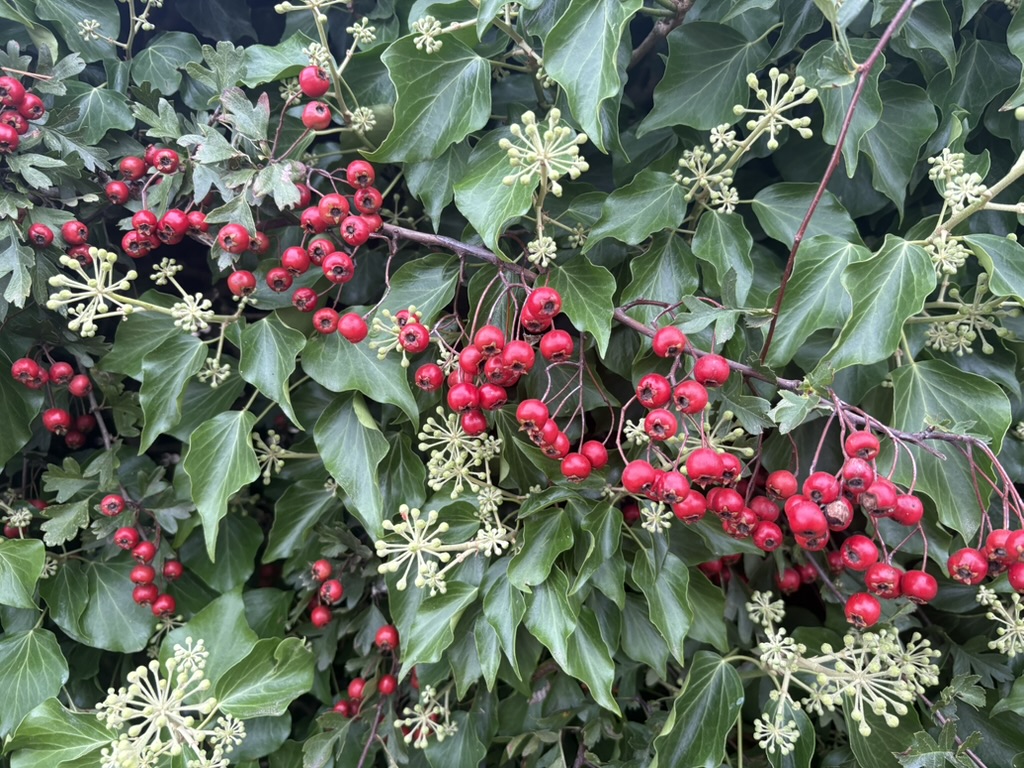
First tick on the Hedgerow Bingo was Hawthorn, her red haws seeming especially glowing and engorged this season, she’s having a great year. Do head out and find some haws if you can, being very careful to identify them correctly, the accompanying frilly-edged leaves and thorny stems are a good indicator (don’t follow this picture where she’s splayed herself across ivy leaves). One of the simplest ways to enjoy haws is as a tea (6 or 8 steeped for 10 minutes or so in a mug of boiling water). Other recommendations are to make haw brandy using the same process as you would to make sloe gin (see below) but using haws, sugar and brandy. A little bit fiddlier but well worth the effort is haw ketchup which has the richness of a barbecue sauce, I love it on toast with a poached egg.
Hawthorn is known to herbalists as a heart medicine, able to regulate the heart. When you sip your haw tea, see if you can feel the gentle pace she encourages you to adopt. It’s like finding your own rhythm, a perfect antidote to a world that tries to force you to a different pace. If you are on any kind of heart medication do therefore take advice before trying hawthorn.
Herbalists often use hawthorn brandy as a base for tincturing other herbs, or perhaps as an opening remedy before introducing other herbs. This is because hawthorn is able to open up emotions and receptivity within the body, as well as carrying her fortitude through the blood to reach all parts. Hawthorn is a member of the vast Rosaceae family, with the protective thorns and open-petalled flowers typical of this group. We can feel protected while opening up our hearts, much as she provides physical protection in the hedgerow.
Number Two: Bramble
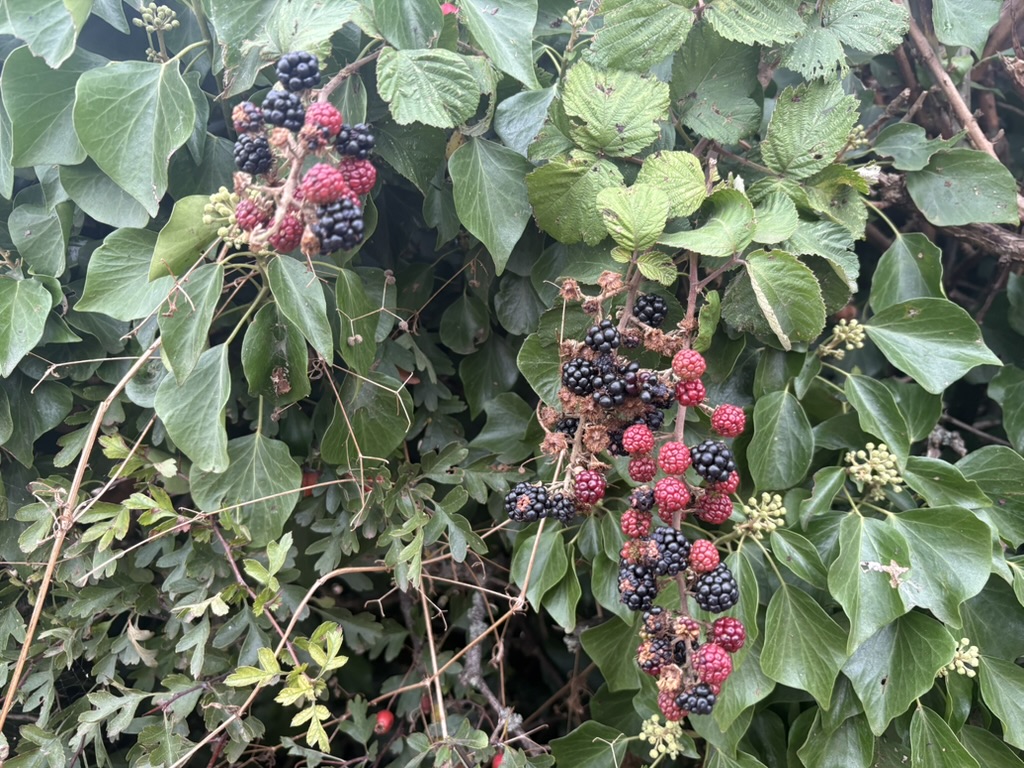
Bramble gave us another tick on the Hedgerow Bingo. At this time of the year recognisable for her juicy berries, probably the hedgerow fruit that most people have experience of and would be happy to recognise and gather on a sunny afternoon. When blackberries are ripe you can smell their juices on the air. It can be fascinating to watch those in different aspects ripening in succession from green, to red, to black. This year supplies have been plentiful since late July.
If you’d like other ways to enjoy bramble besides putting her fruits into a crumble or jam, try gathering a few of her leaves too. They make a very astringent (drying) addition to a tea if you’d like to try tasting them, another way to access her health-giving vitamin C. Alternatively, make a very strong brew and add this to your bath to brighten and tighten skin. Similarly this infusion can be used to rinse hair, helping deepen colour, especially useful for patches of grey hair among dark trusses.
As with so many of our hedgerow herbs, bramble has her associated superstitions. I particularly enjoy looking out for loops of bramble scribing big circles along the hedgerows. Where these meet the ground and strike a root they are thought to provide the magical powers of curing boils. Just past the affected part through the loop. Do tell if you have any experience of this!
Number Three: Rose
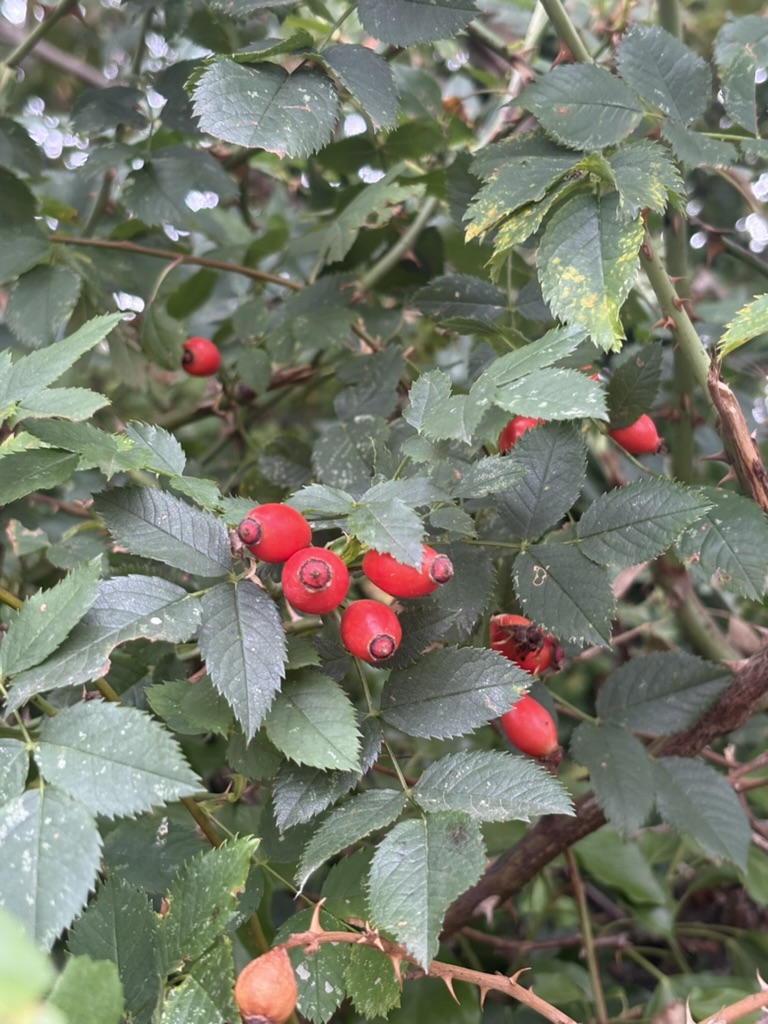
Another shiny red berry made tick number three on the Hedgerow Bingo card. This time we were delighted to find rosehips, again hugely plentiful this year. Some in our group had memories of rosehip syrup, a once-cherished source of winter vitamin C. Women and children used to be sent to the hedgerows to collect basketfuls to supply chemists in making their stocks. If you’d like to make your own, gather your rosehips then bring them home to prepare. Here it’s worth knowing my ‘Rule of 3’ for hedgerow gathering. I always reckon that whatever time you spend collecting in the wild, you’ll need at least three times that to prepare your finished product. So head out for a lovely walk and gather, then settle down for an evening of prep.
With rosehips, very much advise wearing gloves, and you’ll need a sharp knife. When you cut a hip open you’ll see why. They have been known to provide a handy source of ‘itching powder’ for those mischievous enough to sprinkle it down another’s back. Wear the gloves to prevent you getting this itchiness over your hands. You might also want to wear a mask if you’ve lots to prepare. You’re looking to take out that powder and the tiny seeds plus chop off any hairy tufts at top and bottom of the hip.
Once ready, weigh the rosehip flesh and then put in a pan with twice that weight of water. Bring to a boil then cover and take off the heat, leave to infuse for 30 minutes. Strain this through a muslin, reserving the liquid. You may want to do this a couple of times to ensure all the hairs are definitely removed.
Now put the reserved liquid into a clean pan and boil rapidly until it has reduced in volume by a half. Add sugar, at about half the weight of the original batch of rosehip flesh and stir gently until completely dissolved. Simmer for about five minutes, removing any surface scum that may form and then bottle while still warm. Make sure to warm the receiving bottles first so there’s no big temperature shock that might crack them. Seal tightly and label. Store this in a dark place until ready to use, and once open store in the fridge.
Use your rosehip syrup through winter to boost your vitamin C. You can take a teaspoonful at a time neat or add it to a mug of warm water. More adventurous types may get creative adding it to cocktails (hedgerow mojito anyone?) and it’s great to pour over puddings – either hot rice pudding or pancakes, or cold ice cream or yoghurt – or use it to sweeten your morning porridge.
Number Four: Elder
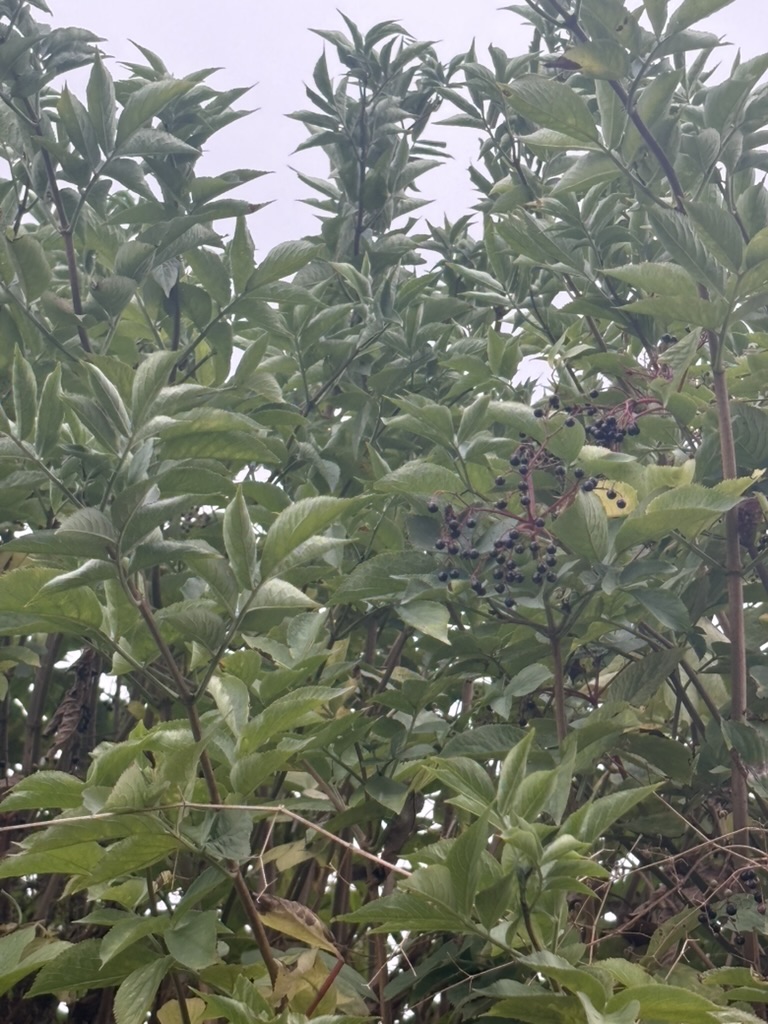
Hedgerow Bingo number four was Elder. In this season it’s her clusters of dark purple berries that hang enticingly from high up above us, so many out of reach. Elder is one of the most revered hedgerow trees – although one of her many contradictions is that she sits somewhere between tree and bush, we take her as we find her. By custom you should aways ‘tip your hat’ in acknowledgement when you pass an elder, and if wishing to gather from her, you must ask permission from Hylde-Moer, the mother of the elder. While she gives generously, even being known as ‘the medicine cabinet of the hedgerow’, her gifts must only be taken respectfully.
Elder is our marker of the turning seasons. The beginning of summer is greeted with her fragrant white flowers; the end by these jewel-like berries. When you’re close to, you realise the very fine thread-like twigs that hold each berry in the cluster. I’m afraid your time preparing the berries will require patience separating berry from twig, a process known as ‘stribbing’. Choose your method, some prefer fingers, and don’t mind the purply staining that inevitably ensues. Others use a fork for speedier effect.
What to do with your elderberries? With just a few you can make an elderberry rob. A rob is a quaint name for a syrup-like medicinal drink. Make this by putting your elderberries in a pan with an equal weight of water. To this you can add your choice of spices – cinnamon, ginger, star anise, cloves, even cayenne if you like. Boil together until the liquid has reduced somewhat and then cool and strain. Some people like to keep it just like this, others will add sugar in a ratio of anything from 1:2 to 1:1 (sugar:syrup). If adding sugar, return the liquid to a clean pan, add the sugar and gently heat and stir until the sugar is fully dissolved. Then bottle, label and store as for rosehip syrup.
If you have more elderberries, have a go at making Pontack Sauce. This is an old fashioned recipe in the style of Worcestershire Sauce. It dates from the days when travelling around the country would take days or weeks in a stagecoach, overnighting at inns along the way. You could never be sure quite what the food would be like at each stop, so carried your personal sauce with you to be able to douse it and add flavour as needed.
Richard Mabey provides a great recipe for Pontack Sauce in his Food For Free book. The essence of it is to chop onion very finely, add this with the elderberries and spices (including peppercorns) to some vinegar and heat. Then strain all and bottle. The trick is to keep your sauce for seven years to mature before use. Sounds ridiculous, but I can assure you tastes gorgeous.
Have even more elderberries? Then you can make my favourite of hedgerow wines. Far better than the heavy, overly-flavoured blackberry wine, elderberry wine has a delicious lightness while still definitely being a full-bodied red wine. Start it off now and you can be toasting your Christmas turkey with it. Also good sloshed into the gravy.
Number Five: Blackthorn
One final superstar on the Hedgerow Bingo autumn card, blackthorn. The scowling sister of hawthorn. I see her as the wicked witch of the West, there are certainly some good witchy associations with blackthorn. Her branches were used to make blasting rods, the wands witches would use for malevolent spell casting. She has viciously long thorns, considered to ward off evil, but also used to stick into poppets in sympathetic magic.
Blackthorn and her dark wood is associated with this season of darker nights, known as the ‘Dark Crone’ or more kindly as ‘Mother of the Woods’ she represents the waning of the year, we all age with time. There is something harsh in the nature of the blackthorn, a representation of winter. When Spring finally comes we sometimes have a sharp cold snap that feels like winter biting back, this is known as a ‘Blackthorn Winter’. Blackthorn is one of the trees represented in the Celtic Ogham, associated with the word ‘Straif’, from which we derive our word ‘strife’ – there is conflict and hardship in her very nature.
But along with that, the transformation that can only come through experiencing hard times. There is a duality here. It was necessary for the Prince to persevere through the thicket of thorns to reach the sleeping princess and change his life’s fortunes.
In seeing the protective, positive nature of blackthorn, her branches were sometimes hung over doorways to ward off evil spirits. Her wood was made to create amulets worn for protection, or fashioned into walking sticks to protect travellers on lonely roads. In Celtic times her hard wood was even used to make cudgels for warriors.
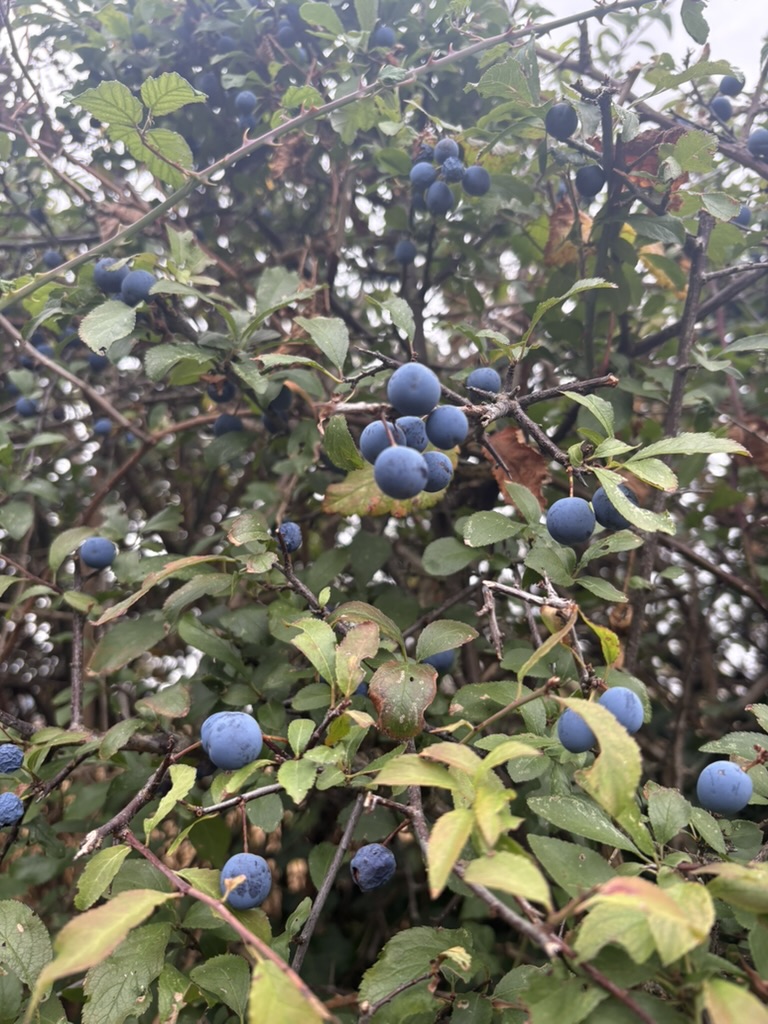
But what we can’t ignore in this season is her berries, the sloes. That’s what we seek her out for. Sloes are, of course, the basis for sloe gin – that luminously pink snifter that keeps the chills away on a winter’s evening. Sloe gin is great for aiding circulation, one of the reasons it’s a go-to to have ready for when cold weather arrives, but it should also be revered for its fabled ability to help absorb the energies necessary for life. It will both stimulate and stabilise, bringing hope and joy.
Make your sloe gin by ensuring the skins of the fruit are ‘bletted’ (i.e., burst to let the juices seep out). Do this by pricking all over with a pin (that’s another long evening gone!), or by ‘cheating’ – freezing them will generally burst the skin doing this bletting job for you. There is a long-held belief that sloes should be gathered after the first frosts, when they are considered to be sweeter. Freezing at home mimics this so can be recommended for that reason too.
With sloes prepared, put them in a jar with half their weight of sugar and cover with gin. Leave to steep for around six weeks or so – you should see the liquid going that glorious pink colour. Then strain off and bottle. For added enjoyment, find your best, most delicate cut glass liqueur glasses (ridiculously cheap in many a charity shop) and sip by twinkling candlelight.
And more …
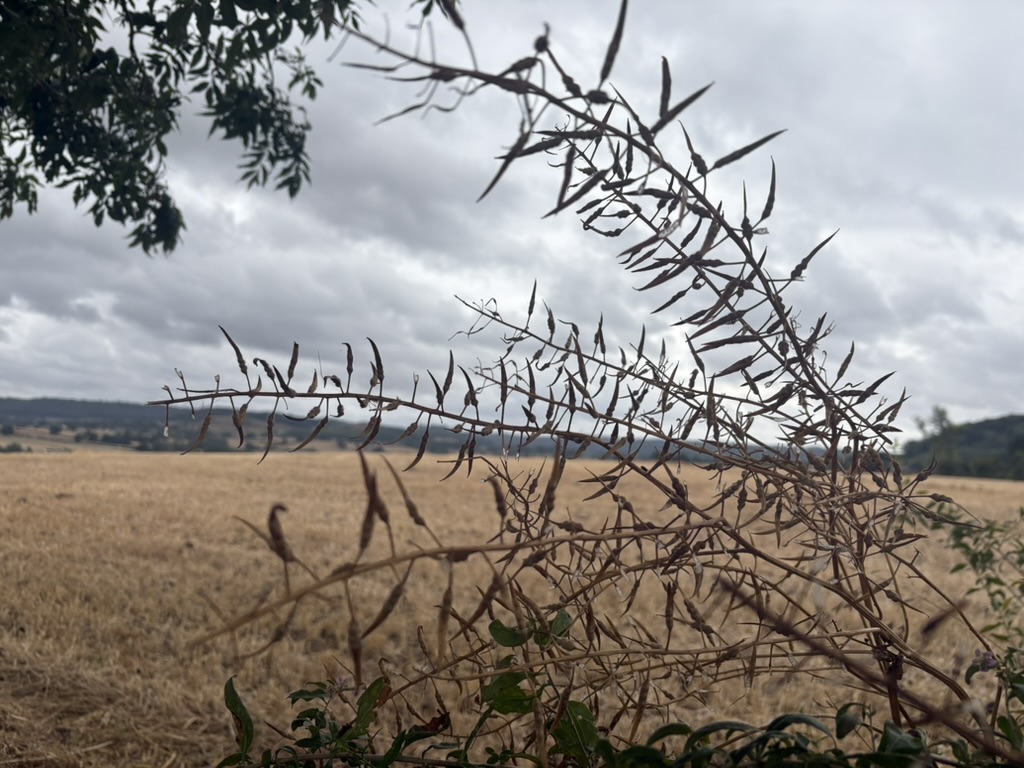
That’s our five top hits on the hedgerow bingo card. But there was lots more to see on the walk. We paused by rapeseed to spy how tiny her little black seeds are, they’re the ones that get pressed for rapeseed oil.
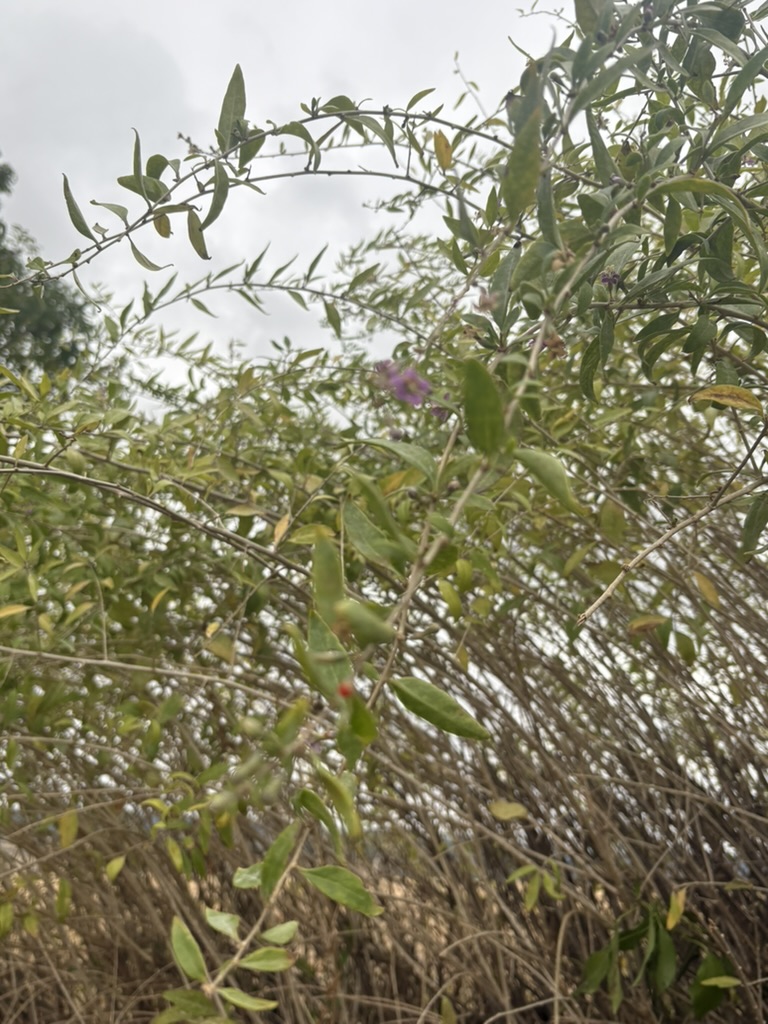
We were excited by the spreading branches of matrimony vine, aka ‘The Duke of Argyll’s Tea Plant’ – its little purple flowers clearly identified it as a member of the Solanaceae family (bit of a roulette from tomatoes and potatoes at one end, to deadly night shade at the other), and the tiny ovoid berries gave it away as goji berry. Not one we’d readily expect in a hedgerow, but we’ve been planting them since the 1730s. You can eat the berries fresh or dried (although they are mostly planted as forage for birds) and the leaves are used in cooking too or to make a tea, which has a fresh, green and slightly sweet taste.
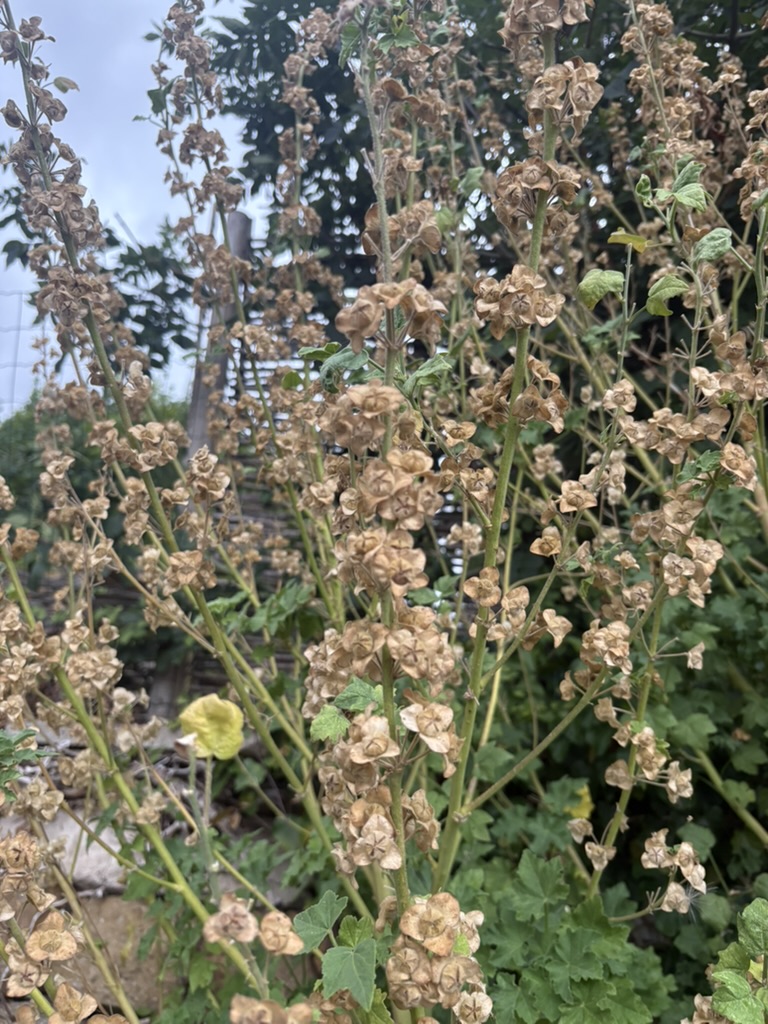
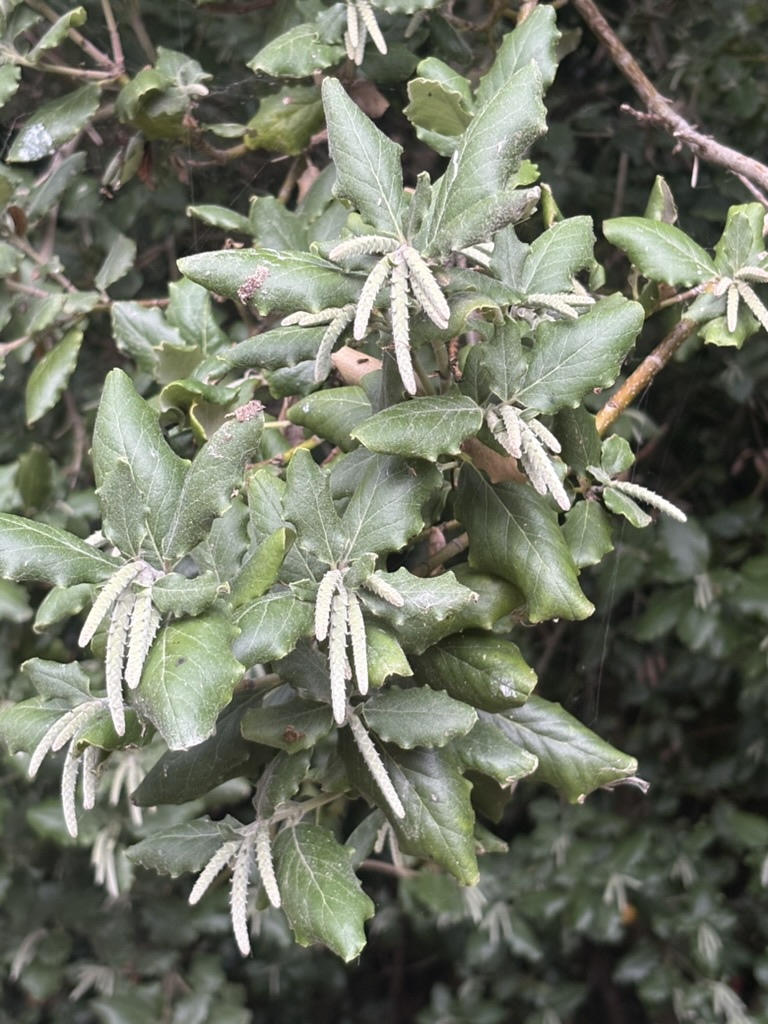
At the end of the lane we rounded onto Pevelands where a walnut tree’s fragrant leaves reminded us of an indulgent radox bath, marshmallow lined a wall, now in end-of-season dryness but still displaying her soft, soft leaves and ‘cheeses’ of seed cases, and the tassles of Garrya Elliptica were starting to form just the other side of the Nursery wall. Come back in February and these will be 30cm long white catkins, giving the plant it’s common name of ‘Silk Tasslebush’. It’s also been known as the ‘Quinine bush’, not because it contains quinine (that comes from the bark of South American Cinchona trees) but because in the absence of a source of quinine, the leaves of Garrya Elliptica have sometimes been used as a substitute. They are intensely bitter so can provide the fever-relieving effect we typically turn to quinine for.
One last treat having crossed the road. The open green area halfway down Manor Avenue has a lovely lot of surprises, including the starry blue flowers of chicory, famed as a coffee substitute (the dried, roasted and ground roots). No gathering of roots in the wild, but a few gathered seeds may result in chicory appearing experimentally in a couple of gardens not too far from here.
Leave a Reply