
A second opportunity to explore the canalside herbs with Stroud Valleys Project (read about the first walk here). This time we chose the stretch of water from Fromebridge Mill. You might have noticed the brilliant bit of architecture that puts the canal underneath or ‘through’ the roundabout on the A38. While this is currently a ‘dead end’ to the East, awaiting connection with the canal through to Stroud, follow it West and you can get all the way to Saul Junction and beyond.
Our evening stroll was timed for the hour and a half before sunset (becoming ever earlier as we approach the Equinox). Starting from Fromebridge Mill we had a walk-of-two-halves. First an array of all the hedgerow fruits; then a collection of waterside specials.
Hedgerow Bingo
The hedgerow gave us a chance to play ‘Hedgerow Bingo’. For full details of the plants to look out for in our autumn version of this take a look at the September herb walk, and then head to your nearest hedge to see how many you can spot.
Hops
Adding to the array on this walk, hops tumbled over the hedge. A little further gone now summer is reaching its end but still with recognisable tendrils. They seemed an appropriate find when on the driveway to Fromebridge Mill pub as they are the dominant choice for beer making. Before hops were introduced to England all sorts of herbs were used to flavour beer, but hops soon gained favour because, as well as adding that rich, soporific flavour, they also provide an element of preservation – they contain lupulin which is antimicrobial. Good for soothing a poorly stomach too, but not so good to soothe the sore head that may follow drinking too much hop-infused beer.
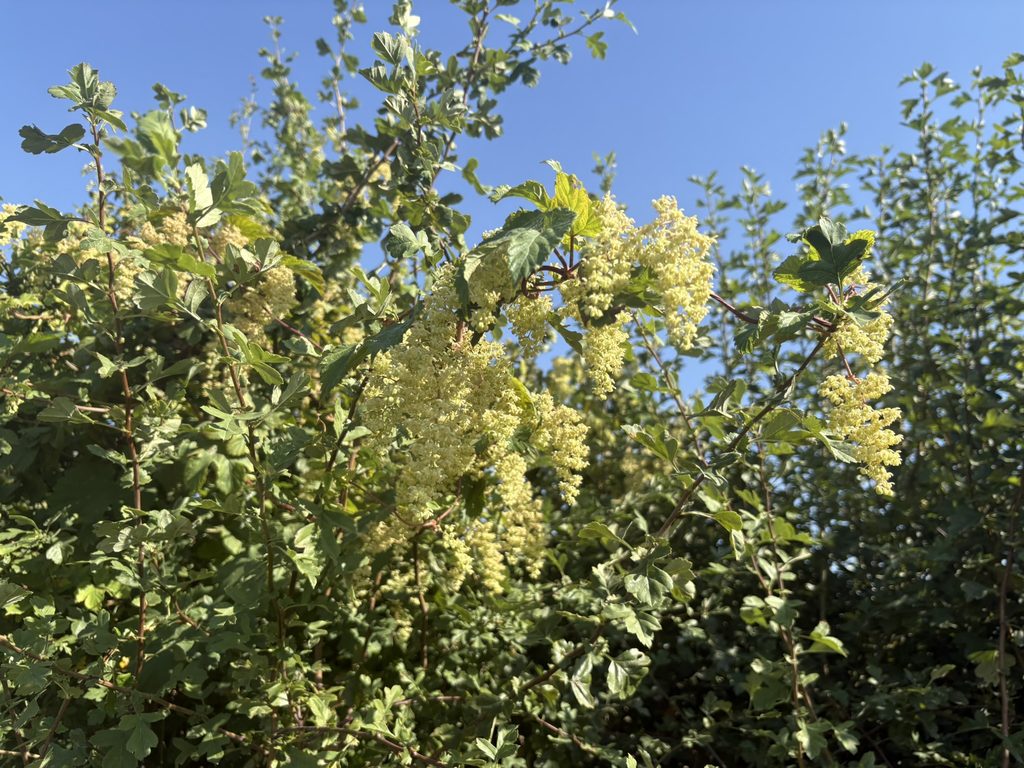
Field Maple
We also found field maple, a sign of an aged hedgerow. Field maples have low, dense branches providing good shelter for birds and other creatures. Their nectar comes early, a welcome foraging source for bees, and their seeds are enjoyed by finches. Fairing well despite our hot summer, field maple is known to be able to adapt to drought, she also resists air pollution well. Of course there are folk associations with this long-lived-with tree. Her branches may be hung to ward off bats and evil spirits or, left on the tree, you can pass a sick child through them to effect a cure, or to protect them from the harm that may be wreaked by spells.
Canalside
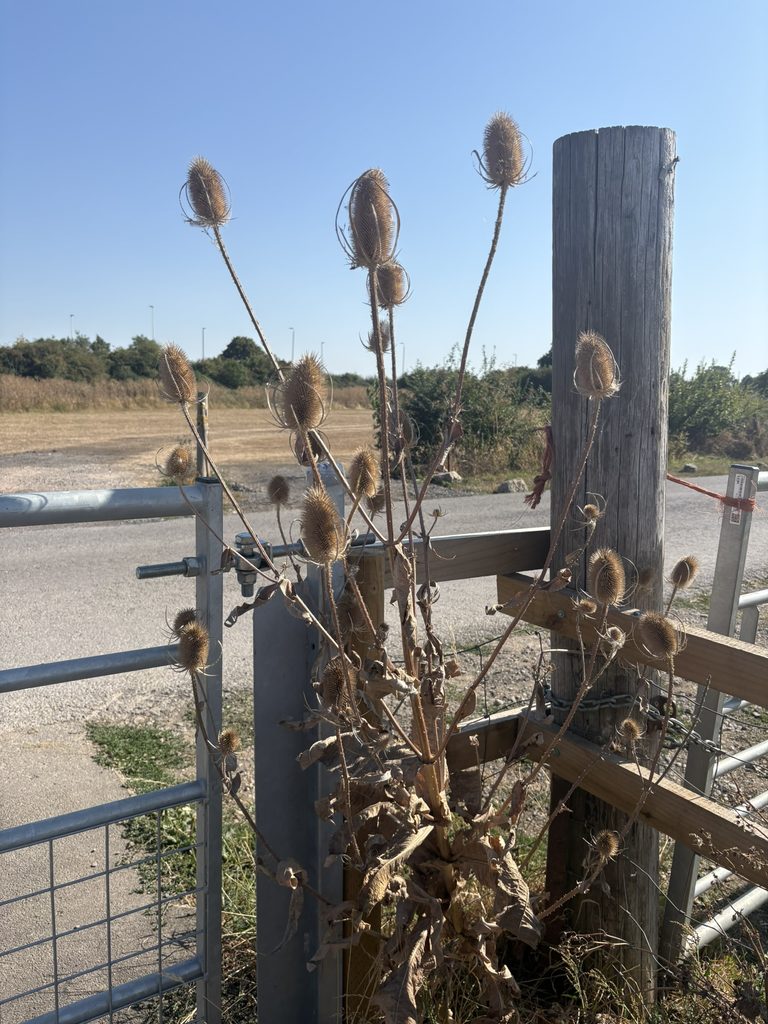
A gate takes you from the driveway of Fromebridge Mill onto the canal path. Look out as you pass through for teasel (a remnant of our cloth-making heritage) and chamomile plus plenty of wild carrot just over the fence, now with its seed heads balled up.
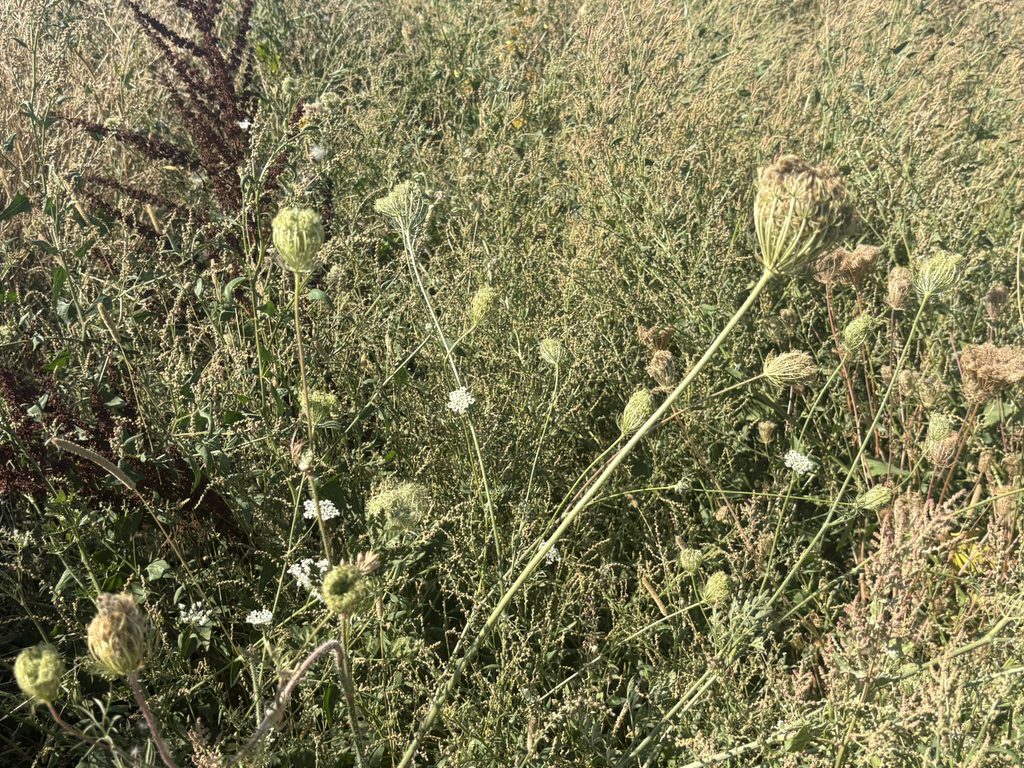
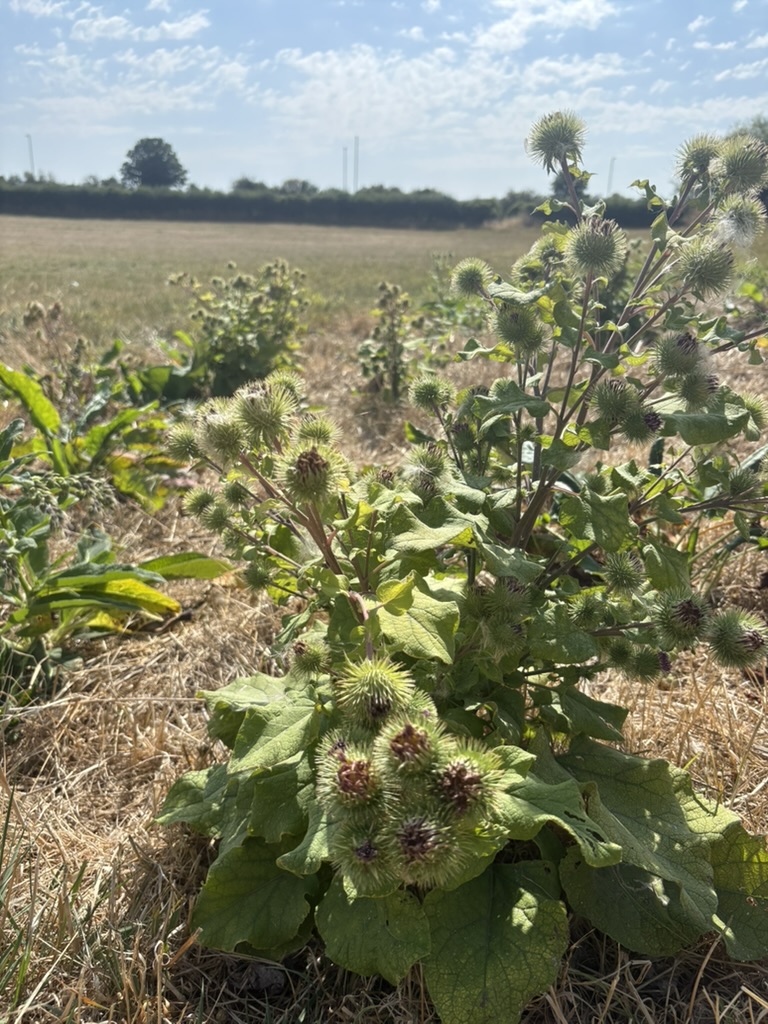
Along the way we spotted prickly lettuce, now looking much less appetising having been shrivelled by summer’s heat; yarrow, still strong and supporting the herbs around her; big-leaved burdock, rusty-leaved dock and ribbed-leaved plantain.
Water plants
Water lilies
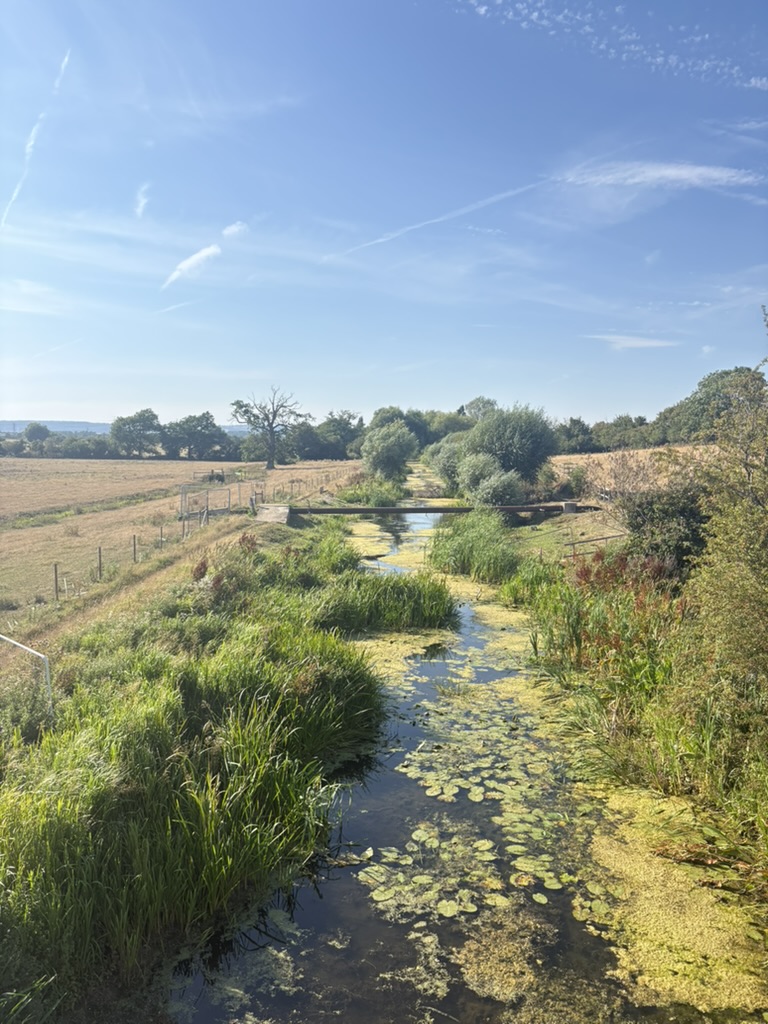
On the water we were happy to come across the spreading pads of water lilies. These are a bonus ecologically because they can oxygenate the water, releasing the gas through their leaves. They can also absorb excess nutrients through their roots. And as a triple whammy, their flowers cast shade across the water’s surface which can help deter algae growth. Creatures love them too, nectar for pollinators and shelter for amphibians.
We don’t tend to gather water lilies in the UK, but they are edible and eaten in other cultures (always cooked first). Stems can be peeled and added to curries and stir fries; buds or petals boiled, pickled, battered and fried; seeds popped, roasted or ground into flour.
Perhaps it’s our folk lore that keeps them sacred for us. From Celtic times water lilies have been considered guardians of sacred pools, only blooming when the ancient spirits bless them, so finding a lily-covered pool is a sign of divine favour.
The flowers’ habit of closing at dusk has led to a belief that the water nymphs cradle their babies in them, hence it is forbidden to gather the flowers at night for fear of inadvertently stealing a child.
Bull rushes
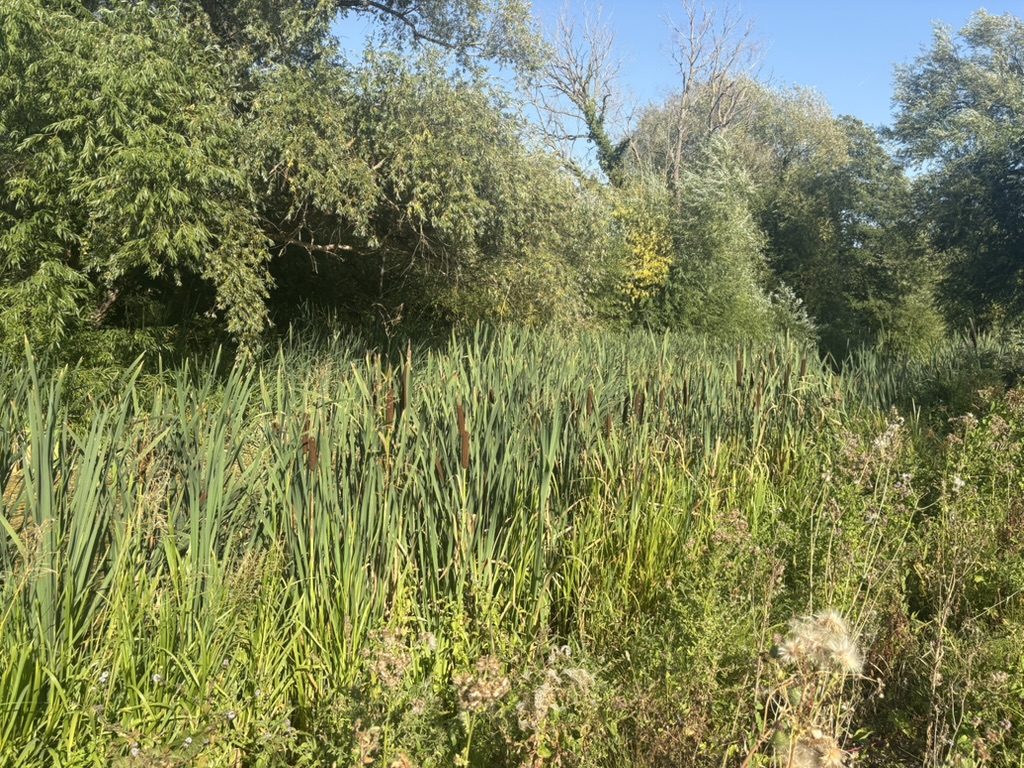
Another plant associated with hiding babies (this time from the Bible story of Moses in his crib) are bull rushes, the stately reeds that line parts of the canal. Strictly speaking these should be referred to as Reed Mace, but anyone with an early Christian Sunday School indoctrination is likely to find the name of bull rushes coming to mind quicker. Rush is our old English name for a tall grass, ‘bul’ is simply a prefix meaning large. Maybe you know them as cat tails, or one of the other forty or so names they’ve acquired through time.
They have a slightly malevolent spirit, not recommended for bringing indoors unless you’re prepared to accept bad luck or potentially even a death in the family. This may come from the Irish association of the stems, with their spindle-like appearance being associated with banshees’ spinning tools.
Or maybe we keep a respectful distance because they were once used as torches, dipped in paraffin and set alight, especially for Halloween parades. With high likelihood of being a fire hazard.
These too provide benefit for the water, stabilising the bank, removing nitrates and phosphates and providing shelter for wildlife.
And they’re also edible, the shoots can be peeled and eaten raw in spring; roots can be boiled to eat or dried to grind into flour; seed heads will cook like baby corn when immature; and even the pollen provides ingredients for making batter.
Watermint
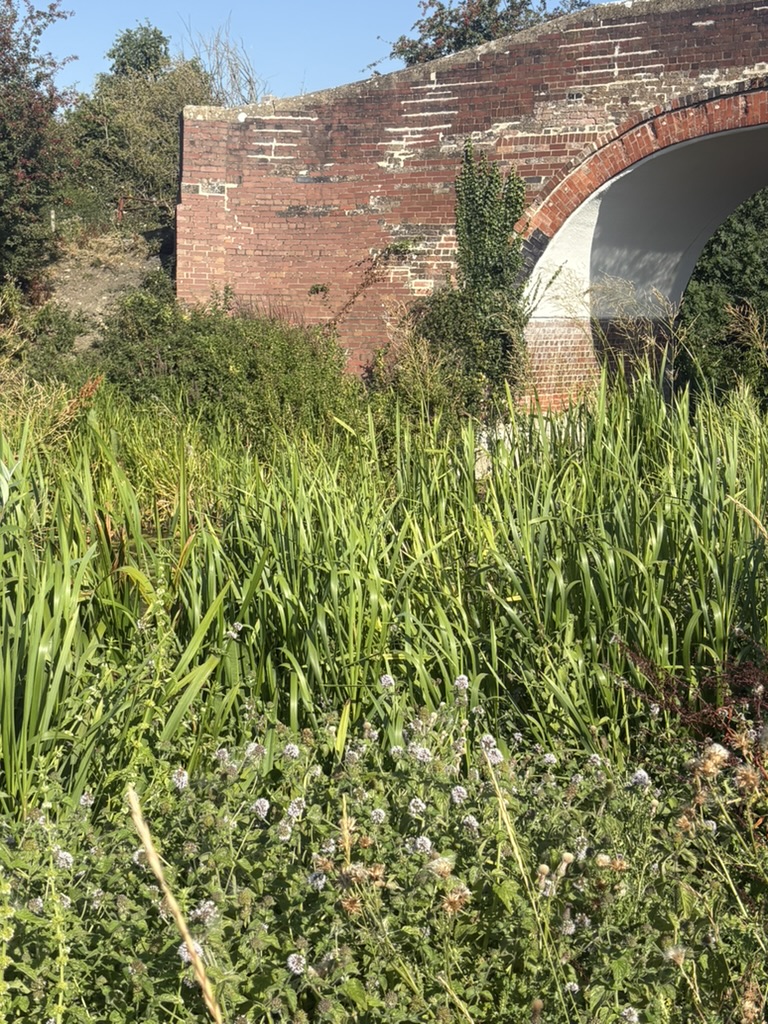
The abundance of watermint means you can catch her scent on the air, fresh, fragrant and unmistakably minty! She’s the firey one of the three main mint sisters (read about them in this blog).
By the water here, she’s aiding with natural filtration, absorbing excess nutrients and pollutants, including toxic algae and heavy metals.
She’s also loved by bees and butterflies, look out for small tortoiseshells, peacock and comma butterflies.
If any of the bug-life around the canal happens to nip you, water mint’s leaves can be good to rub on a bite, or on aching muscles. And a little gathered to take home will make a great herbal tea when steeped in hot water.
Water forget-me-not
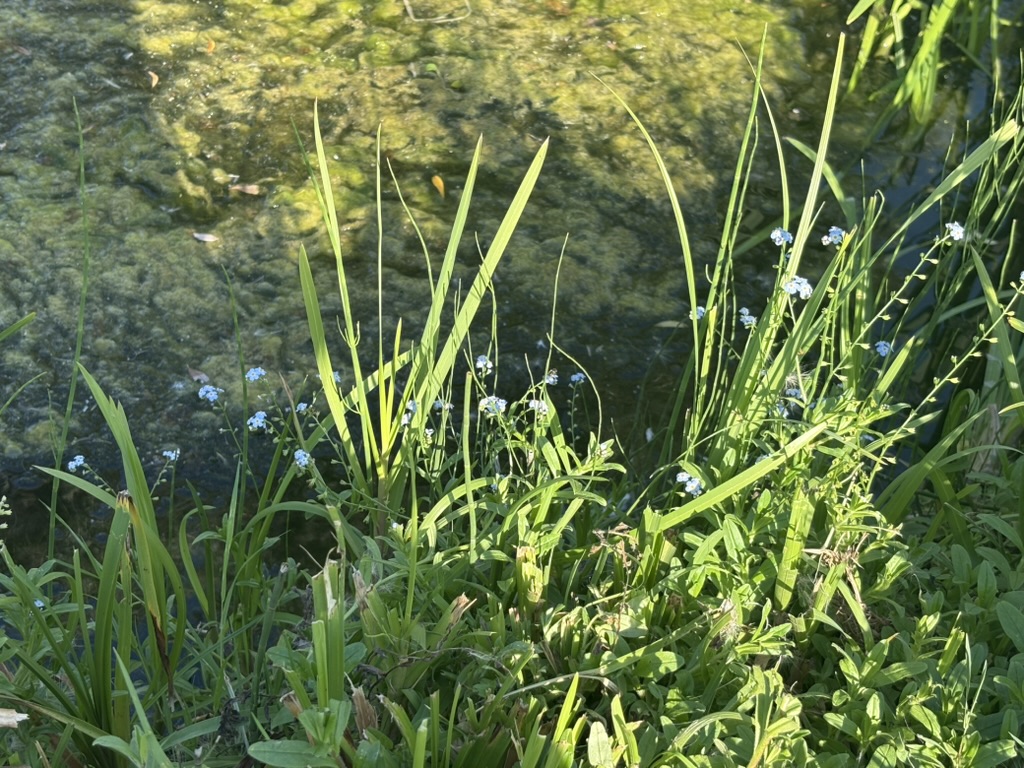
As the sun was beginning to wane, we reached a bank covered with water forget-me-not, a pleasing end to our walk.
While similarly bright blue as the garden forget-me-not this plant differs both by still blooming at this far end of summer, and also in the promise it has of returning year on year, whereas the garden variety is biennial, only appearing every other year.
Some call her ‘scorpion grass’ referring to the curved ‘tail’ at the end of her stems; but to the Victorians in their language of flowers she represented true love.
Leave a Reply