Mint
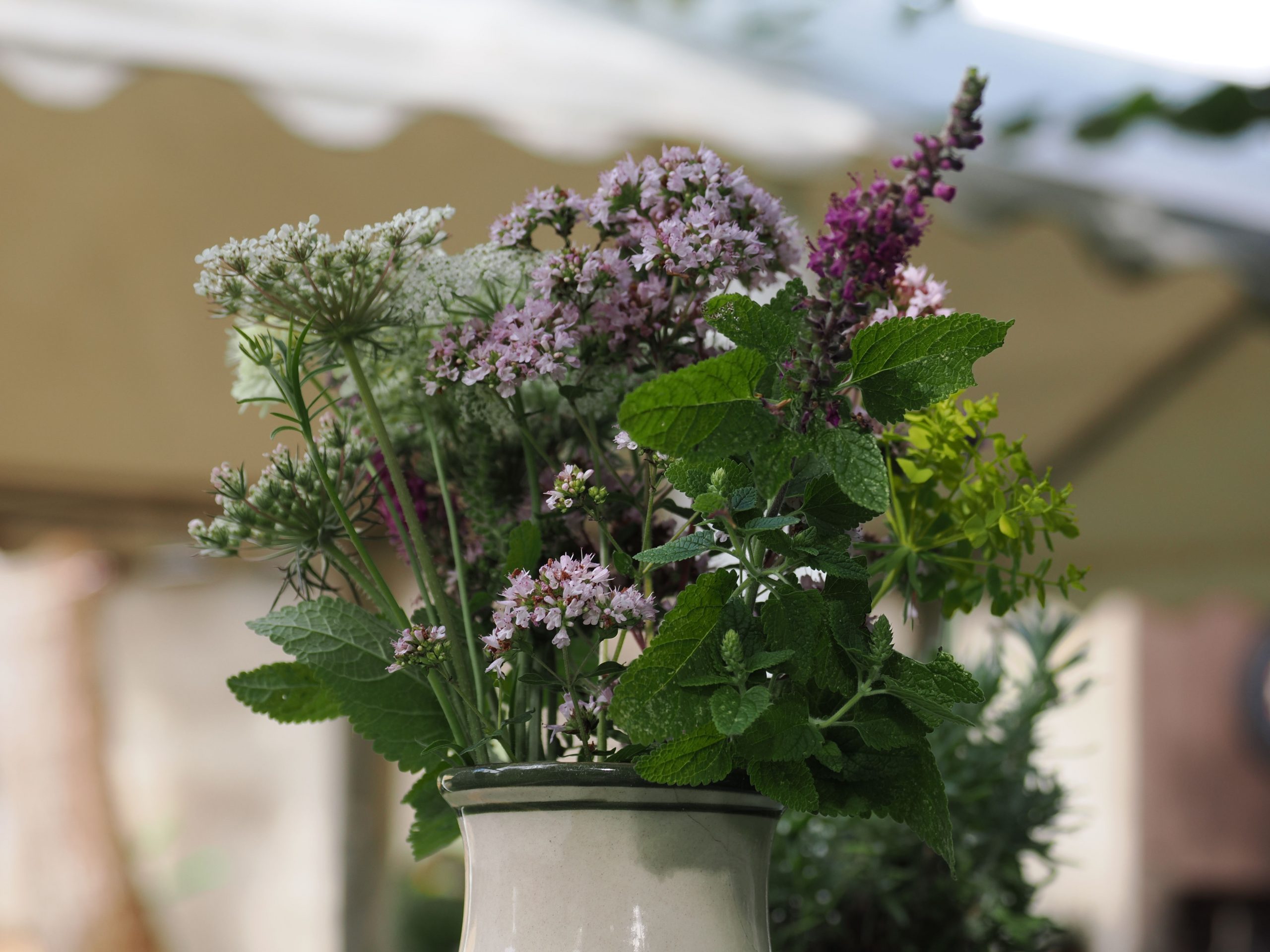
If you’ve bought flowers from me at any time from April to September, your bouquet will probably have contained mint. It’s one of my favourite foliages!
Why do I love mint so much? I think it’s because I can’t get enough of the scent. Whether pepper, lemon or spear, a lovely whiff of mentha adds an extra sensory dimension to a floral arrangement, especially when layered with the smells of other scented foliages such as rosemary and eucalyptus.
But equally, I love it for its shape. The bushiness makes it great for supporting other flowers and creating rhythm through a design. Start with three or four mint stems spiralled in your hand or in a vase, and you’ve got a basic shape that you can then build on by adding other flowers. Larger-leaf varieties are also great for covering any ugly mechanics in an arrangement, although the soft stems mean it’s best used with chicken wire and isn’t well suited to foam or a pin frog.
And on a practical note, it lasts well, up to a week or sometimes even more (which I find surprising given how soft the stems and leaves are – mint always feels to me like it should be more delicate and diva-ish than it actually is!).
Of course mint is not just a foliage and I should not fail to mention how beautiful its fluffy little flowers are. They range from purple, through lilac to an almost grey colour and give a sort of misty background that helps more obvious flowers to shine out, while also adding height and airy-ness to a display.
How to harvest mint
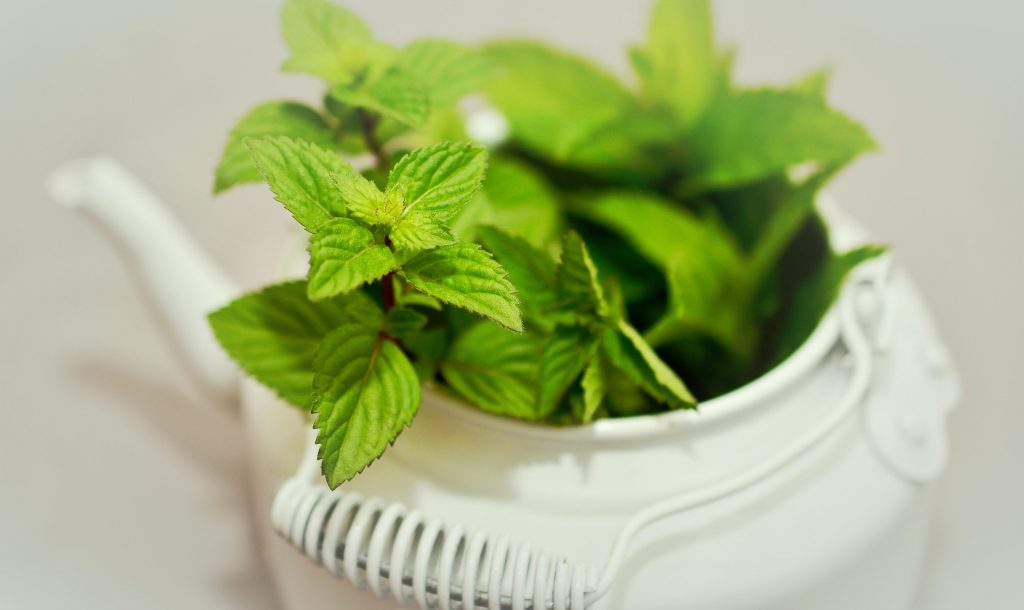
To get the most from your cut mint, I’m afraid you’ll need to get out in the garden as early as possible in the AM as that’s the time the stems are strongest and best for cutting. Snip the mint straight into a bucket of clean, cold water, removing any leaves that would otherwise be below the water line. Make those cuts at a nice, sharp 45 degree angle to maximise the stem’s ability to take up water, pop in a bit of flower food and give them about 24 hours to hydrate in a cool, shady place before you use them in a design.
How to display mint
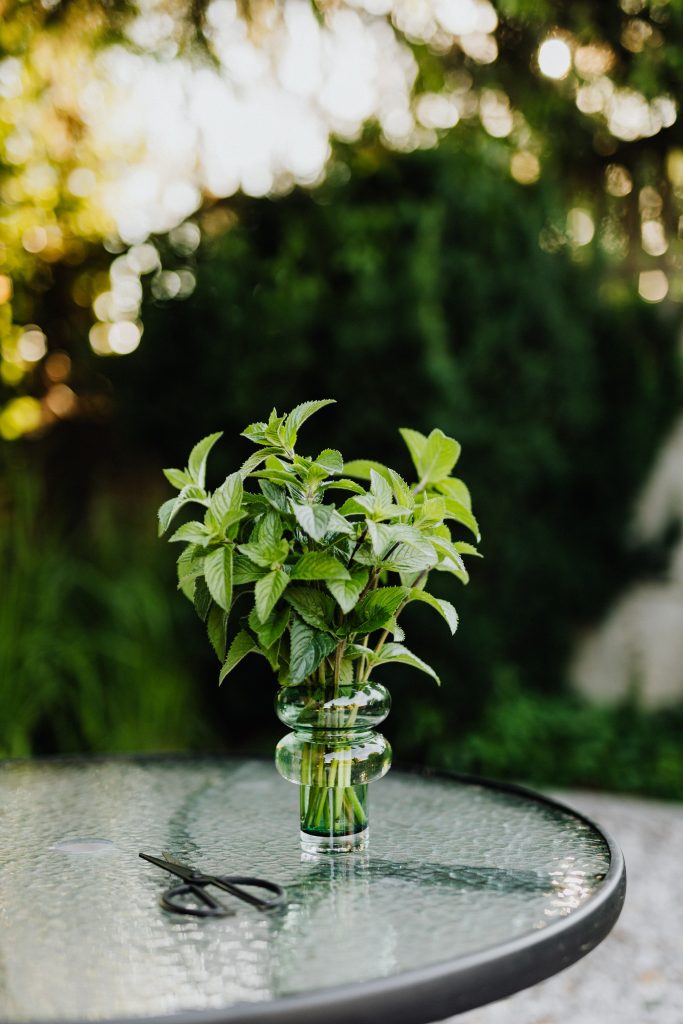
Mint is a must for your on-trend, cottage garden bouquets and arrangements. Mix smaller-leaved varieties and tiny flowers abundantly with other delicate florals such as nigella, jasmine, lavender and feverfew, plus plenty of wafty grasses, for a whimsical, meadowy look.
Use bigger leaves of mint with scabious, ox-eye daisies, calendula and cosmos, for a bolder, bushier style. I particularly love big-leafed mint with garden roses, as long as the scents don’t clash or overpower one another.
Mint is traditionally associated with welcome, so it would be lovely to have it by your front door, but also has been historically used at funerals, so would make a thoughtful addition to a sympathy bouquet or wreath.
Keeping mint
As I said, mint is surprisingly robust but if you do find it starts to wilt, try cutting the stems again and repeating the hydration process. This also works for your kitchen mint by the way – I always keep mine in a pint glass of water just inside the fridge door!
On that note, while it’s fine to use mint that’s been sold as food for flower arranging, I would advise not to eat mint that’s been sold for the flower industry, or use it in contact with wedding cakes or other food, unless you know for certain that the grower hasn’t sprayed it with chemicals. If in doubt, don’t risk it.
But then, why would you want to eat it, when it’s so beautiful to look at! I’m joking of course, but hopefully you’ll be looking at it a little differently now you’ve read this, and giving mint a chance to shine outside your julep glass or the sauce on your roast!
Sophia Mason is a florist based in a little studio in Cam. She offers flowers for all occasions, with a focus on sustainability and supporting local growers. Find out more on the Sophia Mason Flowers website