

June’s Herb Walk was part of Dursley’s new OffBeat event, happening alongside a Bee Walk and an Historic Rope Walk. Participants could join either at the Market Place or at the walk location, St Mark’s Churchyard on Woodmancote.
The churchyard is a green oasis a stone’s throw from the centre of town, largely unseen from the road. St Mark’s Church itself was built in 1844 as a secondary church to St James’ in the centre of Dursley. It was deconsecrated in 2023 but the churchyard is being looked after by the Town Council with a Wildlife and Biodiversity Plan. This actively manages the woodland edge to encourage wild flowers and the grass to keep areas accessible while also allowing wildflowers, insects and other wildlife to thrive. It gave us plenty to see on our herb walk.
Passion Dock
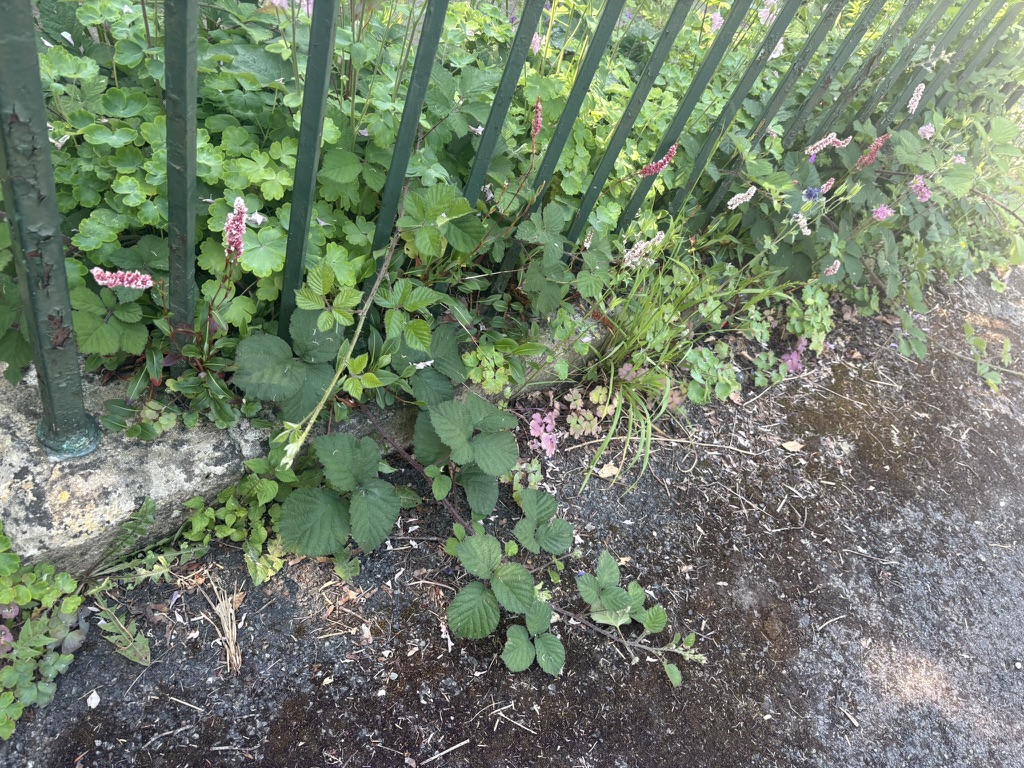
As we gathered by the gate on Vizard Close, the most obvious plant was slender, pink flowered bistort. This herb got its ‘twice-twisted’ name from it’s S-shaped root. It was colloquially known as “Passion Dock” relating to its use in Easter puddings, a savoury dish eaten during Lent including the slightly bitter leaves of bistort along with onion, oatmeal and nettles fried in bacon fat.
Birds
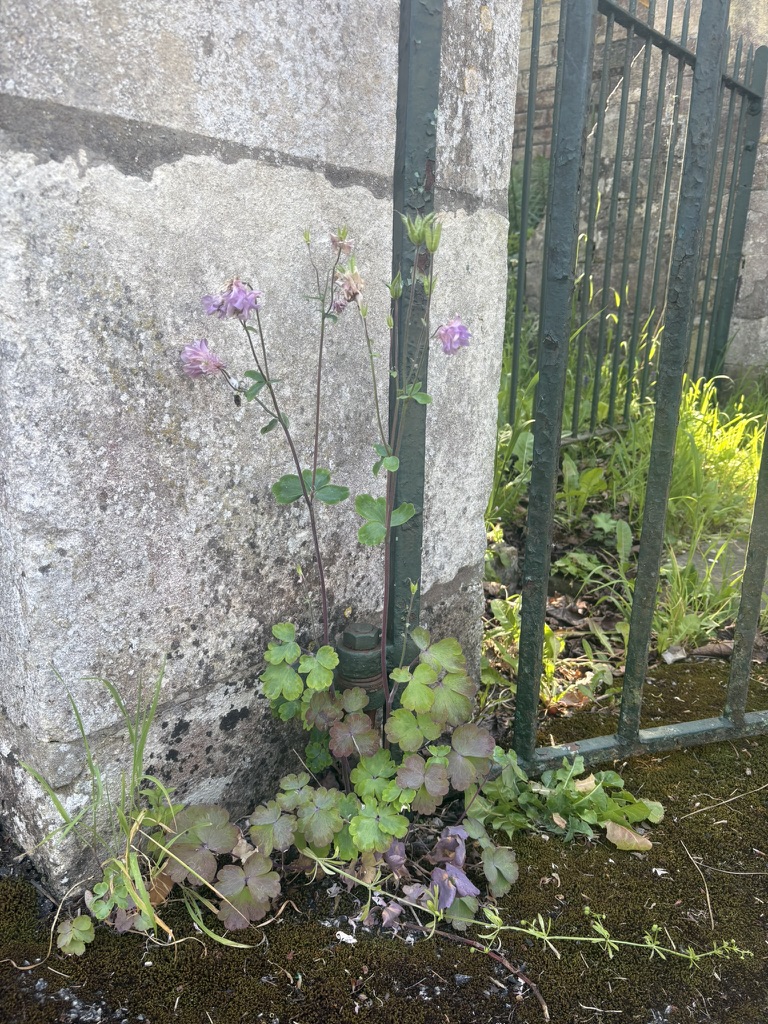
Along with the bistort, another pink (and-other-hued) flower known variously as ‘Granny’s or Dolly’s Bonnets’, ‘Rags and tatters’, ‘widow’s weeds’ or ‘columbine’. The latter name relates to a top-down view of the flower looking like a ring of five doves. The other bird associated with this herb is the eagle, the curved petal spurs are thought to look like eagles’ beaks. The confusion of this dual association with birds of very different natures meant Victorian floriography (the language of flowers) assigned Aquilegia (its latin name) with qualities of foolishness and devoted love. In Hamlet, Ophelia hands out columbines to symbolise ingratitude and faithless lovers.
Fairies
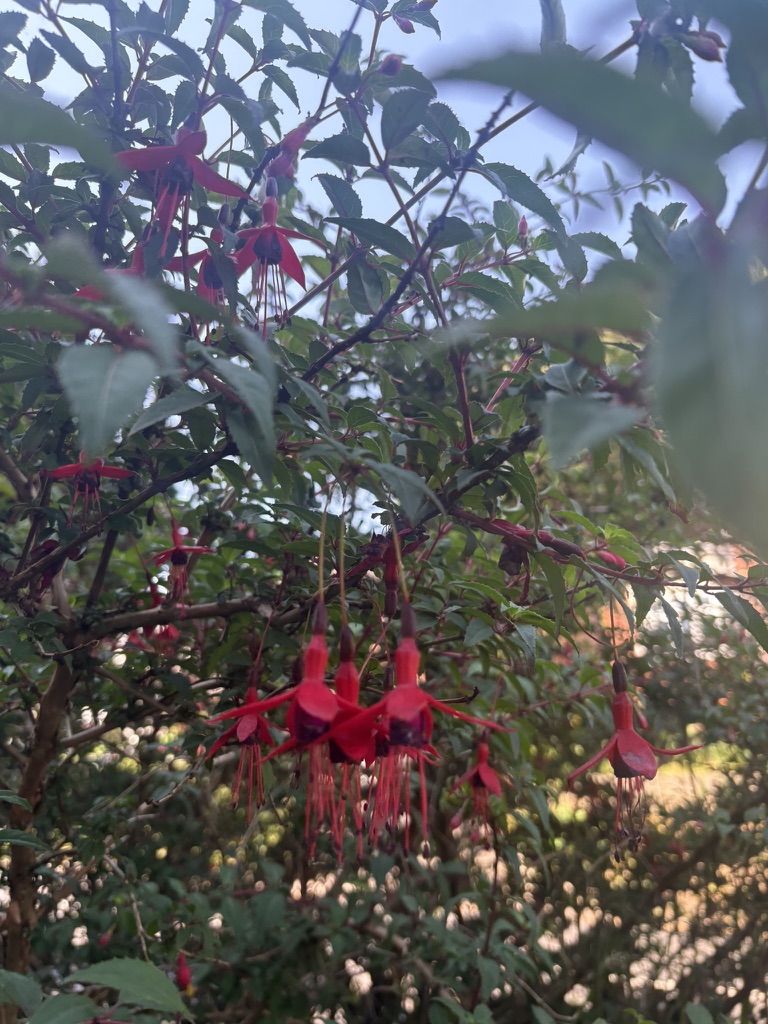
Moving into the churchyard a large fuchsia bush dripped with bright pink flowers. These are one of the best places to look for fairies, they are said to hide in fuchsia bushes. Perhaps this belief came about through watching children play with the flowers, imagining them to be dancing fairies.
Mischief
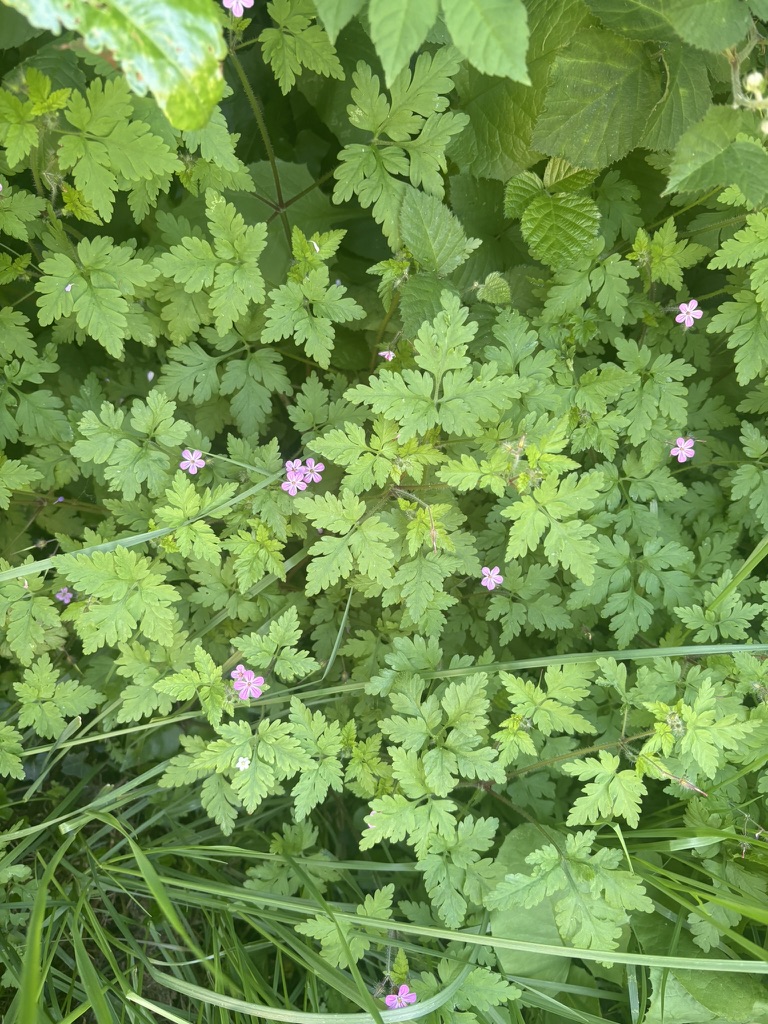
A couple of herbs in the wild geranium family were liberally scattered around the churchyard. Herb Robert, the spindly, sometimes green, sometimes red stemmed plant (the red being an indication of its high tannin content) was named, we think, after 11th C Abbot Robert of Molerne, founder of the Cistercian order of monks. He used the herb to heal many diseases, including plague. It is also linked with Robert, son of William the Conqueror, whose war wounds may have been treated with it, and to Robin Goodfellow, the individual represented as mischievous Puck in Midsummer Night’s Dream. The herb is said to be protected by the mischievous house goblin, to uproot it brings disaster.
The other geranium is the pink-flowered common cranesbill. Cranesbill comes from the Greek geranos, meaning the crane, referencing the beak-like seed pods. This is also known as thunder-flower, to pick it brings on a violent downpour. We didn’t chance this on our walk.
Happiness

Large hypericum bushes showed their sunny yellow flowers, they are related to St John’s Wort, traditionally picked on the Saint’s feast day of 24th June. The medicinal St John’s Wort is a far more delicate plant, known for the perforations on its leaves which hold the valued red hypericin-containing oil. Read more about SJW in the blog as she was June’s herb of the month.
Herb for colour
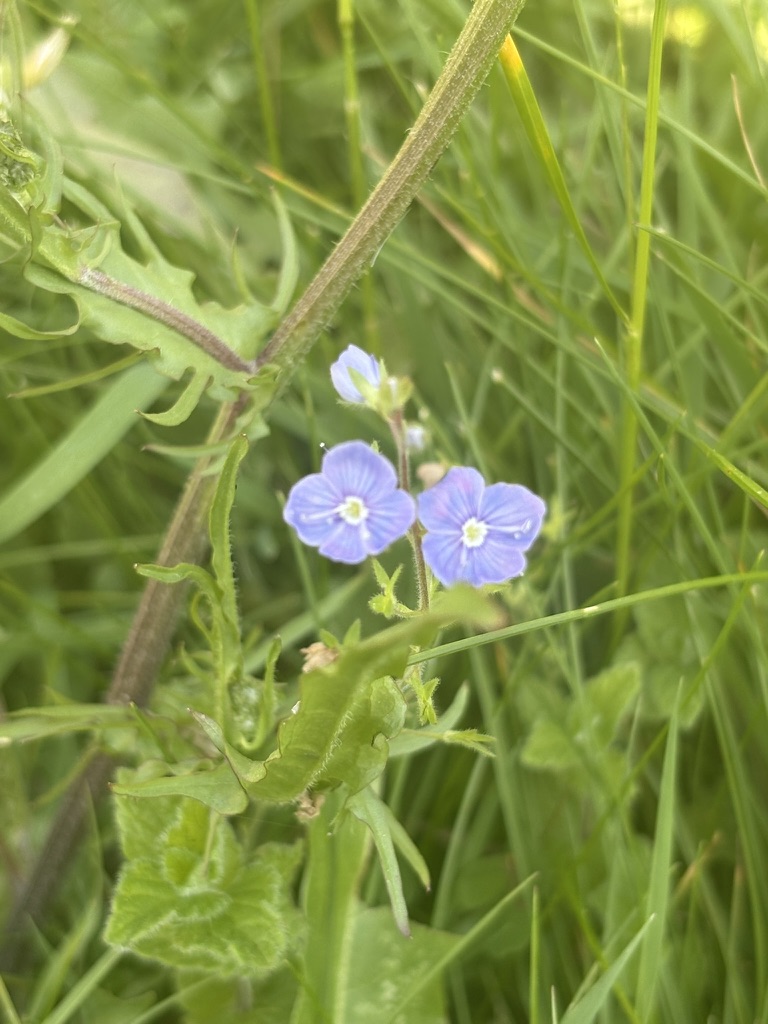
Moving on through the churchyard, the space opens out and large trees preside over the graves. Around these, we found green alkanet growing in abundance. This is a traditional dyeing plant so its presence may be associated with the weavers and clothiers who lived in Woodmancote. The dye comes from boiling its roots, surprisingly (for green alkanet) the dye is red, used for ecclesiastical robes and uniforms. In the same family as borage and comfrey, green alkanet can also be used to stimulate compost and feed plants. Now we are aware of pyrrolizidine alkaloids in its leaf that are toxic to the liver; in the past green alkanet root was carried by travellers to protect them from any poisoned food or drink they met on their way.
Herb for scent
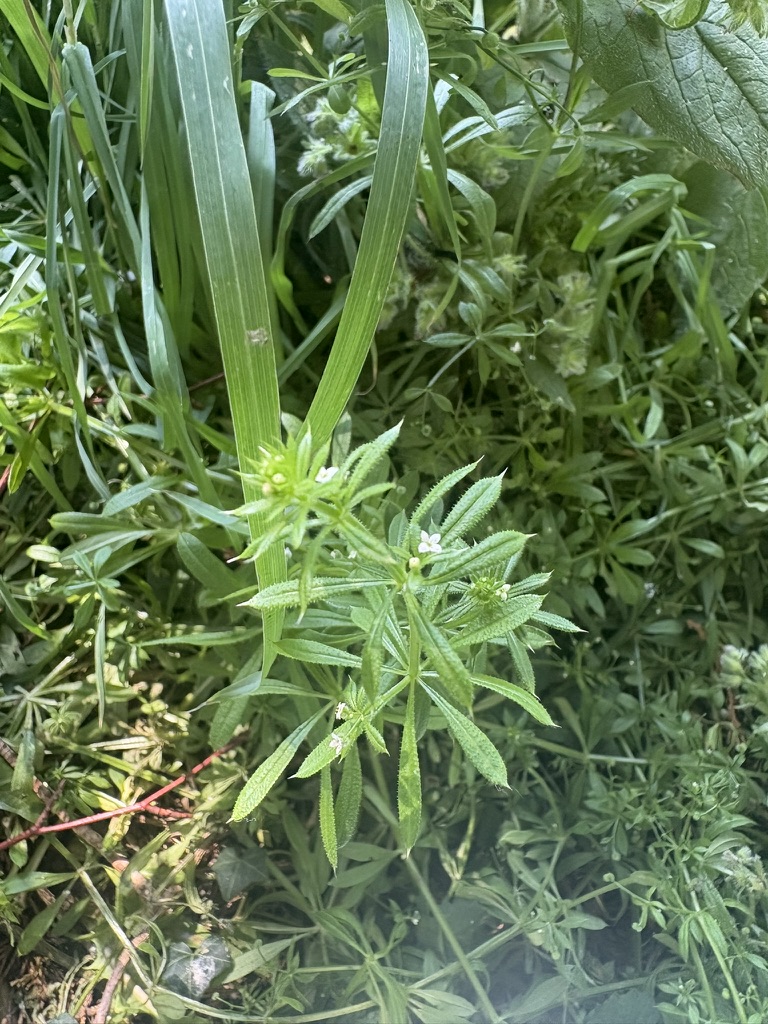
Scrambing through this was hedge bedstraw, from the Galium family (which includes cleavers/goosegrass/sticky willy). Its common name reminds us how it was used to stuff mattresses. When dried its coumarin gives the scent of a meadow, and also keeps fleas away. The roots of this herb will yield a pink dye.
Herb for food
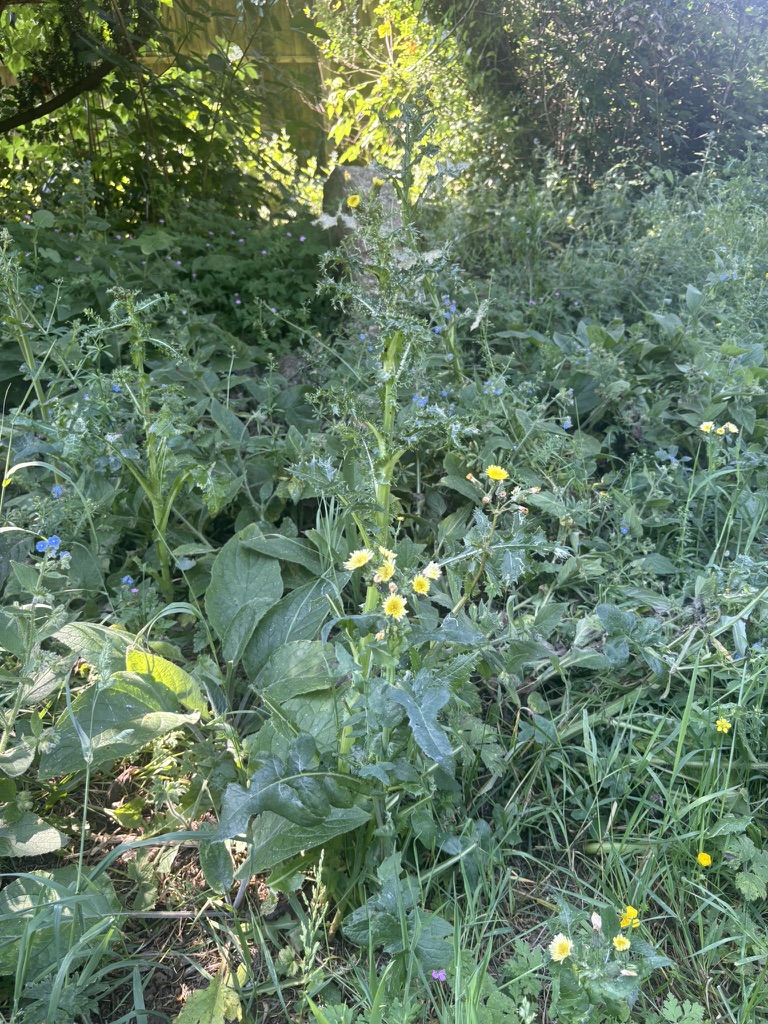
Sow thistle was also here, distinctive for the white blotches on her leaves. A favourite of foragers for a lettuce-like addition to meals, it was traditionally fed to lactating pigs (hence the name). You can also wear it in your hat to protect you from ‘hags of the night’ and from tiring on journeys.
More faries and folklore
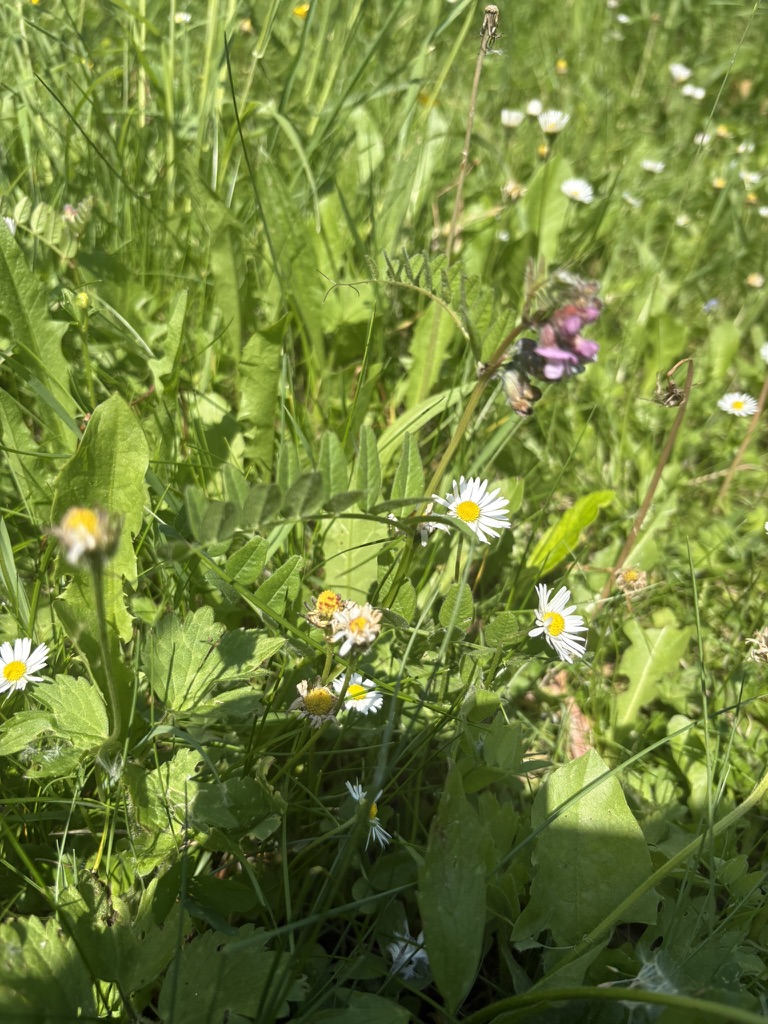
At the back of the churchyard, graves are positioned on a slope with plenty of grass and flowers inbetween. Vetch twines here, a herb associated with magic, protection and resilience. The way she weaves through other plants was thought of as fairy handiwork. She is nitrogen-fixing, helping bring soil back to good health. As is clover. We found a lovely clump of red clover with the white horseshoes on her leaves. As well as a good luck charm (especially when found with four leaves). The more normal three-leaved variety may be associated with the holy trinity, or with the maiden/mother/crone trio. She makes a good tea, drunk by women to ease hot flushes and by all to help clear away the mucus of a chesty cough.
Witches and mistaken identity
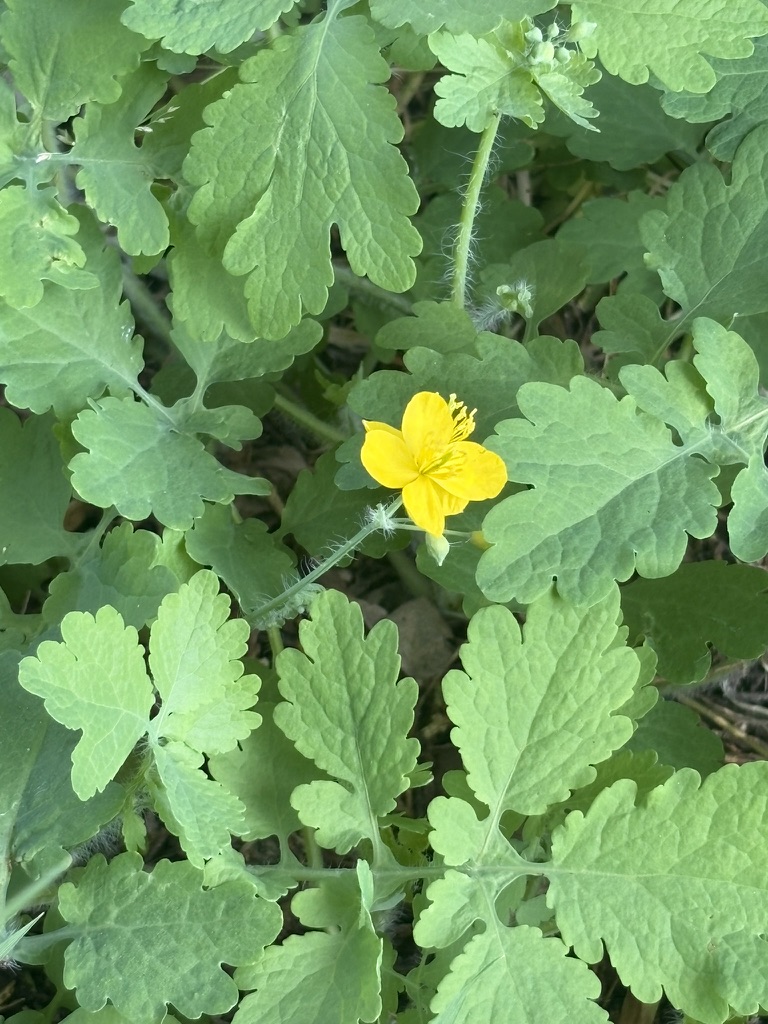
We ended the walk with greater celandine, another happy yellow flower. Known as swallow wort because it flowers as the swallows return. There is a greater celandine carved on Wordsworth’s gravestone (at Grassmere in the Lake District). It is a mistake, though Wordsworth claimed celandine as his favourite flower and wrote several poems about her, it was the unrelated lesser celandine that he favoured, the starry yellow flower that is among the first to bloom as soon as sunshine reaches us in February.
Greater celandine was made into an eye wash and used against cataracts, perhaps copying the way swallows used its orange juice to restore sight for their fledglings. It is also associated with witches. Burn the plant or wash the floor with celandine-infused water to keep witches away. Meanwhile, witches would themselves carry the plant to prevent detection or imprisonment. But if in court, it was recommended to wear the plant against the skin in order to influence judge and jury. This would need to be changed every three days. Another three day practice is associated with the use of greater celandine to cure warts. Benefit from the sap for this purpose only once the plant has been dug up, buried and resurrected three days later to activate its ability.
–
If you enjoy getting to know your local plants, and hearing some of their curious and quirky associations, or perhaps ways you can benefit from them yourself, do join our monthly herb walks. They take place on the first Saturday of every month (throughout the year), are free to join, and suitable for all ages. Find out where to meet each month by checking on the Cotswold Herb Centre website calendar, or subscribing to our newsletter for a timely reminder in your inbox.