
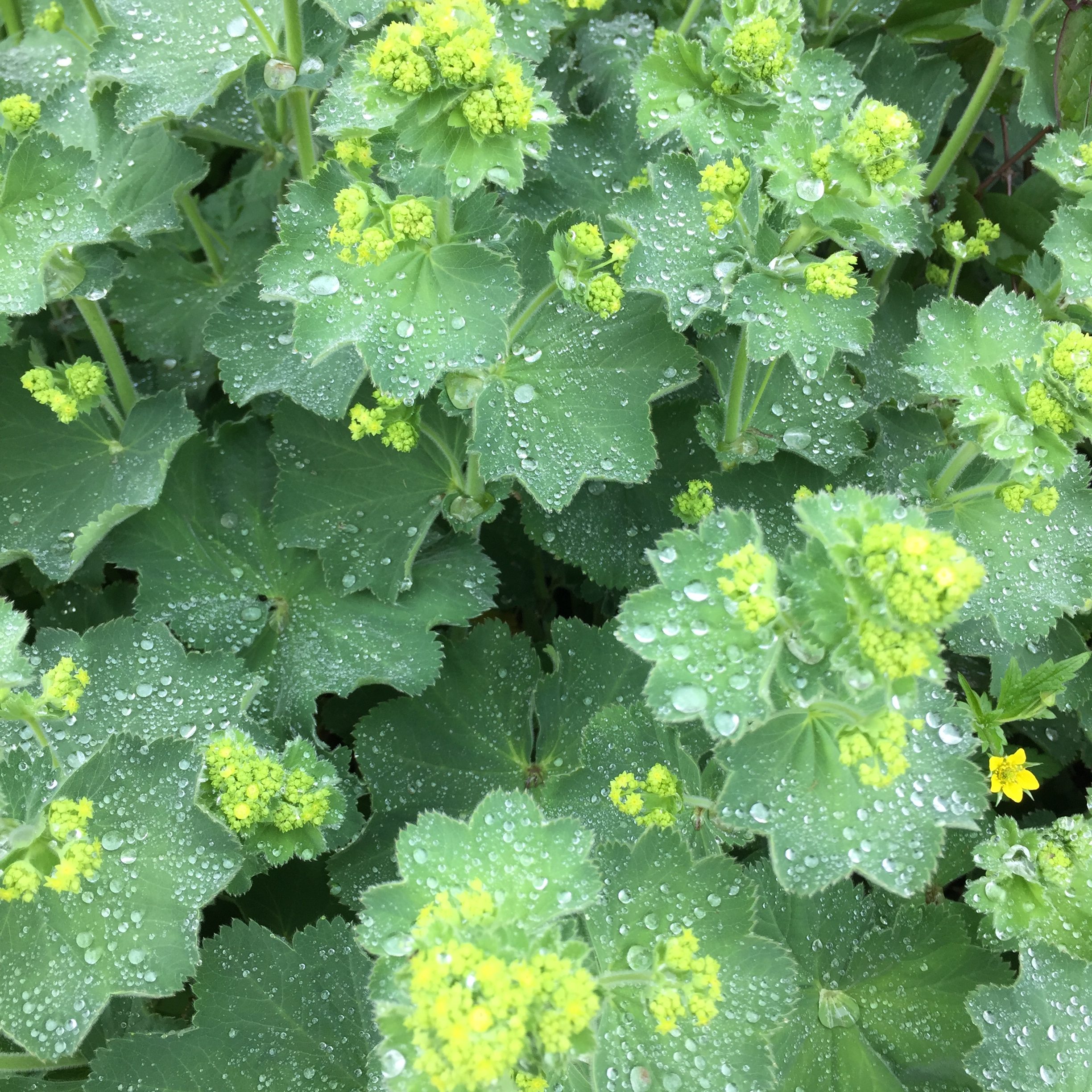
Alchemilla vulgaris
In medieval times, Alchemilla was reputed to preserve youth. Her name means ‘little magical one’, referencing the drops that form on her leaves. This is not dew, but a secretion from the plant herself – an ingredient treasured by alchemists, collected each morning, a drop at a time. Her rounded leaves are pleated, like a cloak (or mantle) and her nature is to nurture and support in a way that feels like having a caring arm or a soft blanket wrapped around you. Considered a ladies’ herb, she provides many benefits for women with particular association for wombs and breasts.
Wild or cultivated
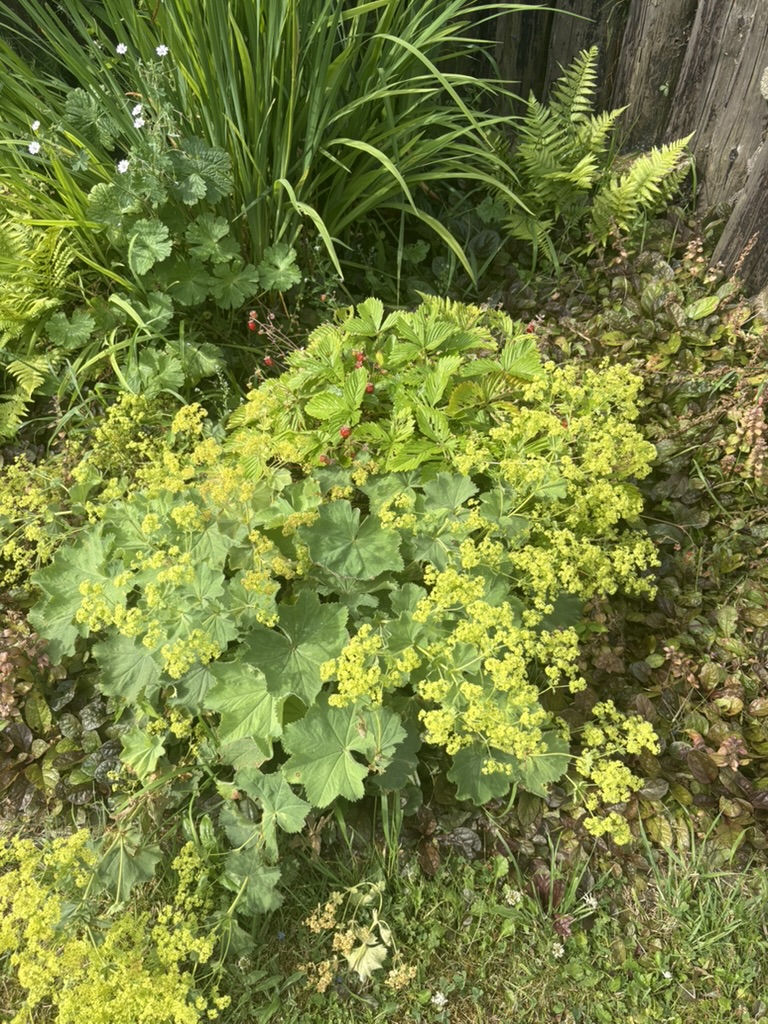
Alchemilla vulgaris, is a smallish plant but can be found growing abundantly in the wild, often in lighter soils, this is the variety favoured medicinally. Alchemilla mollis is the variety of this plant typically grown in gardens, forming large mounds of soft green leaves above which flower spikes appear in early summer. There are about 250 different varieties of Alchemilla. If the garden variety is easier for you to access, this is fine for skincare and teas, particularly if it is her anti-inflammatory properties that interest you.
Alchemilla is a member of the vast Rosaceae family, home to rose, hawthorn, bramble and many more. Often associated with their dual ability to both soften hearts and provide protection.
Alchemilla’s actions
Old herbals sometimes refer to her ‘very drying and binding character’. It is her astringent tannins that create this ability. She is known to help with any areas that have become too open, fluid or permeable. Be that leaky gut, urinary tract, varicose veins, heavy menstrual flow or saggy skin.
She is particularly helpful for oily skin, an infusion can be used to tighten and tone skin, reduce large pores and minimise sebum production.
Alongside tightening, Alchemilla helps reduce inflammation. Her ellagic acid, has been associated in studies with her anti-inflammatory capabilities. This makes her good applied topically against eczema, psoriasis, acne or rashes and burns. With salicylic acid she can be an antiseptic friend against acne, gently exfoliating and smoothing. Drunk as a tea she can help with internal inflammation, calming and soothing the digestive tract.
Lady’s mantle is typically used in a water infusion to access her tannins and antioxidant flavonoids. When plentiful, a juice from fresh leaves creates a tonic for oily skin, try using this to blend a mask. Or soak the soft, large fresh leaves in water and lay them directly on the face as a mask to reduce fine lines and pimples or over eyes as a compress, or to cool sunburn, or to soothe sore breasts.
Distinctive Alchemilla
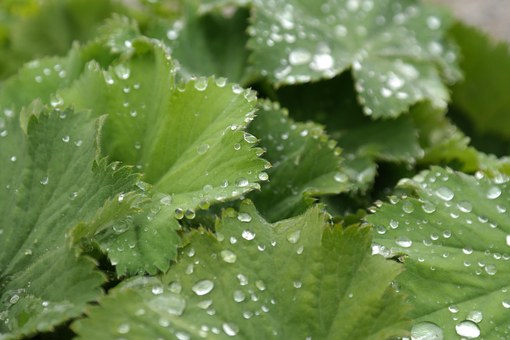
Lady’s mantle is often remembered for the way water accumulates on her leaves in tiny drops. While this looks like she’s captured the dew, they are in fact secretions from the plant herself. In a process known as guttation, water droplets are released to help regulate internal pressure. This tends to be seen at night or early morning when there is high soil moisture and low evaporation. Active root pressure forces xylem sap out through special pores called hydathodes. This same process happens in some grasses, tomato plants and many houseplants.
Alchemists valued dew highly, they would stake out cloths over fields at night in order to collect the dew. When realising lady’s mantle offered little ‘cupfuls’ of ‘dew’ on her leaves these were like a gift from nature. The name Alchemilla and the term alchemy come from the same Arabic root. It is suggested that they sent apprentices out to do the collecting and it was because they got this wrong that their attempts to make gold failed!
Harvesting Alchemilla
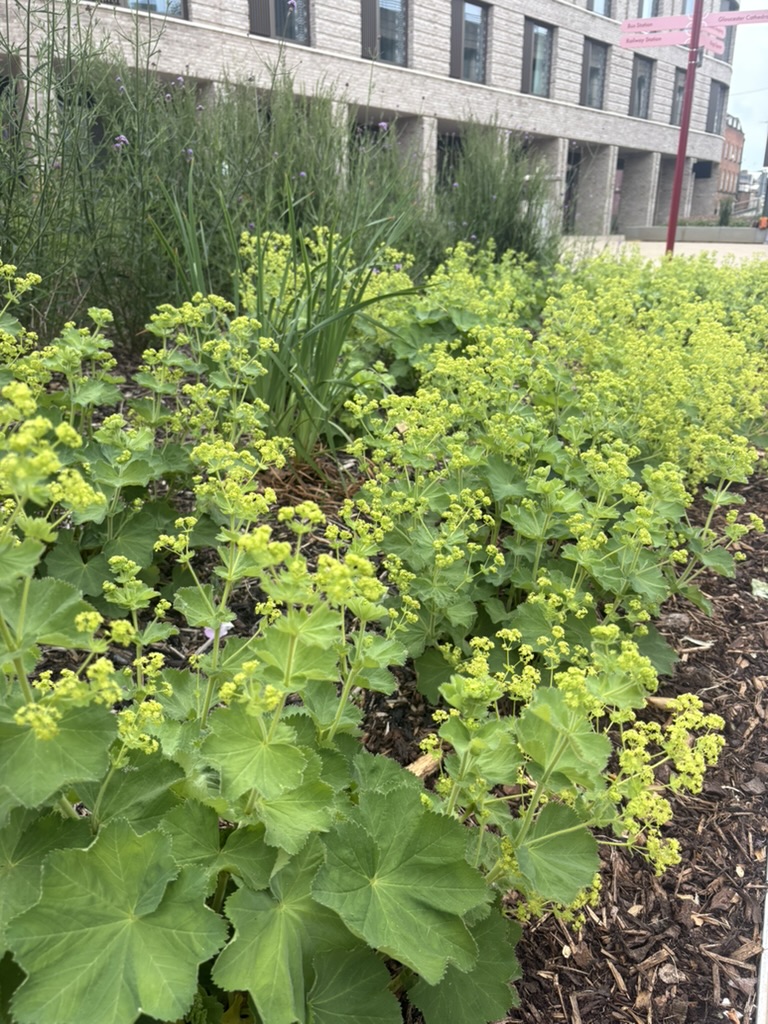
Her frothy yellow flowers, pleated leaves and delicate stems can all be gathered and dried. Collect them soon after the flowers open, certainly before they set seed. Dry them by hanging in small bunches, dehydrate at a low setting or lay on racks.
Leave a Reply