
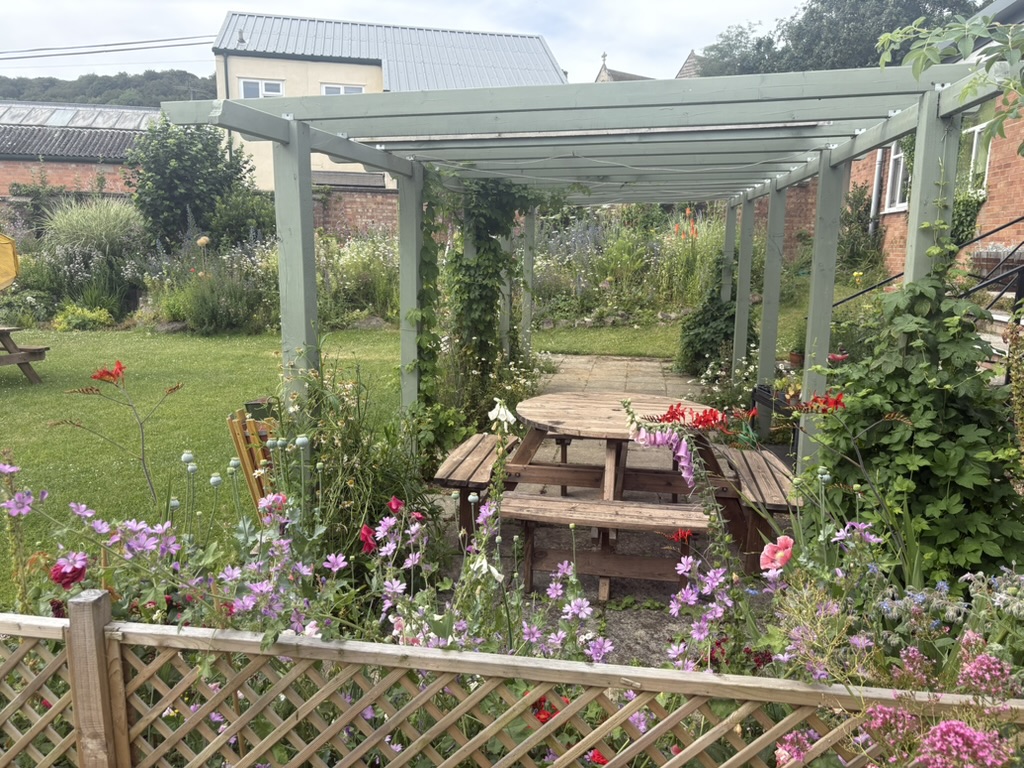
July found us in the colourful surroundings of the Chantry Centre Garden, the hidden green space behind the Chantry Centre on Long Street. Do visit if you can, it’s open on Wednesday and Saturday mornings when the volunteer run café has a wonderful selection of home baked cakes and a warm welcome for all.
While planted as a garden for sitting and socialising in, meaning plants are largely selected for their aesthetic, aromatic benefits, as well as suitability to soil and aspect, with an overall cottage garden feel, there are plenty of purposeful plants among them. Testament to the fact that a traditional, homely garden would have been a natural resource for healing, food and other useful functions. Plants are not just just with us for their prettiness.
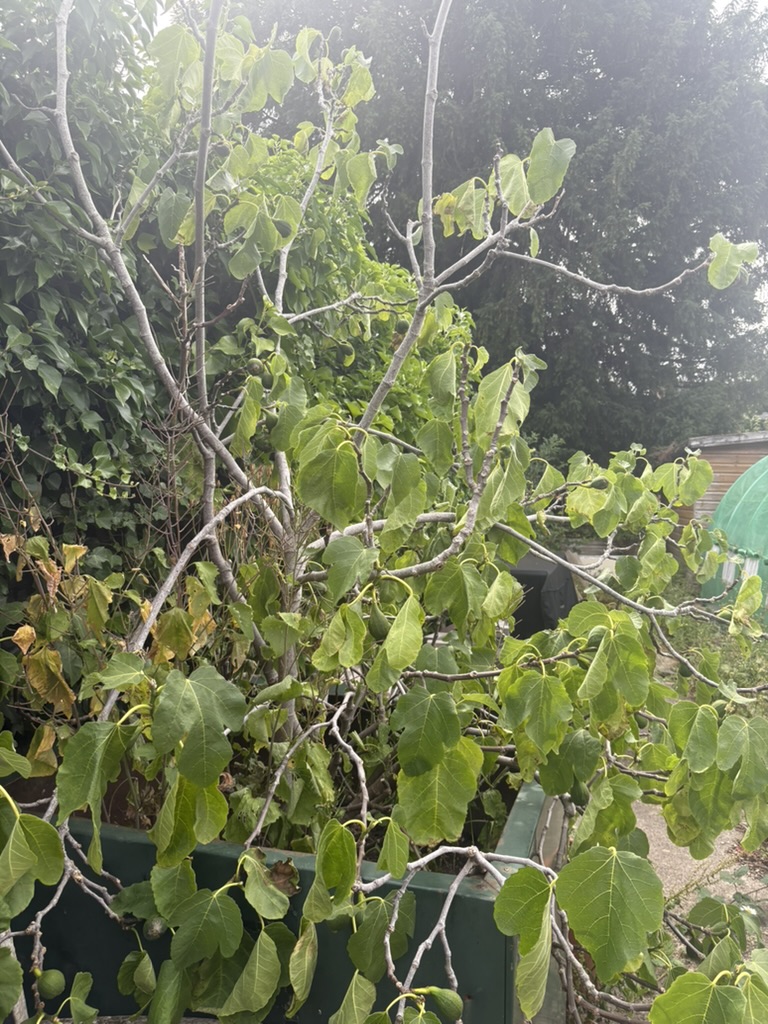
Fig-uring it out
We started by the gate, welcomed by a large fig. This is nature’s sweetener, fig paste was used in baked goods long before sugar cane existed. Fig leaves may be steeped in tea to help manage blood sugar levels. The fruits are renowned for their high fibre content a natural laxative to cure constipation, with syrup of figs a traditional remedy. Going beyond the purely practical, figs are highly praised in Islamic tradition as a divine blessing with both spiritual significance and health benefits.
Fig trees may be either male or female. It’s the female trees that produce edible fruit; the male trees provide pollen to help pollinate. However, if you want figs in your garden, a self-pollinating female tree will do fine on her own. The fruits are actually inverted flowers, to be pollinated, a wasp will crawl inside and die. The insect then becomes disintegrated within the fruit, which is why strict vegans won’t eat figs.
Cottage garden flowers
Moving over to the flower beds, Nigella was amply scattered around, she’s able to find a home in many niches. While we mostly enjoy her as a delicate blue flower, with decorative seed heads, known commonly as love-in-a-mist, Nigella has a long history in traditional medicine. She is the black seed considered an Ayurvedic panacea. Her seeds and seed oil are used to treat asthma, bronchitis, digestive stress and skin ailments, due to the active compounds she contains which are bronchodilators, helping open up airways and assist breathing. We come across her also in culinary use as her seeds are roasted on bread, added to curries and used to season cheese.
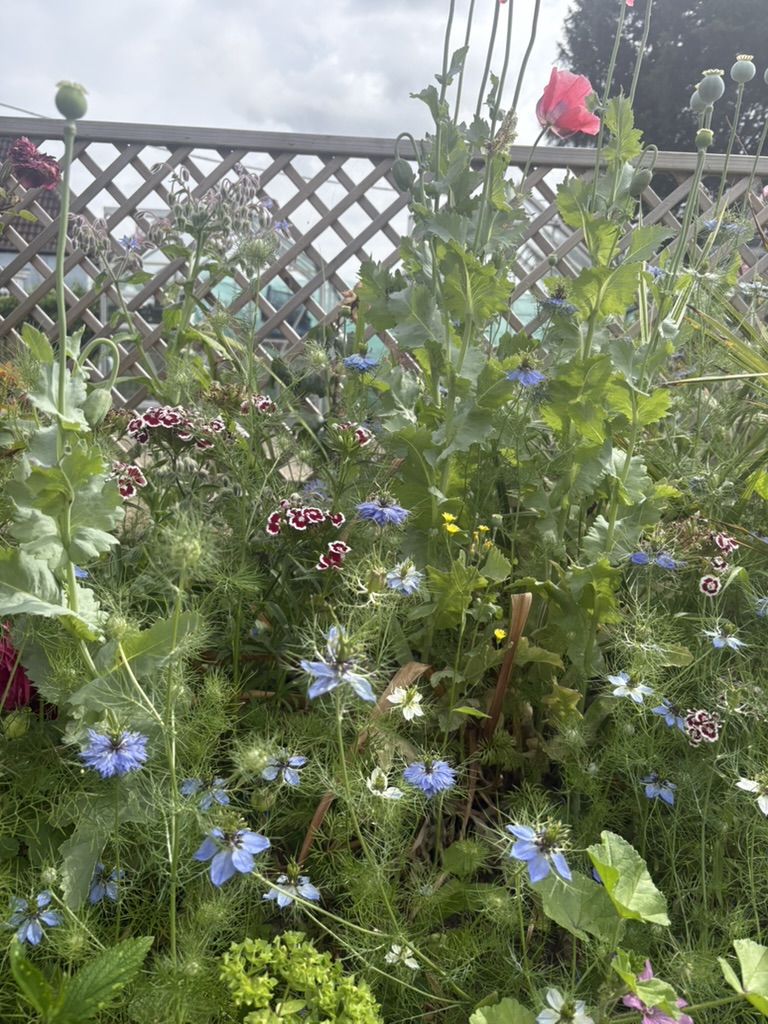
Another cottage garden favourite is Sweet William, these biennials do have lovely scent, as their name suggests. The ‘William’ is unknown, famous Williams sometimes associated include Saint William (of York or of Aquitaine), William Shakespeare or Prince William, Duke of Culloden. The latter is chronologically impossible as ‘Sweete Williams’ have been noted in print since 1596, long before his time. The Scottish connection may be there, however as ‘Sweet William’ is a standard name often given to a lovelorn hero in traditional ballads. Alternatively, it may be a corruption of the French word oeillet, meaning, ‘little eye’ or a small carnation.
They do belong to the carnation family having the same clove scent and flavour, petals can be scattered in salads or cakes. Medicinally they have been used to ease an upset stomach, steep a few petals in hot water to make a soothing tea. This may also help clear up colds and chest congestion. They can also be added to a balm for easing aching muscles and stiff joints. Romantically, they are a symbol of gallantry.
Hoping for hops
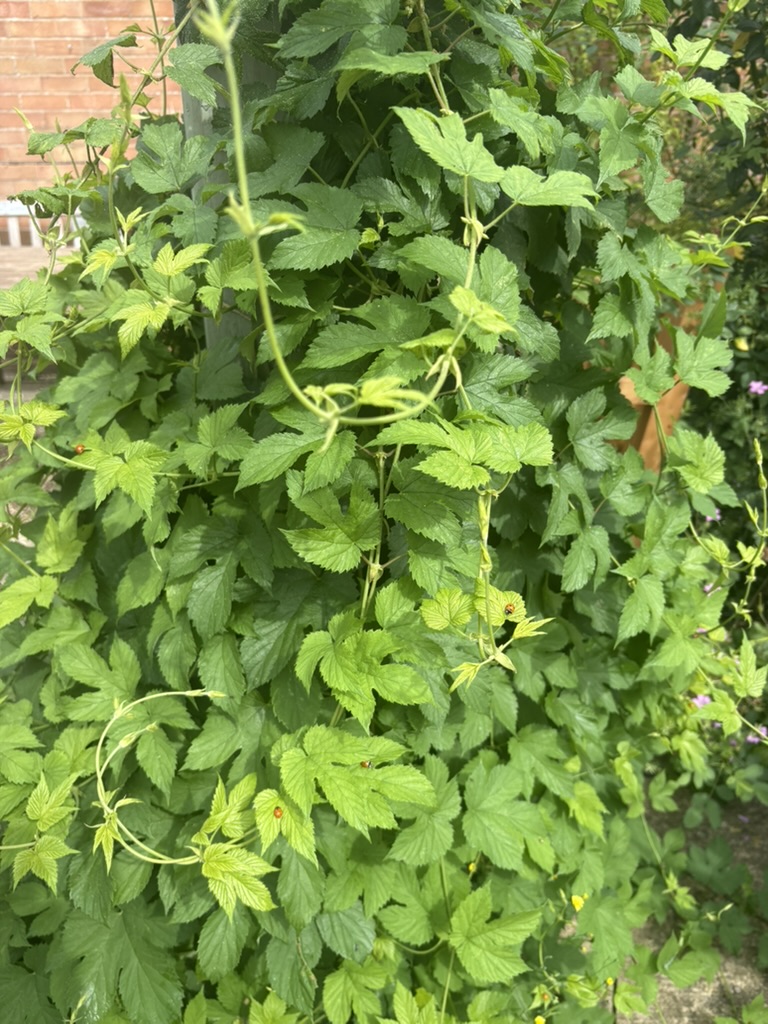
If you visit the Chantry Centre café on a sunny day there’s a choice of sitting at a table on the lawn or under the hop-covered pergola. Hops are traditional calmers, often included in a hop pillow or nighttime tea, so be prepared for a relaxing rest in their shade. Famous now for use in making beer (displacing many traditional herbs for this purpose), the preference for hops is not just for her flavour but also for the alpha and beta acids she contains in lupulin which are antimicrobial, helping preserve the beer. These are also good for us in a tea, helping fight bad bacteria, soothe the stomach and aid sleep. Infusing in oil, can extract this lupulin and the fragrant oil can be made into balms to soothe sores, rashes and bruises. Being anti-inflammatory, hops are also helpful against acne. But that’s probably not a good enough excuse for teenagers to drink more beer.
The softly-scented hop flowers haven’t yet emerged, but visit in a month or so and the air will be fragranced by them.
A few years ago, when the broad steps that lead up to the café needed some remedial work, the decision was taken to leave a few spaces for planting, further greening up the exterior of the building, softening the entrance into the garden. These planting pockets contain treasures include sempervivums and thymes.
Popular protection
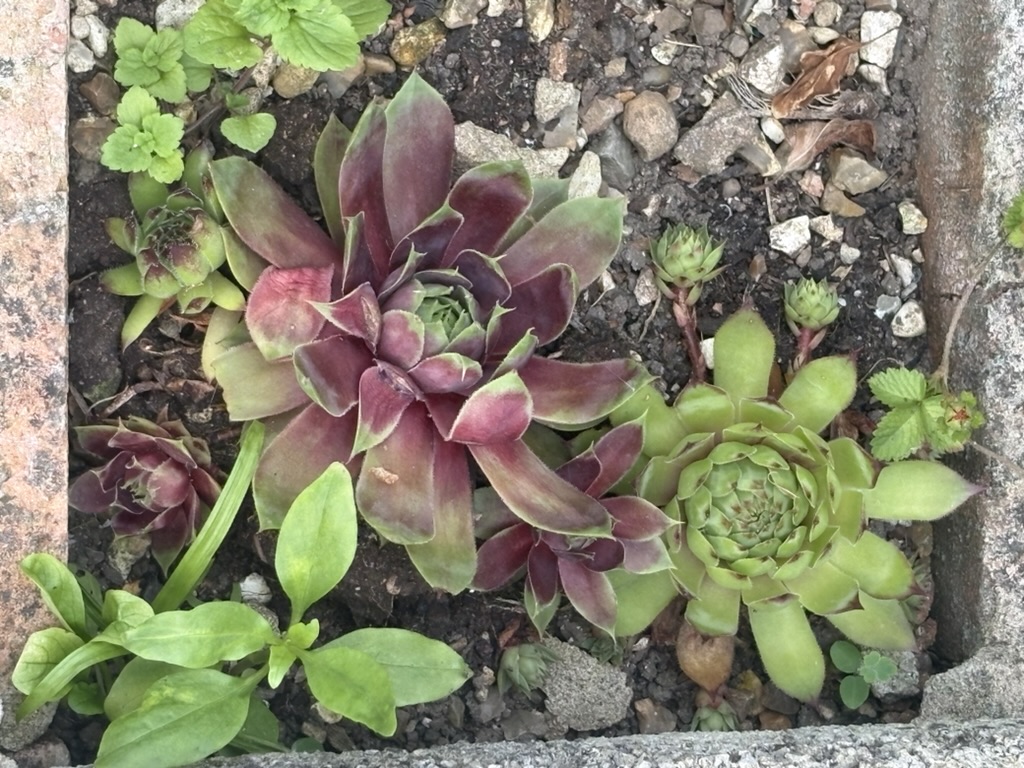
Sempervivums are the little spiky plants that became popular in the great house plant revival that accompanied lock down. Sadly this led to unscrupulous gathering of them from native hillsides, depleting them in volumes it is hard to recover from. They have been respected as a protective plant for millennia. Romans had them in pots by their door; 8th Century Frankish King Charlemagne ordered them to be planted on all roofs in the belief that they would protect from lightening. Before we had access to aloe vera gel, these little succulents provided a handy source of gel to be used in similar ways.
Snakebite
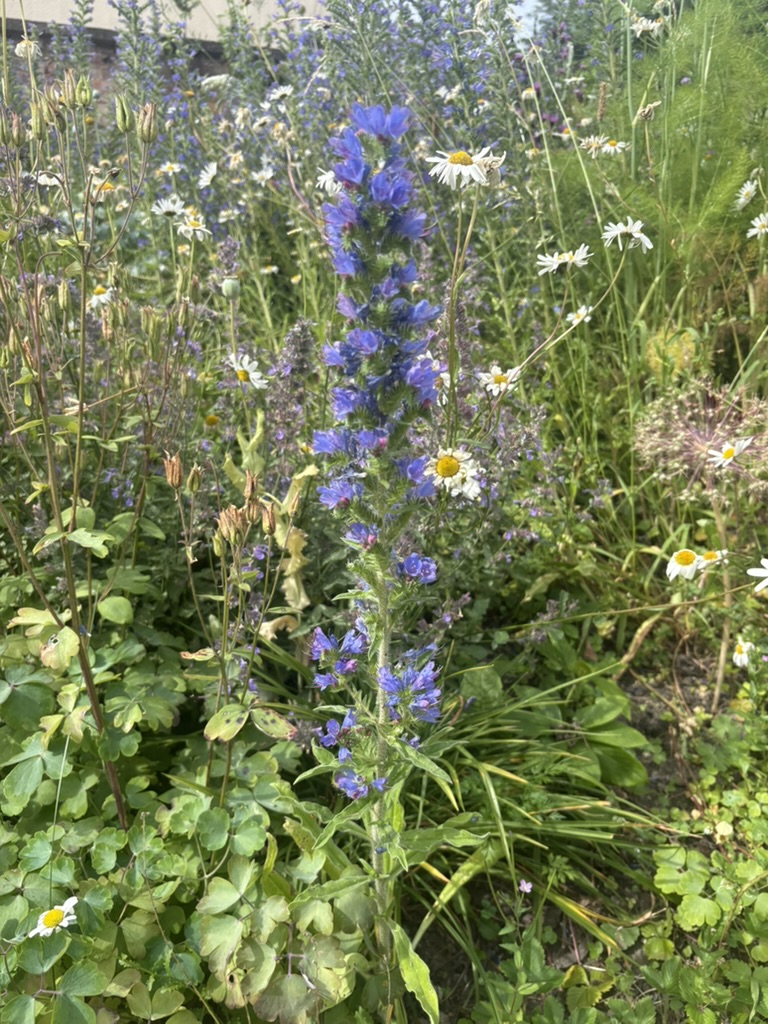
A striking plant in the beds at this time of the year is the blue-flowered Vipers Bugloss. Apparently getting its name because the seed heads look like the head of a viper; or maybe because the stem resembles a snake skin. It is used sympathetically, therefore, against snake bites and is sometimes given the common name snake flower. Also known as blue weed or the Blue Devil. It is equally good against insect stings, particularly bee stings – apiculturalists should have a tincture of vipers bugloss on standby. A member of the Boraginaceae family (along with borage and comfrey) it contains allantoin which is healing, promoting new cell growth. To benefit from this, make a poultice from the leaves, or extract juice from them. While the plant has traditionally been used to make teas and cough syrups, thanks to its mucilage content, it is now not recommended to consume due to containing pyrrolizidine alkaloids which may cause liver damage. There are plenty of other mucilaginous plants you can use instead, such as marshmallow.
Standing proud
Three tall upright plants attract notice:
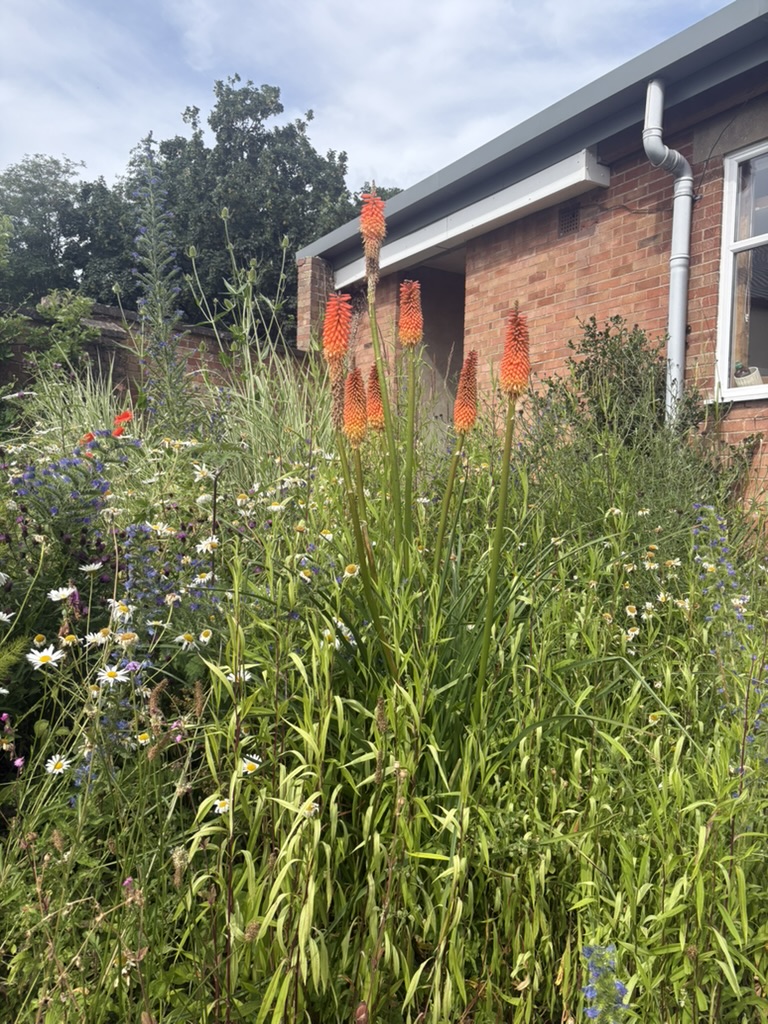
- Red hot pokers don’t have any medicinal or culinary use that I know of, but they do remind us of the actual red hot pokers that were used in taverns to caramelise spiced ales – an even more performative beverage than today’s latte art!
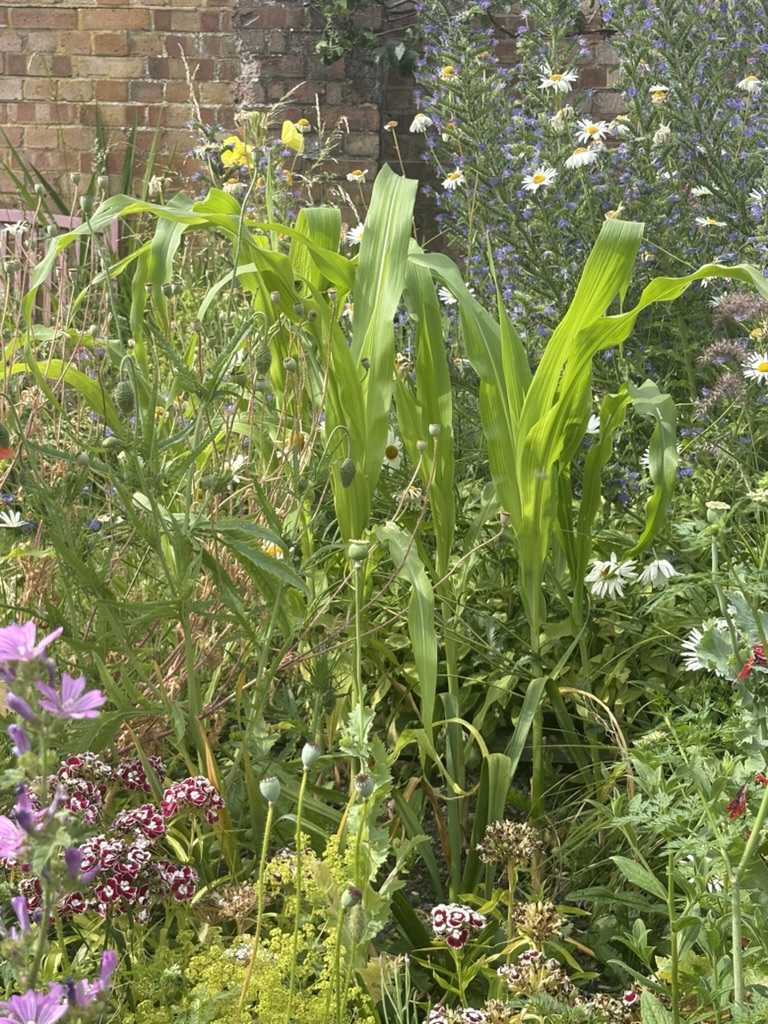
- The corn that has been planted is flint corn, a bit different to our standard maize that we enjoy for corn-on-the-cob. Here we look forward to seed heads with a deep array of reds, browns and yellows as a decorative addition to the garden. Being a grittier and less sweet corn, this was used for products with a coarser texture, such as polenta. It’s also our go-to for popcorn.
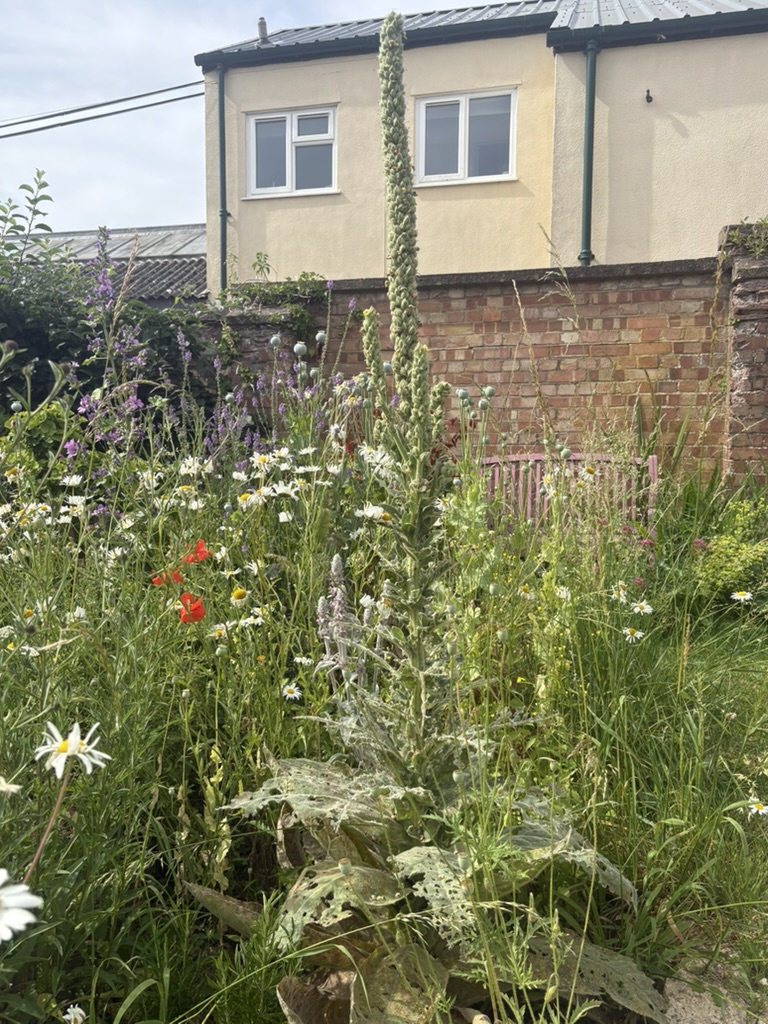
- Verbascum sends spikes of yellow flowers up from soft, downy leaves. The flowers are gathered by herbalists to be tinctured in making an ear treatment; the leaves are dried and used in a tea to help ease a cough. The tough flower spikes were also traditionally used as candles.
Purposeful plants
The bank is stuffed full of plants, including many purposeful ones, such as southernwood (dried and used in wardrobes to guard against moths), sage (reputed to help live to an old age), fennel (digestive and breath freshener), marjoram (another plant for healthy daily doses) and bay (with warm scent and protective powers).
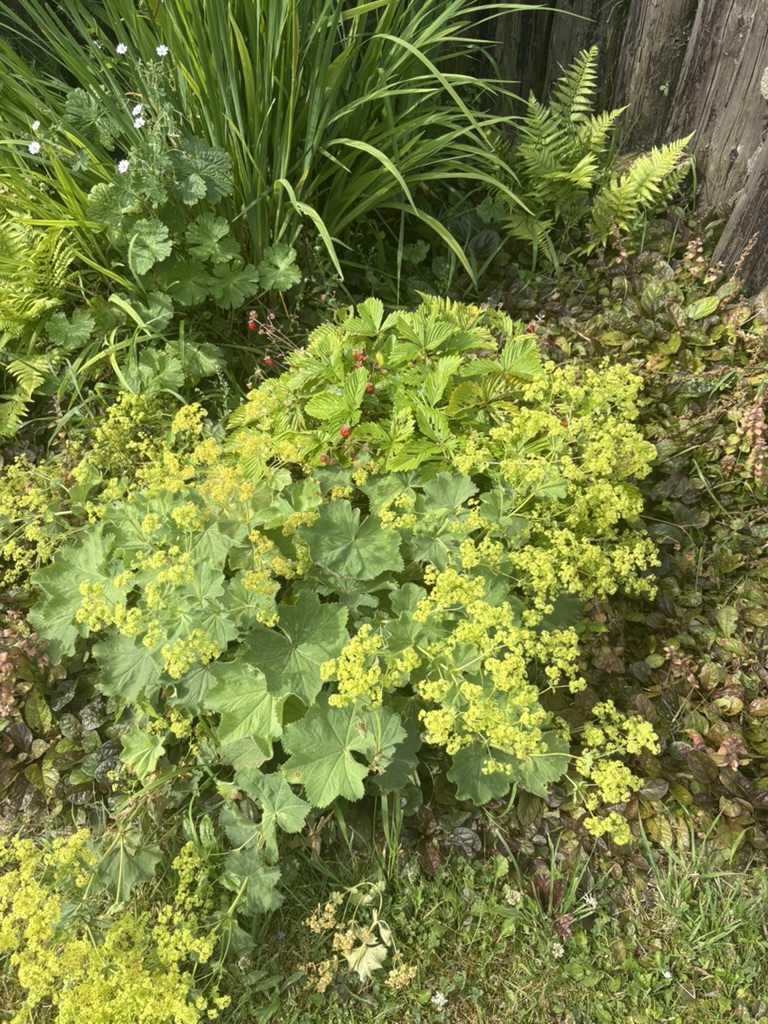
Coming back round by the pond we spent a little while admiring Alchemilla – the little magical one, known commonly as Lady’s Mantle. Always a joy to see as her leaves seem to catch the rain or dew drops, holding them in glistening pearls. While this is an after effect of moisture in the air, the little drops that form on the outer edges of her crinkly leaves come about from a different process, called guttation. In this process the plant herself exudes water, it’s a means of cooling often adopted by plants in the tropics and hence most often seen by us on house plants. Those exuded drops were much valued by alchemists who would collect one drop each morning to add to their potions. Hence her name, which is derived from the same root as alchemy.
The wild side
We just had time to head onto the ‘wilder’ garden area of the old concrete plinth (this was the base of the canteen that used to stand on the site, daily serving all the workers from Listers’ factory). Always worth peeping among the poorer soils to find the real survivors of plant world. Their strength and tenacity is often a gift to us too.
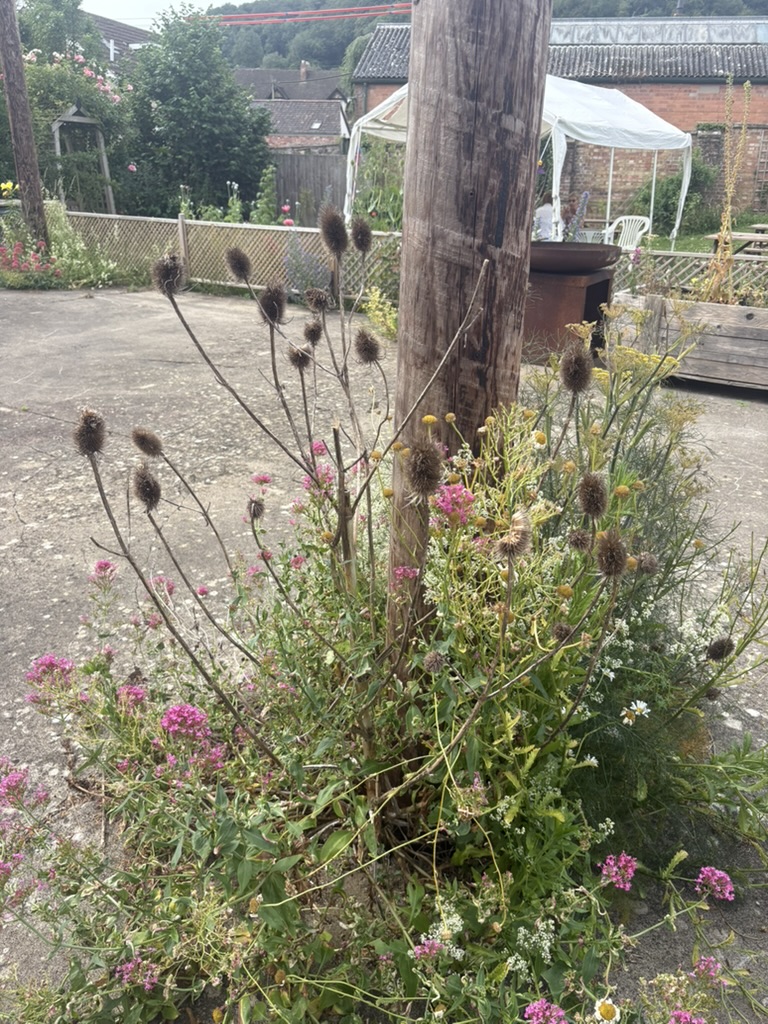
Here we found valerian, the classic sleep inducer and source of nerve-calming Valium. Its root has a very funky smell and was probably the secret aid that enabled the Pied Piper of Hamelin to lure the rats out of the city, apparently his clothing was stuffed with it and the rats find it irresistible.
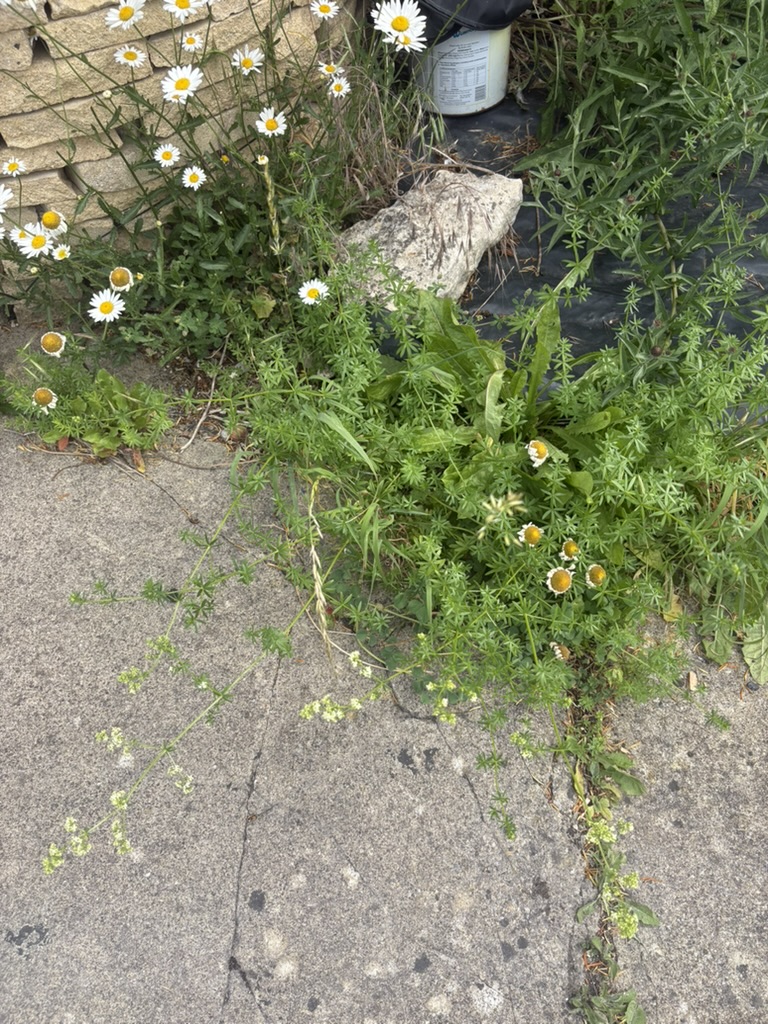
Chamomile, another calming herb, good for bedtime teas and beautifully fragrant. As is Lady’s Bedstraw which was present in fluffy abundance. Her gentle scent increases with drying, making her an ideal herb for strewing floors and stuffing mattresses to induce a sweet-smelling sleep.
Join us for a herb walk
Our herb walks take place on the first Saturday of each month, starting at 10am and lasting for an hour. Each month we choose a different local space to visit and find the helpful herbs that surround us in plain sight.
For August we’re making a ‘field trip’ going a little further afield from our normal Cam and Dursley stomping ground. The walk will start at Eastington village church and take in the churchyard and the neighbouring community orchard. All are welcome, especially families and the walk will be followed by an eye-spy for children and tea and cakes for all, along with herby goodies for sale within the church.