
For May we returned to Cam’s Vale Hospital, there is so much to see in the beds around the carpark, the quiet garden beside the hospital, and the healing allotment beds. We were here last year in July, wanting to enjoy the lime trees, but catching them just after their best. This year, we arrived early, their flowers hardly showing alongside their bracts. Maybe next year we’ll visit in June and get them full of fragrant flower.
Appropriately for the start of May, arriving by foot from Kingshill Road, the path into the hospital grounds guides you though an arch of mayflower. White queen of the hedgerow, she is the flower of Beltane. On May Day Eve, excursions were made to the hedgerows to gather armfuls of may blossoms to decorate the May Day celebrations (well, that was the excuse given for heading into the fields to frolic).

Mayflowers are the blossom of the hawthorn tree, the most prevalent species in English hedgerows. In folk custom hawthorn is called ‘the medicine cabinet of the hedgerow’ she provides so many benefits for health. She therefore made an appropriate introduction to our Vale Hospital visit, as we were to find, many of the plants surrounding the hospital have therapeutic and medicinal properties.
The deliberate, thoughtful planting here makes a change to the wilder fields and hedgerows we typically visit on a herb walk. And so the range of plants differed from the weeds we normally eulogise over.
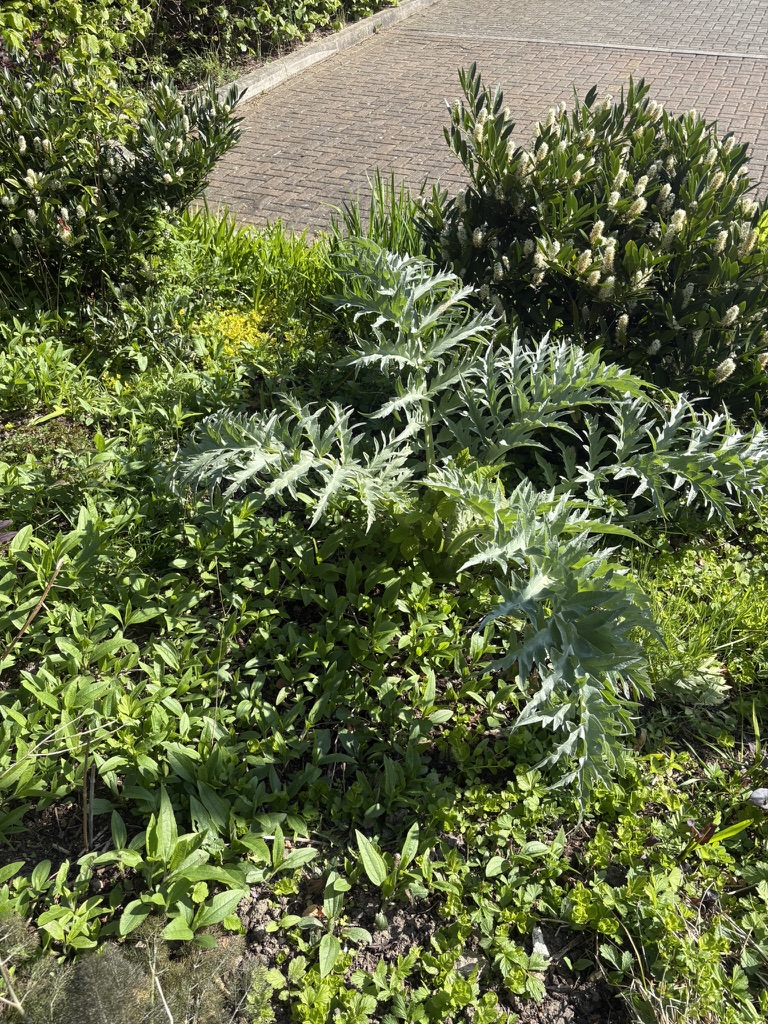
The first bed we stopped at has two dramatic banana trees in it (handy source of potassium to keep leg cramps at bay – apparently in the skin, not the flesh, some say you can make a tea from your banana skin, I’ve not tried). Another big sculptural plant was the cardoon, like an artichoke but the stems are edible (steamed or braised) for artichoke flavour, without the fuss. Like artichoke, it provides B vitamins, vitamin C, vitamin K and fibre. More fruit trees brought vertical height to the border, an apple and a pear tree. ‘An apple a day keeps the doctor away’. Both are good for vitamins and roughage, choose an apple if you want more vitamin C, a pear if you want more fibre.
Decorative interjections in the border came from iris (just coming into its flowering season) and bronze fennel. The former is used traditionally for its root. Dried and powdered this is known as orris root. It is very drying so used medicinally against inflammation, practically for drying oranges pierced with clovers to make pomanders, and cosmetically in setting powders and dry shampoos. Fennel is most appreciated for her seeds, a good post-meal digestif and the basis for sugar-coated kissing comfits to sweeten the breath. Read about those here.

Taking our eyes to the ground, we were fascinated to see two plants with similar medicinal purpose put together – not sure whether by design or chance – big-leaved bergina and small-leaved creeping jenny. When you look closely, both have shiny kidney-shaped leaves, which is a good clue as to the medicinal use they’ve been put to, helping to break up kidney stones. Bergenia actually has a folk name of ‘stone-breaker’.

To the side of the hospital is a quite space, planted with a border that repeats a sequence of plants stretched along the building, and an open space defined by clipped hedges and a grid of trees. There are spaces here to sit and simply be still among calm and orderly nature. Green therapy.
We noticed viburnum, who’s folk name of ‘cramp bark’ gives a good clue as to what it was used for. It is particularly associated with native American medicine as a treatment for muscle spasms and menstrual cramps.

Making our way back through the meditative space of the area planted with evenly spaced small trees I was pleased to see not everything had been weeded out of the central bed. Many gardeners find themselves battling with the speedy growth of brambles at this time of the year, they can put on so much growth in seconds it seems. This is a good indication of their vitality. Bramble leaves are valued for helping complexion, and it’s the foremost bundle of leaves you gather for this purpose. Don’t get into the scratchy thicket, just touch the leaves at the tip and you may be surprised how soft they are. These can be gathered and dried for use during the year. They shrink a lot on drying (most plants are 70% or so water content, like us). To get an idea of bramble’s drying effect, try chewing a leaf, the tannins will soon make you mouth pucker.
The carpark beds are super colourful, a very welcome sight. Some of the plants we stopped to talk about were the hollyhocks, a summer favourite, just coming into bloom and part of the mallow family. They have the family trait of mucilaginous content, good for soothing skin irritation and coughs, and anti-inflammatory.
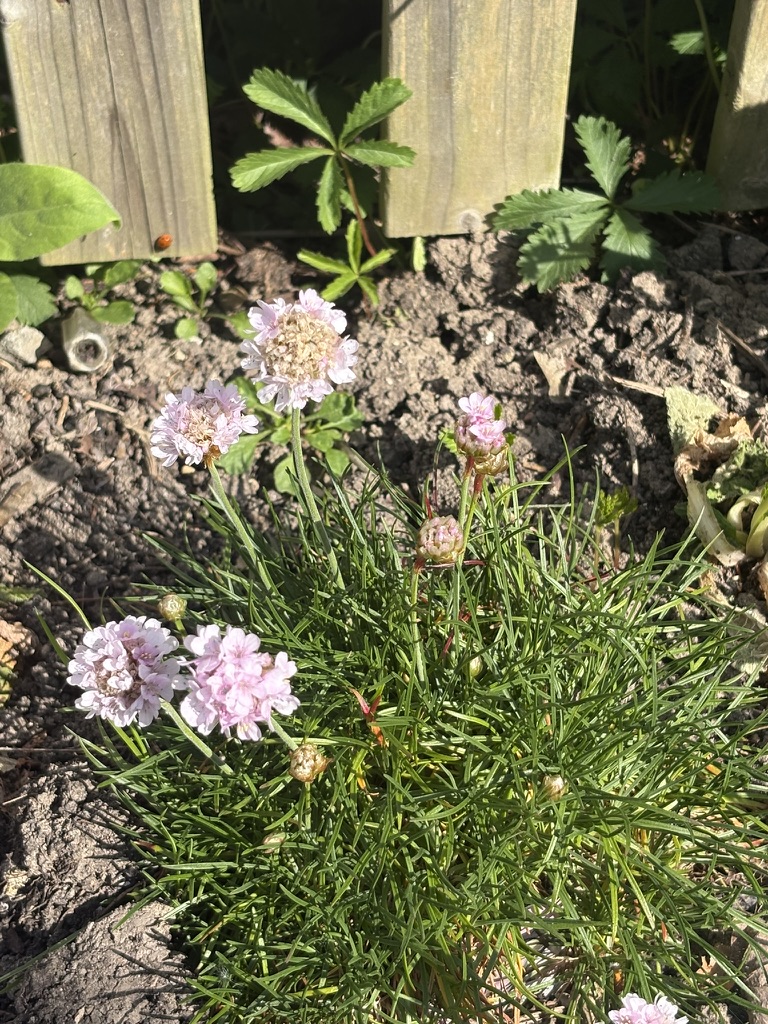
On a smaller scale, little pinks have a clove like scent and make a calming tea. When floated in white wine they were called ‘sops in wine’, a habit we learnt from the Romans, making a fragrant white wine. You could try them in cordials or cocktails. Why not pair it with strawberry as we have here. The shape of her fruit is a good indication she’s good for the heart. She also helps manage blood sugar and provides vitamin C.
The allotment beds are well tended, each with a different owner so there’s a huge variety of plants growing. Always good to see comfrey when productive crops are around. Comfrey is made into a tea as plant food, a bit stinky but hugely nutritious. She’s also classically used to help mend sprains and broken bones, hence her folk name ‘knit bone’. You can also have a comfrey bath to ease back pain, handy for gardeners after a long day on the allotment.

It seems to have been a brilliant year for hedge mustard, super-spicy to nibble in your rustic sandwich. You don’t need much as it’s almost overpoweringly garlicky. Sometimes called ‘the Singer’s plant’ it can help alleviate hoarseness or restore a lost voice.

More vitamin C is on offer from nasturtiums, starting their colourful scramble, and from honesty which has also had an amazing spring this year. The rowan tree is looking promising but it’ll be later in the season when it’s berries provide yet another source of potent vitamin C antioxidant.
There were still many more plants to spot as we made our way back across the car park, including one we’d been looking out for – lemon balm. A mass of green she can sometimes evade a casual glance through a border, but anytime you’re up close and brush past her, you won’t miss the welcoming citrusy scent. This is great made into a refreshing summer drink, and is believed to bring joy to any occasion.
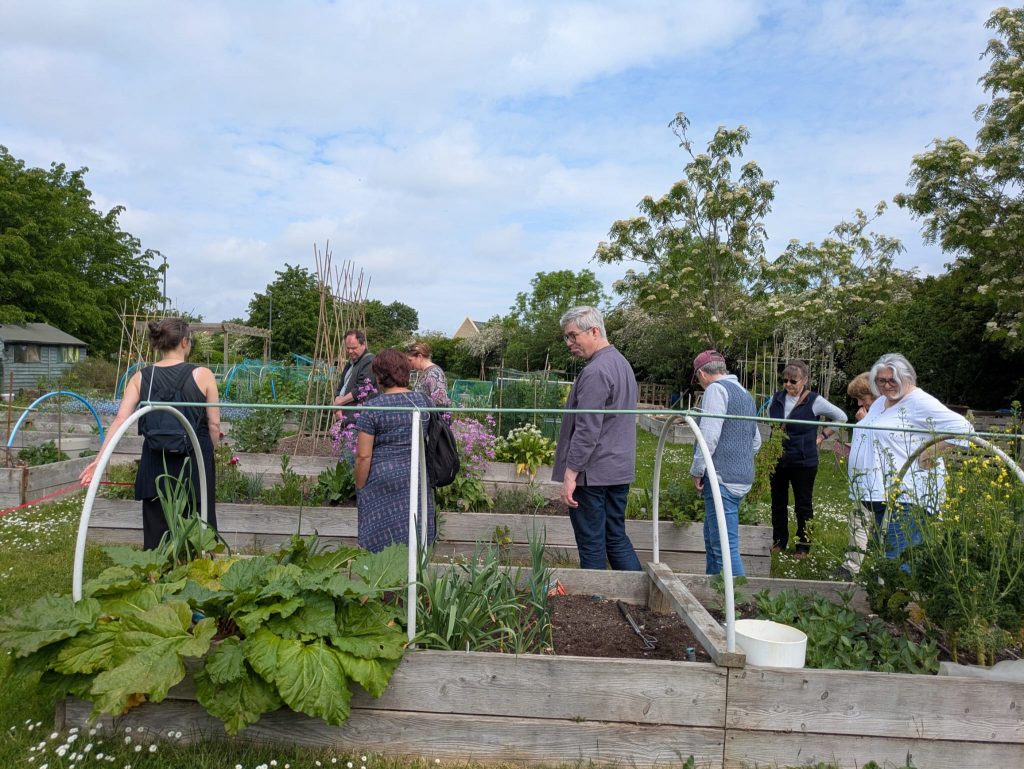
Our next herb walk takes place on 6th June. The walk will be part of Durley’s OffBeat celebrations so we’ll be close to the centre of town, at St Mark’s Church, Woodmancote. The walk will be 10am until 11am, as usual, then Laura and Viv will be at the marketplace until 3pm with our herbal teas and herbal skincare. All lovely and local. There’s loads more going on during OffBeat check out the details here.
Advanced warning too, our July herb walk will also be in central Dursley as this falls on the day of the Dursley Festival, Saturday 4th July.
Leave a Reply