
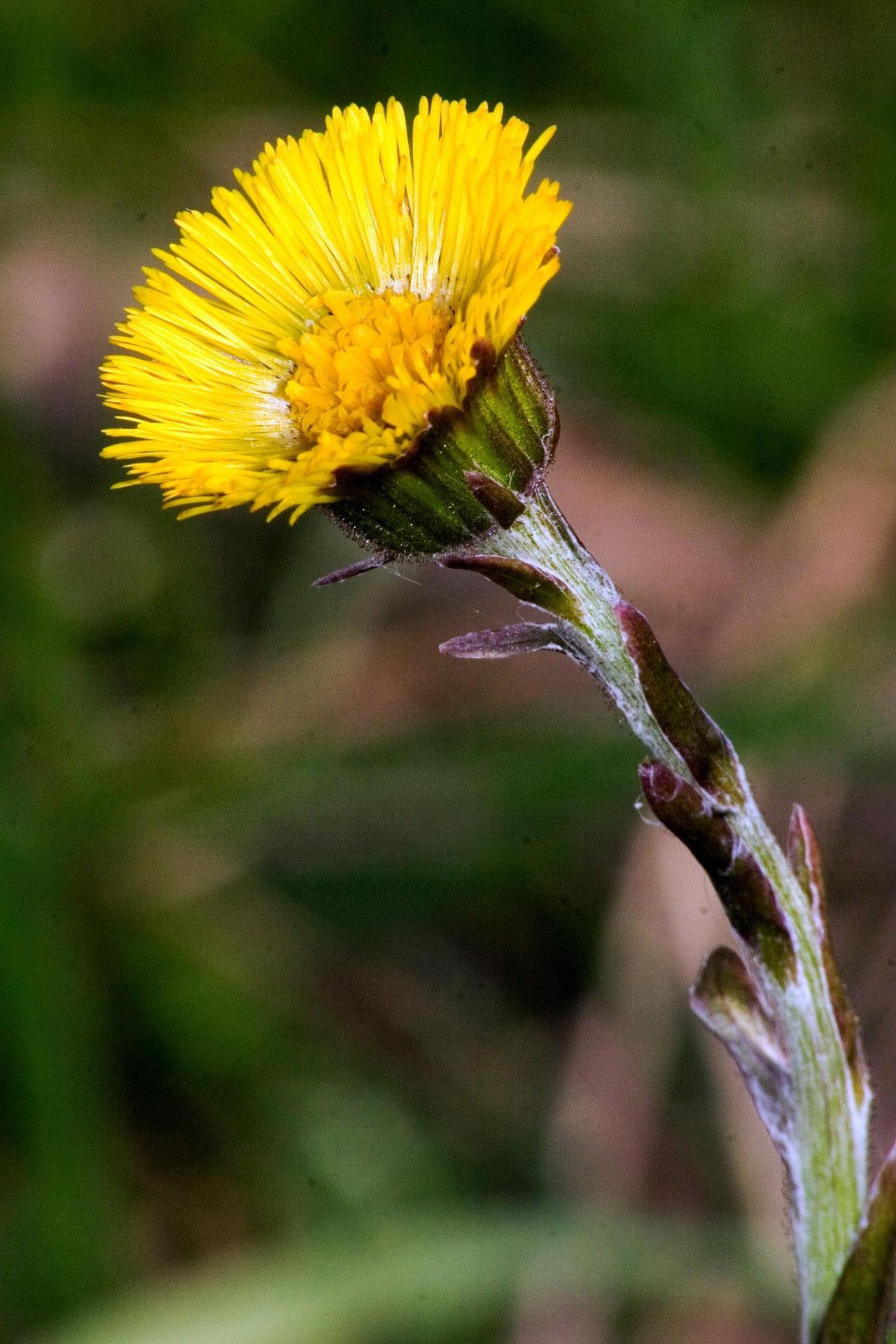
Early in the year, round about late February or early March, especially if you’re wandering alongside a stream or river, where there is moist, heavy soil, you may see a yellow flowerhead looking, at first glance, like a dandelion.
Take a closer look.
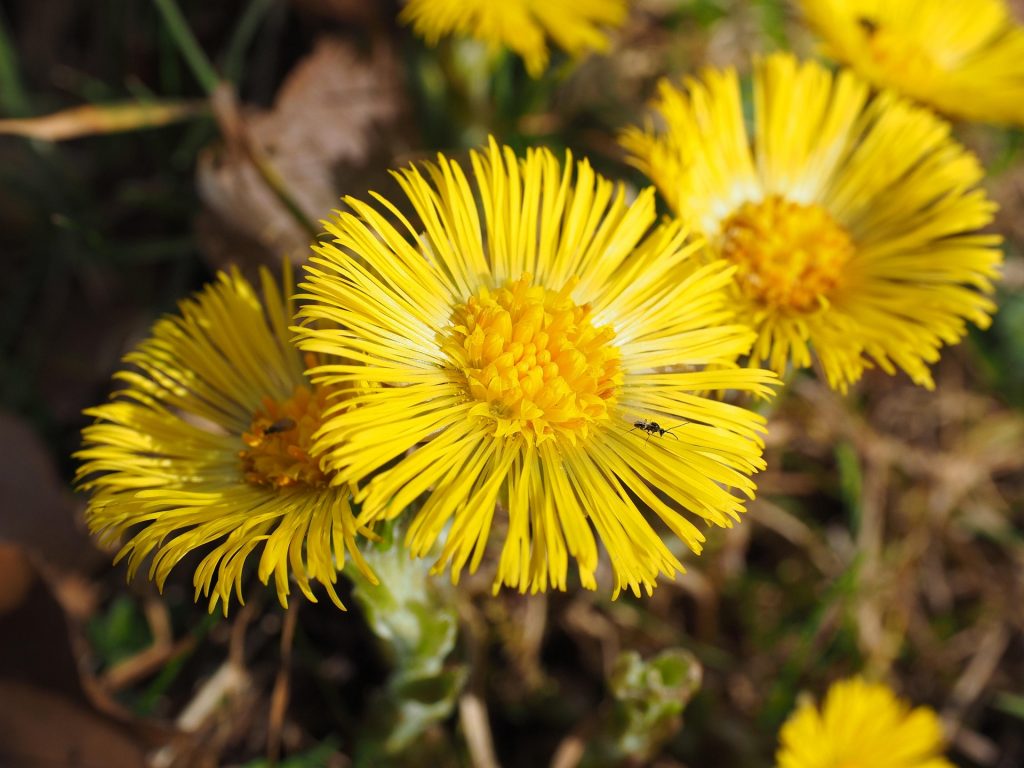
You may find, instead of the toothed leaves and smooth stem of the dandelion, your yellow flower has what looks more like a scaly stem.
If so, it’s likely you’ve found Coltsfoot.
The plant won’t have leaves while its in flower, they come later and are crinkly and wooly.
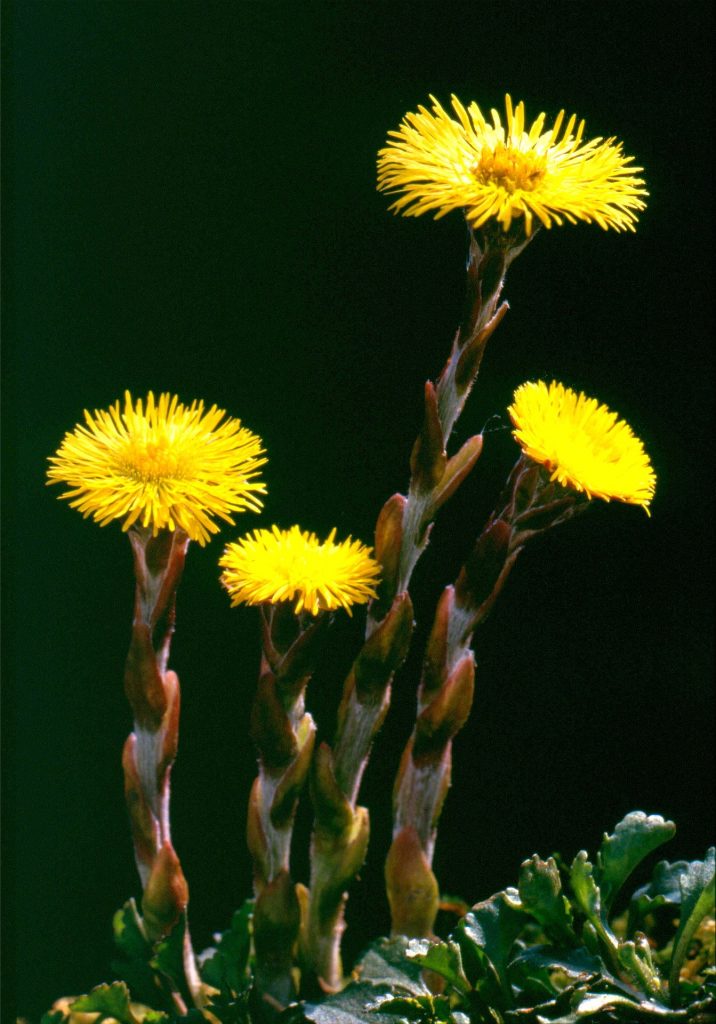
Tussilago farfara
Tussilago farfara is the exotic sounding name for this homely plant. It’s a member of the large Asteraceae family (that contains many yellow-flowered dandelion-like plants).
The name comes from the Latin ‘tussis’ which means cough, and ‘ago’ meaning to cast or act on. An indication that this has long been a sought after plant for helping with coughs and chest complaints.
Valued as a demulcent and expectorant, coltsfoot was a common remedy across Europe. However, it is now known to contain pyrrolizidine alkaloids, a potential cause of liver damage, though a pyrrolizidine alkaloid free variety has been bred in Austria and Germany where the plant is very popular, and suspected incidents have been put down to mis-identification of the plant.
Foot like
The folk name of ‘coltsfoot’ is due to the leaf shape being a little like a colt’s foot. Other names it may be known by include foal’s foot, ass’s foot, bull’s foot and horse foot – you get the picture!
It is also called coughwort and foal’s wort – we love a wort (a plant with a purpose). Do follow us on Instagram for a weekly dose of worts.
The plant’s habit of producing a flower before the leaves has also led to it being called ‘son-before-father’.
The ‘farfarus’ part of the name possibly comes from the notes of Pliny the Elder and refers to the white-haired leaves of the plant that resemble the white poplar.
Traditional remedy
Coltsfoot is a prized traditional remedy used to treat coughs, especially dry wheezy coughs.
Coltsfoot syrup is the medicine made for this purpose, and the means of doing so is rather curious.
It was so associated with remedies that at one time, the door of an apothecary shop in Paris would be identified by painting on a picture of the coltsfoot flower.
Coltsfoot syrup
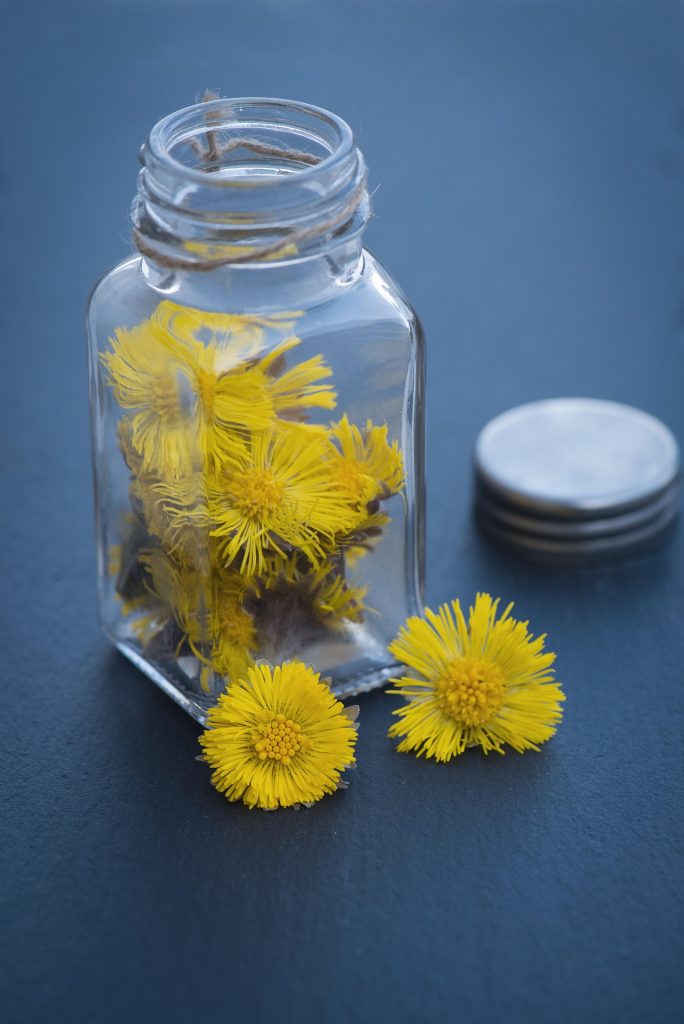
Use both the flowers and their stalks to make coltsfoot syrup. Having picked them (do refer to our guidance here), they will need to be washed and dried.
Then get a jar of suitable size to hold all your plant material, wash and dry this too. Then start layering your plant, alternating with granulated sugar. Press down firmly with each new plant layer so you pack it all in as tightly as possible.
Once the jar is full, seal and leave to stand for four weeks. Maybe set a reminder in your calendar, there could be so many things distracting you in the meantime. Many things will be coming into leaf of bloom during this time.
After four weeks, find your jar along with a second, clean jar. Using a muslin or fine sieve, strain your colstfoot into the new jar. You should have a ready-to-use syrup in the jar, and the spent plant in the sieve or muslin.
Seal and label the jar, and dispose of the plant on your compost heap or food recycling bin.
How to use
Next time you or a loved one gets the kind of irritating dry cough that can sometimes make it hard to breath, and saps energy, you will have the remedy to hand.
Take one or two teaspoons of coltsfoot syrup three or four times a day until your cough has disappeared.
Sweet Alternative
Maybe you’re adverse to picking from the wild. Maybe you simply didn’t spot any coltsfoot at the right time of the year. But you’d still like a little coltsfoot to soothe.
If you pop along to Hewitts on Parsonage Street, you will find a big jar of Colstfoot Candy. Traditionally made from the plant, it’s made from an infusion of the leaves of coltsfoot (no stems or flowers). The recipe I found online takes 15 cups of colstfoot leaves, so maybe a trip to Hewitts is kinder to the local plant population.
Other uses
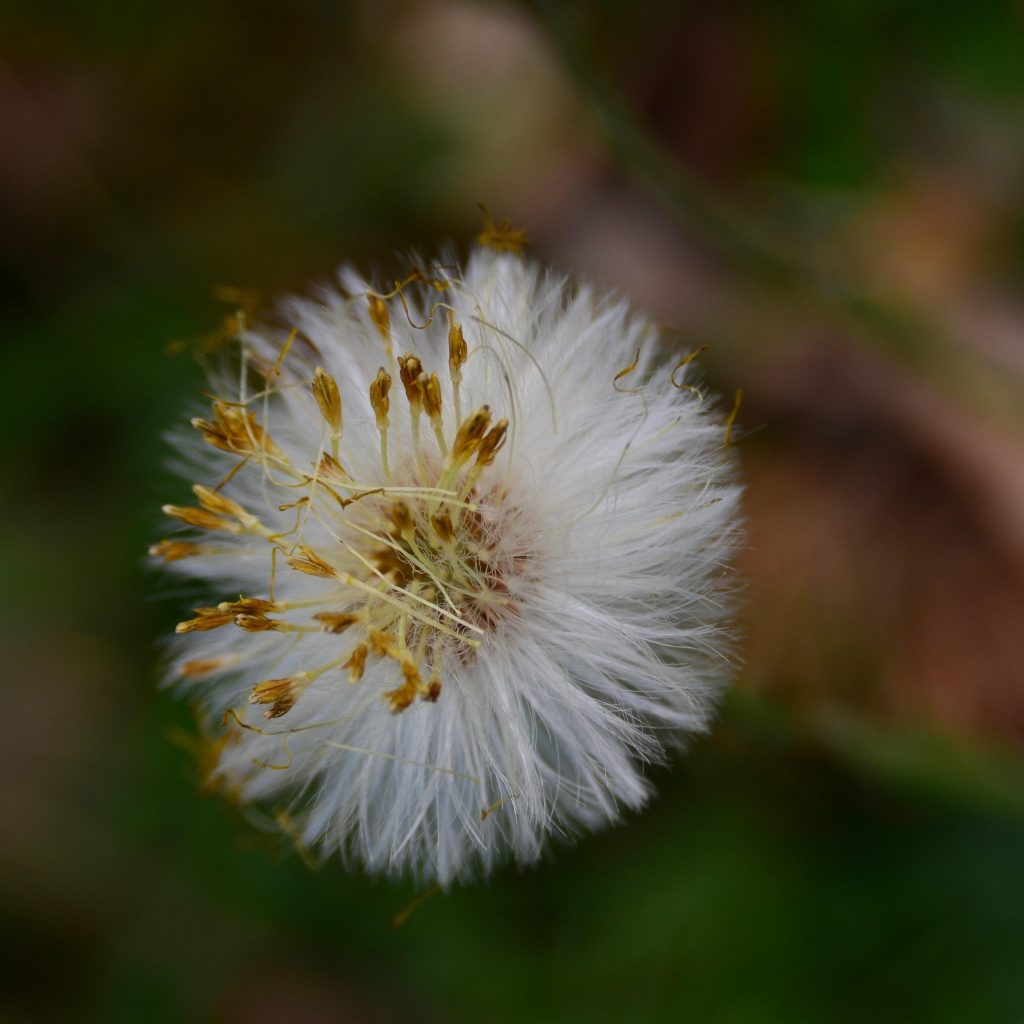
Just like a dandelion, coltsfoot produces a fluffy seed head, sometimes used to stuff pillows, and also collected by goldfinches to line their nests.
Used as a dye, coltsfoot produces a green colour.
And both leaves and root can be dried and used for tobacco, considered to be good for the lungs, according to Dioscorides, Galen, Pliny and Boyle and much enjoyed by the Swedes for this purpose. It forms the basis of the British Herb Tobacco (which also includes buckbean, eyebright, betony, rosemary, thyme, lavender and chamomile flowers) and is recommended for asthma sufferers.
The felty covering of the leaves can be easily rubbed off and makes good tinder.
Infusions of the plant can be used to soothe skin irritations and wounds.
Leave a Reply